
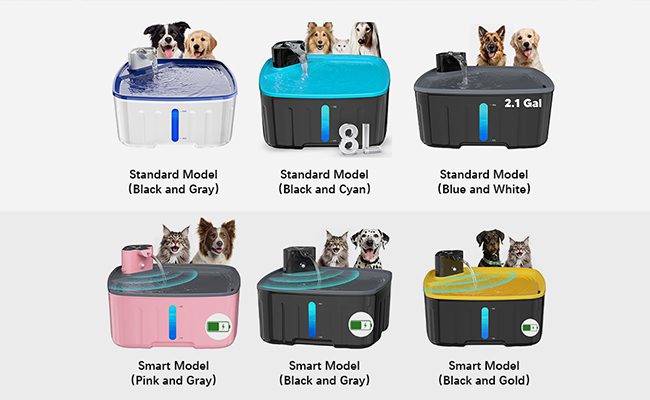
Buying pet water fountains in bulk can be a highly profitable move — whether you are stocking an e-commerce store, supplying retail shelves, or building a private label brand. But a bulk purchase also means a bulk risk. A single overlooked flaw in the product, the supplier, or the logistics chain can turn a promising investment into a warehouse full of unsellable inventory. The difference between a successful bulk order and a costly mistake comes down to due diligence. Before you sign a purchase order or wire a deposit, there are seven critical factors you must evaluate. This guide walks you through each one with practical checklists, comparison tables, and red flags to watch for.
Why a Checklist Matters for Bulk Orders
When buying a single unit, a defect means returning one item. When buying 500 or 5,000 units, a systematic quality problem means returning an entire shipment — or worse, absorbing the loss and dealing with hundreds of customer complaints. Bulk purchasing amplifies every decision, for better or worse. A structured evaluation process protects your capital, your timeline, and your reputation.
The seven factors covered in this guide are:
- Product material and build quality
- Pump performance and reliability
- Filtration system and replacement filter availability
- Certifications and regulatory compliance
- Supplier manufacturing capability and quality control
- Minimum order quantity, pricing, and payment terms
- Logistics, packaging, and after-sales support
Check 1: Product Material and Build Quality
Why It Matters
The material of a pet water fountain determines its durability, hygiene, safety, and perceived value. When buying in bulk, you are committing to a specific material for every unit in your order. If the material is substandard, every unit carries the same flaw — and your customers will notice.
What to Evaluate
| Material | Quality Indicators | Red Flags | Best For |
|---|---|---|---|
| Stainless steel (304 grade) | Smooth, consistent surface finish. No visible weld marks or rough edges. Magnetic test: 304 stainless steel is weakly magnetic or non-magnetic. Weight feels substantial. | Rough or pitted surface. Strong magnetic attraction (may indicate lower-grade steel). Thin, flimsy construction. Visible rust spots or discoloration on samples. | Premium positioning. Hygiene-conscious buyers. Cats prone to chin acne. Multi-pet households. |
| ABS plastic | Uniform color with no streaking or discoloration. Smooth surface with clean mold lines. No chemical odor. BPA-free certification available. | Strong plastic smell (indicates poor-quality resin or inadequate off-gassing). Visible mold defects (flash, sink marks, short shots). Brittle feel when flexed. No BPA-free documentation. | Budget-friendly options. Colorful or uniquely shaped designs. Entry-level market segment. |
| Ceramic | Smooth glaze with no cracks or chips. Even color distribution. Substantial weight. Food-safe glaze certification. | Visible hairline cracks. Uneven glaze. Lightweight (may indicate thin walls prone to cracking). No food-safety documentation for glaze materials. | Niche premium market. Aesthetic-focused buyers. Limited to smaller capacities due to weight and fragility. |
| Food-grade PP (polypropylene) | Used for food-contact components (bowls, hoppers). Translucent or opaque with consistent color. No odor. FDA or EU food-contact compliance documentation. | Strong chemical odor. Discoloration or inconsistent pigmentation. No food-contact compliance documentation. | Internal food-contact components (hopper liners, bowl inserts). Often used in combination with ABS housing. |
How to Verify
- Request physical samples: Never place a bulk order based solely on product photos or catalog descriptions. Order samples of the exact product you intend to purchase and evaluate them hands-on.
- Conduct basic material tests: For stainless steel, use a magnet test and check for surface consistency. For plastic, check for odor, flexibility, and surface quality. For ceramic, tap the surface (a clear ring indicates no cracks; a dull thud may indicate hidden defects).
- Request material documentation: Ask the supplier for material safety data sheets (MSDS), food-contact compliance certificates, and BPA-free declarations. A reputable supplier will provide these without hesitation.
- Compare samples from multiple suppliers: Order samples from at least two to three suppliers to establish a quality baseline. This gives you a reference point for evaluating whether a supplier’s quality meets your standards.
Explore available water fountain models across different material types to compare build quality and design options.
Check 2: Pump Performance and Reliability
Why It Matters
The pump is the most failure-prone component in a pet water fountain. It runs continuously, is submerged in water, and contains moving parts. A pump failure renders the entire fountain useless. When buying in bulk, pump quality determines your return rate, customer satisfaction, and long-term brand reputation.
What to Evaluate
| Pump Attribute | What to Check | Acceptable Standard | Red Flag |
|---|---|---|---|
| Noise level | Run the sample pump in a quiet room. Measure with a decibel meter app if possible. | Under 30 dB (quieter than a whisper). Under 40 dB acceptable for budget models. | Audible rattling, buzzing, or grinding. Noise above 45 dB. Noise increases significantly after a few hours of operation. |
| Flow rate consistency | Run the pump for 24+ hours and observe whether the flow rate remains consistent or decreases over time. | Stable flow rate with no visible decrease over 24 hours of continuous operation. | Flow rate decreases noticeably within hours. Intermittent flow interruptions. Pump stalls and restarts. |
| Power consumption | Verify the actual power draw matches the stated specification. | 1 to 5 watts for standard pet fountain pumps. Actual draw within 10 percent of stated specification. | Actual power draw significantly exceeds specification. Pump runs hot to the touch. |
| Build quality | Disassemble the pump (if possible) and inspect the impeller, bearings, shaft, and seals. | Ceramic or stainless steel shaft. Balanced impeller with smooth edges. Silicone or EPDM seals. Clean, tight assembly. | Plastic shaft (prone to wear and warping). Rough or unbalanced impeller. Hardened or poorly fitted seals. |
| Cord and connector quality | Inspect the power cord for gauge, flexibility, and strain relief at connection points. | Adequate gauge wire (no overheating). Flexible cord with proper strain relief. Secure connector that does not loosen with movement. | Thin, stiff cord. No strain relief at the connector junction. Connector feels loose or poorly molded. |
| Lifespan claims | Ask the supplier for life-cycle test data. How many hours has the pump been tested to run continuously? | 10,000 to 20,000 hours of tested continuous operation (approximately 1 to 2+ years of 24/7 use). | No life-cycle test data available. Vague claims without supporting documentation. |
How to Verify
- Extended sample testing: Run the sample fountain continuously for at least 72 hours (one week is better). Monitor noise, flow rate, and temperature daily. This simple test reveals many quality issues that are not apparent in a brief demonstration.
- Request pump specifications: Ask for detailed pump specifications including flow rate, power consumption, noise level, rated lifespan, and materials used for the impeller, shaft, and bearings.
- Ask about pump sourcing: Does the fountain manufacturer produce the pump in-house or source it from a third party? In-house pump production typically indicates better quality control and faster issue resolution. Review pump product details and manufacturing capabilities to assess production depth.
- Include pump replacement in your order: Even with high-quality pumps, some replacements will be needed over the product’s lifetime. Ensure replacement pumps are available and compatible with the fountain model. Browse replacement pump options to confirm availability.
Check 3: Filtration System and Replacement Filter Availability
Why It Matters
The filter is the consumable heart of a pet water fountain. It keeps the water clean, protects the pump from debris, and determines the ongoing cost of ownership for your customers. When buying in bulk, you need to evaluate not only the quality of the included filter but also the availability, pricing, and compatibility of replacement filters. If replacement filters are unavailable, overpriced, or poorly fitting, your customers will abandon the fountain — and your brand.
What to Evaluate
| Filter Attribute | What to Check | Acceptable Standard |
|---|---|---|
| Filtration stages | How many filtration layers does the filter include? What does each layer do? | Minimum two stages: foam pre-filter (hair and debris) + activated carbon (odor, chlorine, impurities). Three-stage filters (adding ion exchange resin) are preferred for hard water areas. |
| Filter fit and seal | Install the filter in the fountain and check for gaps between the filter and the housing. Run water through the system and observe whether any water bypasses the filter. | Snug fit with no visible gaps. All circulated water passes through the filter media. No bypass flow observed. |
| Filter lifespan | How long does the filter last before needing replacement? What factors affect lifespan? | 2 to 4 weeks for standard use. Lifespan should be clearly stated in the product documentation. |
| Replacement filter availability | Can you order replacement filters in bulk alongside the fountain order? Are they available as a separate SKU? | Replacement filters should be available as a standalone product with their own SKU, packaging, and pricing. They should be orderable in bulk. |
| Replacement filter pricing | What is the per-unit cost of replacement filters at wholesale? What is the suggested retail price? | Replacement filter margins are typically 60 to 80 percent at retail. Ensure the wholesale cost allows for healthy margins at a competitive retail price. |
| Pre-filter (foam or mesh) | Is a reusable pre-filter included? How is it maintained? | A foam or mesh pre-filter that can be rinsed weekly and replaced monthly extends the life of the carbon filter and protects the pump. |
How to Verify
- Test filter installation: Install and remove the filter multiple times to check for consistent fit. A filter that is difficult to install or falls out easily will frustrate customers.
- Run a bypass test: Fill the fountain with water, add a small amount of food coloring upstream of the filter, and observe whether colored water appears downstream without passing through the filter media. If it does, the filter fit is inadequate.
- Negotiate replacement filter supply: Include replacement filters in your bulk order or establish a standing order for ongoing filter supply. Replacement filters are a high-margin recurring revenue stream. Explore replacement filter options and filter product categories to understand the range available.
- Verify filter packaging: Replacement filters should be individually sealed in moisture-proof packaging to preserve the activated carbon’s effectiveness. Filters exposed to air and humidity lose their adsorption capacity before use.
Check 4: Certifications and Regulatory Compliance
Why It Matters
Certifications are not a formality — they are a legal requirement for selling electronic products in major markets. A bulk order of uncertified products can be seized at customs, delisted from e-commerce platforms, or subject to regulatory fines. Verifying certifications before placing a bulk order is non-negotiable.
Essential Certifications Checklist
| Certification | Required For | What to Request | How to Verify |
|---|---|---|---|
| FCC | US market (all electronic products) | Copy of FCC Declaration of Conformity or FCC Certification (with FCC ID for products with wireless modules). Test report from accredited laboratory. | Verify FCC ID in the FCC database (fcc.gov). Confirm test laboratory is accredited. |
| CE | EU / EEA market | Copy of CE Declaration of Conformity referencing applicable directives (LVD, EMC, RoHS, RED if applicable). Test reports. | Review the DoC for completeness. Verify that the referenced harmonized standards are current. |
| RoHS | EU market (mandatory); globally expected | RoHS test report or material declaration confirming all 10 restricted substances are below maximum concentration limits. | Check that the test report covers all homogeneous materials in the product. Verify the testing laboratory is accredited. |
| UKCA | UK market (Great Britain) | UK Declaration of Conformity referencing UK-specific regulations. Test reports. | Review the DoC for UK-specific regulatory references (not EU directives). |
| UL / ETL | US market (strongly preferred by major retailers) | UL or ETL listing certificate. Listing number verifiable in UL or Intertek database. | Verify listing in UL Product iQ (iq.ul.com) or Intertek directory. |
| FDA food-contact | US market (food-contact components) | Food-contact compliance declaration for all materials that contact water or food. Material test reports showing compliance with 21 CFR 170 to 199. | Review material declarations and test reports. Confirm that all food-contact surfaces are covered. |
| ISO9001 | Baseline quality management expectation | Copy of ISO9001 certificate. Verify it is current and issued by an accredited registrar. | Confirm certificate validity with the registrar listed on the certificate. |
How to Verify
- Request certificates before ordering: Do not accept verbal assurances that a product is certified. Request physical or digital copies of all relevant certificates and test reports before placing your order.
- Verify independently: Use the verification methods listed in the table above to confirm that certificates are genuine and current.
- Check certificate scope: Ensure the certificates cover the specific product model you are ordering, not just a similar product from the same manufacturer. Certificate scope should match the product’s model number, features, and components.
- Include certification in your purchase agreement: Your purchase agreement should specify that the supplier guarantees all products are certified as stated, and that the supplier will bear the cost of any compliance failures.
For a comprehensive breakdown of all certifications required for pet products in the US and EU, review the full certification documentation from established manufacturers.
Check 5: Supplier Manufacturing Capability and Quality Control
Why It Matters
The supplier’s manufacturing capability determines whether they can produce your order on time, at the specified quality level, and at a scale that supports your business growth. Quality control systems determine whether every unit in your bulk order meets the same standard as the sample you approved.
What to Evaluate
| Capability Area | What to Ask | What to Look For |
|---|---|---|
| Production facility | Where is the factory located? How large is it? What production lines does it operate? | A dedicated, modern production facility (not a trading office). Multiple production lines covering injection molding, electronics assembly, and final assembly. Factory size sufficient for stated capacity. |
| Vertical integration | Does the manufacturer produce key components in-house (pumps, filters, housings) or source everything externally? | In-house production of pumps, filters, and housings indicates stronger quality control and supply chain reliability. Vertically integrated factories reduce dependency on external suppliers. |
| Monthly production capacity | How many units can the factory produce per month for the specific product you are ordering? | Capacity should comfortably exceed your order volume, with room for growth. A factory running at 100 percent capacity has no buffer for rush orders or quality rework. |
| Quality control process | What QC checkpoints exist at incoming materials, in-process assembly, and finished goods stages? What is the acceptable defect rate? | Documented QC procedures at all three stages. End-of-line testing on every unit. AQL inspection before shipment. Defect rate below 1 percent for major defects. |
| Inspection access | Can you or a third-party inspector visit the factory to inspect production and finished goods before shipment? | A reputable manufacturer will welcome factory visits and third-party inspections. Refusal to allow inspection is a major red flag. |
| Lead time | What is the standard lead time from order confirmation to shipment? What is the lead time for repeat orders? | Standard lead time of 20 to 40 days for existing products. Shorter lead times for repeat orders. Clear communication about lead time commitments. |
| Track record | How long has the manufacturer been in business? Who are their existing clients? Can they provide references? | Established manufacturers with years of experience in pet product production. References from other brands or distributors. Verifiable production history. |
How to Verify
- Factory visit or video tour: Visit the factory in person if possible. If travel is not feasible, request a live video tour of the production facility. A pre-recorded video is less reliable than a live walkthrough where you can ask questions and request close-ups of specific areas.
- Third-party factory audit: Hire a third-party inspection company (SGS, Bureau Veritas, Intertek) to conduct a factory audit on your behalf. A basic factory audit costs $300 to $800 and provides an independent assessment of the manufacturer’s capabilities, quality systems, and working conditions.
- Pre-shipment inspection: Before your bulk order ships, arrange a pre-shipment inspection where a third-party inspector randomly samples finished goods and verifies them against your specifications. Standard AQL inspection costs $300 to $600 per inspection day. This is one of the highest-ROI investments you can make on a bulk order.
- Review production documentation: Ask the manufacturer to share examples of QC reports, inspection records, and production logs from previous orders. A manufacturer with a robust quality system will have this documentation readily available.
Manufacturers with vertically integrated facilities — including in-house injection molding, pump production, filter manufacturing, and assembly — offer the strongest quality control because they manage the entire production chain. Review factory capabilities and manufacturing details to assess production depth. You can also explore manufacturer background and past project cases to evaluate track record.
Check 6: Minimum Order Quantity, Pricing, and Payment Terms
Why It Matters
The commercial terms of your bulk order directly affect your cash flow, margins, and financial risk. Understanding MOQ structures, pricing tiers, and payment terms before committing allows you to negotiate effectively and plan your finances.
MOQ Structures
| Order Type | Typical MOQ | Factors Affecting MOQ |
|---|---|---|
| Standard product (existing design, standard color) | 100 to 300 units | Lower MOQ because no tooling or customization is required. Products may be available from stock or short production runs. |
| Custom color or branding | 300 to 500 units | Custom colors require a dedicated production run with specific pigment mixing. Custom branding (logo printing, engraving) adds setup time. |
| Custom packaging | 500 to 1,000 units | Custom packaging requires print setup, die-cutting, and minimum print runs from the packaging supplier. |
| ODM with design modifications | 500 to 1,000 units | Modifications to existing molds or product architecture require engineering investment that must be amortized across the order volume. |
| OEM (fully custom design) | 1,000 to 3,000 units | New tooling (injection molds) represents a significant upfront investment ($5,000 to $30,000+) that must be amortized across the order volume. |
Pricing Structure
| Pricing Factor | What to Understand | Negotiation Tips |
|---|---|---|
| Unit price (FOB) | FOB (Free on Board) price means the supplier covers costs up to the point the goods are loaded onto the shipping vessel. You bear shipping, insurance, and import costs from that point. | Always compare FOB prices, not ex-works prices, when evaluating suppliers. FOB includes inland transportation to the port, which varies by factory location. |
| Volume discounts | Most suppliers offer tiered pricing based on order volume. Larger orders receive lower per-unit prices. | Request pricing at multiple volume tiers (e.g., 300, 500, 1,000, 3,000 units). Calculate the break-even point where the volume discount justifies the larger order. |
| Tooling costs (for custom orders) | If your order requires new molds or tooling, these are one-time costs charged separately from the per-unit price. | Negotiate tooling cost amortization: agree that the tooling cost will be credited against future orders, or negotiate a lower tooling cost in exchange for a commitment to minimum annual order volumes. |
| Sample costs | Most suppliers charge for samples, especially for custom products. Sample costs may be credited against your first production order. | Ask whether sample costs will be refunded or credited against your bulk order. This is standard practice for serious buyers. |
| Certification costs | If the product requires additional certifications beyond what the manufacturer already holds, the testing costs may be shared or passed to you. | Clarify upfront which certifications are included in the product price and which require additional investment. Negotiate cost-sharing for certifications that benefit both parties. |
Payment Terms
| Payment Structure | Typical Terms | Risk Level for Buyer |
|---|---|---|
| 100 percent advance payment | Full payment before production begins. | Highest risk. Avoid this structure for first orders. Only consider with long-established, verified suppliers. |
| 30/70 split (most common) | 30 percent deposit to start production. 70 percent balance paid before shipment (after inspection approval). | Moderate risk. Industry standard for most supplier relationships. The deposit covers raw materials; the balance is held until you approve the finished goods. |
| 30/70 with inspection | 30 percent deposit. Balance paid after third-party pre-shipment inspection is completed and approved. | Lower risk. Adds a quality verification step before releasing the balance payment. Recommended for first orders with a new supplier. |
| Letter of Credit (L/C) | Payment is guaranteed by a bank and released upon presentation of specified shipping documents. | Low risk. Provides security for both buyer and seller. More complex and costly to set up than direct payment. Typically used for larger orders ($20,000+). |
| Net 30 / Net 60 (for established relationships) | Payment due 30 or 60 days after shipment. Typically offered to long-term customers with a proven payment history. | Low risk for buyer (you receive goods before payment). Only available after a trust relationship is established through multiple successful orders. |
How to Negotiate Effectively
- Get quotes from multiple suppliers: Obtain pricing from at least three suppliers to establish a market baseline. This gives you leverage in negotiations and helps you identify outliers (both suspiciously low and unreasonably high).
- Negotiate beyond unit price: If the supplier will not lower the unit price, negotiate on other terms: free samples, included certifications, better payment terms, free replacement filters with the first order, or reduced MOQ for the initial order.
- Build the relationship: Suppliers offer their best terms to customers they expect to work with long-term. Communicate your growth plans and order projections to signal that you are a serious, long-term partner — not a one-time buyer.
- Protect yourself contractually: Your purchase agreement should specify product specifications, quality standards, defect rate tolerances, inspection rights, delivery timelines, and remedies for non-conforming goods. Do not rely on verbal agreements.
Explore wholesale partnership options for structured pricing and MOQ arrangements. For Amazon sellers, discuss packaging and labeling requirements that may affect pricing.
Check 7: Logistics, Packaging, and After-Sales Support
Why It Matters
The product is only as good as its condition when it arrives at your warehouse — and the support you receive when something goes wrong. Logistics, packaging, and after-sales support are often overlooked during the sourcing process but become critically important when issues arise.
Logistics Considerations
| Logistics Factor | What to Evaluate | Recommendations |
|---|---|---|
| Shipping method | Sea freight, air freight, or express courier. Each has different cost, speed, and minimum volume requirements. | Sea freight is most cost-effective for bulk orders (500+ units). Typical transit time: 4 to 6 weeks to the US, 3 to 5 weeks to Europe. Air freight is faster (5 to 10 days) but 4 to 6 times more expensive. Use air freight for urgent or small orders. |
| Incoterms | The agreed trade terms that define where the supplier’s responsibility ends and yours begins. | FOB (supplier delivers to port) is the most common for bulk orders. CIF (supplier covers cost, insurance, and freight to destination port) adds convenience but less control. DDP (delivered duty paid) is simplest but most expensive — the supplier handles everything to your door. |
| Customs and import duties | Import duties, taxes, and customs clearance fees for your destination country. | Research the HS code (Harmonized System code) for pet water fountains in your destination country to determine the applicable duty rate. In the US, pet fountain duty rates are typically 0 to 4.5 percent. In the EU, rates vary by product classification. Factor duties into your landed cost calculation. |
| Insurance | Cargo insurance covers loss or damage during transit. | Always insure your shipment. Standard cargo insurance costs 0.3 to 0.5 percent of the cargo value. The cost is minimal compared to the risk of a total loss on a bulk order. |
| Freight forwarder | A freight forwarder handles shipping logistics, customs clearance, and documentation. | Work with an experienced freight forwarder familiar with pet products and your destination market. They can optimize shipping routes, handle customs paperwork, and resolve logistics issues on your behalf. |
Packaging Evaluation
| Packaging Level | What to Check | Why It Matters |
|---|---|---|
| Individual product packaging (retail box) | Print quality, structural integrity, product fit, included accessories (power adapter, filter, user manual), insert cards. | Retail packaging is your customer’s first physical interaction with your brand. Damaged or poorly printed packaging reduces perceived value and increases returns. |
| Inner carton (if applicable) | Some suppliers pack multiple retail boxes into inner cartons for additional protection. | Inner cartons add a layer of protection during transit and make warehouse handling more efficient. |
| Master carton (shipping carton) | Carton strength (corrugated grade), dimensions, weight per carton, number of units per carton, carton labeling (SKU, quantity, lot number, shipping marks). | Weak master cartons collapse during stacking, damaging the products inside. Proper labeling ensures efficient warehouse receiving and inventory management. |
| Drop test results | Has the packaged product been drop-tested to simulate shipping and handling conditions? | A drop test verifies that the packaging protects the product during the rough handling typical of international shipping. Request drop test results or conduct your own by ordering a sample shipment and inspecting the condition upon arrival. |
| Amazon FBA compliance (if applicable) | If you sell on Amazon FBA, packaging must meet Amazon’s specific requirements: suffocation warnings on poly bags, scannable barcodes, proper labeling, and carton dimensions within FBA limits. | Non-compliant shipments are rejected or subject to re-labeling fees at Amazon’s warehouses. Ensure your supplier understands and follows Amazon FBA packaging requirements. |
After-Sales Support
| Support Area | What to Establish | Why It Matters |
|---|---|---|
| Warranty terms | What warranty does the supplier offer on the product? What does it cover (manufacturing defects, pump failure, electrical faults)? What is the duration? | A supplier warranty gives you the foundation to offer a warranty to your customers. Standard warranty for pet electronics is 12 months. |
| Defective unit policy | How does the supplier handle defective units discovered after delivery? Will they provide replacements, credit, or refund? | Establish the defective unit policy in writing before placing your order. A reasonable policy covers replacement units or credit for manufacturing defects confirmed within a specified period (typically 30 to 90 days after delivery). |
| Spare parts availability | Can you order spare parts (pumps, filters, power adapters, seals) separately for warranty repairs and customer support? | Spare parts availability allows you to resolve customer issues quickly without requiring full product returns. This reduces your support costs and improves customer satisfaction. Browse pump, filter, and pump category options for spare parts sourcing. |
| Communication responsiveness | How quickly does the supplier respond to post-order inquiries, quality issues, and support requests? | Responsive communication after the sale is just as important as before. A supplier that goes silent after receiving payment is a supplier you cannot depend on for long-term partnership. |
| Product documentation | Does the supplier provide user manuals, troubleshooting guides, and technical specifications that you can use for customer support? | Comprehensive documentation reduces your customer support burden. User manuals should be available in the languages of your target markets. |
How to Verify
- Order a trial shipment: Before placing your full bulk order, order a small trial shipment (10 to 30 units) using the same packaging and shipping method you plan to use for the bulk order. Inspect the condition of the products upon arrival. This reveals packaging weaknesses, shipping damage risks, and logistics issues at minimal cost.
- Inspect packaging samples: Request packaging samples (empty retail boxes, master cartons) before production begins. Verify print quality, structural strength, and dimensional accuracy.
- Document everything in your supply agreement: Your agreement should specify packaging specifications, warranty terms, defective unit policies, spare parts availability, and communication expectations. Verbal promises are not enforceable.
- Establish a communication protocol: Agree on preferred communication channels (email, messaging app, project management tool), response time expectations, and escalation procedures for urgent issues.
For Amazon sellers, discuss FBA-specific packaging and labeling requirements with your supplier early in the process. For wholesale buyers, confirm that packaging meets the requirements of your distribution channels. You can also contact the manufacturer to discuss logistics and support arrangements.
Complete Bulk Order Checklist
Use this consolidated checklist before placing your bulk order. Check each item to ensure nothing is overlooked:
| # | Check Item | Status | Notes |
|---|---|---|---|
| 1 | Physical product samples received and evaluated | ||
| 2 | Material quality verified (stainless steel grade, plastic BPA-free, food-contact compliance) | ||
| 3 | Pump tested for 72+ hours (noise, flow rate, temperature) | ||
| 4 | Filter fit and filtration performance verified | ||
| 5 | Replacement filters and pumps available as separate SKUs | ||
| 6 | All required certifications received and independently verified | ||
| 7 | Factory visited or audited (in person, video, or third-party) | ||
| 8 | QC process documented and understood | ||
| 9 | MOQ, pricing, and payment terms negotiated and agreed | ||
| 10 | Purchase agreement signed (specifications, quality standards, warranty, remedies) | ||
| 11 | Packaging samples approved (retail box, master carton) | ||
| 12 | Shipping method, Incoterms, and logistics plan confirmed | ||
| 13 | Import duties and landed cost calculated | ||
| 14 | Cargo insurance arranged | ||
| 15 | Pre-shipment inspection scheduled | ||
| 16 | After-sales support terms established (warranty, defective unit policy, spare parts) | ||
| 17 | Communication protocol agreed (channels, response times, escalation) |
Frequently Asked Questions (FAQ)
How many units should I order for my first bulk purchase of pet water fountains?
For a first order with a new supplier, start conservatively. A first order of 200 to 500 units allows you to test the market, evaluate product quality in real-world conditions, and assess the supplier’s reliability without overcommitting capital. Once you have validated the product and the supplier relationship, scale up with follow-up orders. Many suppliers offer lower MOQs for first orders to help new buyers get started. Discuss MOQ flexibility during your initial conversations. Explore wholesale partnership options for first-order arrangements.
Should I order samples from multiple suppliers before placing a bulk order?
Yes, absolutely. Order samples from at least two to three suppliers to compare quality, packaging, and communication. The cost of samples (typically $50 to $200 per supplier including shipping) is insignificant compared to the cost of a bad bulk order. Evaluate samples side by side on material quality, pump noise, filter fit, packaging quality, and overall build consistency.
How do I calculate the true landed cost of a bulk pet water fountain order?
Landed cost includes: (1) FOB product cost, (2) international shipping (sea or air freight), (3) cargo insurance, (4) import duties and taxes, (5) customs clearance fees, (6) inland transportation from port to your warehouse, (7) inspection costs, and (8) any platform fees (such as Amazon FBA inbound shipping). Add all these components and divide by the number of units to get your per-unit landed cost. This is the number you use to calculate margins and set retail prices.
What is the most common mistake when buying pet water fountains in bulk?
The most common mistake is choosing the supplier with the lowest unit price without evaluating total value. The cheapest supplier often has the highest defect rates, weakest quality control, poorest communication, and least reliable delivery. The cost of returns, negative reviews, and lost sales from a bad supplier far exceeds the per-unit savings. Evaluate suppliers on the complete picture: quality, certifications, capability, communication, and support — not just price.
Do I need to hire a third-party inspection company for my bulk order?
For orders above $3,000 to $5,000, a pre-shipment inspection by a third-party company (SGS, Bureau Veritas, Intertek) is strongly recommended. The inspection costs $300 to $600 per day and provides an independent, unbiased assessment of the finished goods before you release the balance payment. This is one of the highest-ROI investments in the entire sourcing process. For smaller orders, you can request detailed photos and videos of the finished goods from the supplier, but this is less reliable than an in-person inspection.
What certifications do I need to import pet water fountains into the US?
At minimum, you need FCC certification for electromagnetic compatibility. UL or ETL listing is strongly preferred by major retailers. FDA food-contact compliance is required for all components that contact water. California Prop 65 compliance is required if you sell to California customers. Ensure your supplier provides valid copies of all relevant certifications before placing your order. Review certification documentation for details.
What certifications do I need to import pet water fountains into the EU?
You need CE marking (encompassing LVD, EMC, and RoHS compliance), REACH compliance, and WEEE registration in each EU member state where you sell. Food-contact components must comply with Regulation (EC) No 1935/2004. If the product has Wi-Fi or Bluetooth, the Radio Equipment Directive (RED) applies. UKCA marking is required separately for the UK market.
How do I handle defective units in a bulk order?
Establish the defective unit policy in your purchase agreement before placing the order. A standard policy specifies: (1) the acceptable defect rate (typically 1 to 2 percent for major defects), (2) the process for reporting defects (photos, videos, unit count), (3) the supplier’s response obligation (replacement units, credit, or refund), and (4) the timeframe for resolution. For defects discovered during pre-shipment inspection, the supplier should rework or replace defective units before shipment. For defects discovered after delivery, the warranty terms govern the resolution.
Can I mix different fountain models or capacities in one bulk order?
Many suppliers allow mixed-model orders, but MOQs may apply to each individual model or SKU. Mixing models within a single order can be advantageous for testing multiple products in your market simultaneously. However, it also increases complexity in inventory management, listing creation, and after-sales support. Discuss mixed-order options with your supplier and calculate whether the combined order volume meets any MOQ thresholds for favorable pricing.
How long does it take from placing a bulk order to receiving the goods?
Typical timeline: production takes 20 to 40 days (depending on order size and customization). Sea freight adds 3 to 6 weeks (depending on origin and destination). Customs clearance adds 3 to 7 days. Inland transportation adds 1 to 5 days. Total: approximately 8 to 14 weeks from order placement to warehouse delivery for sea freight. Air freight reduces the shipping phase to 5 to 10 days, bringing the total to approximately 4 to 7 weeks. Build buffer time into your planning to account for production delays, shipping schedule variations, and customs processing.
Where can I find reliable suppliers for bulk pet water fountain orders?
Start by researching manufacturers with specific experience in pet water fountain production, relevant certifications, and vertically integrated manufacturing capabilities. Evaluate potential suppliers using the seven checks outlined in this guide. Review product catalogs, explore factory capabilities, check manufacturer background, and contact suppliers directly to begin the evaluation process. You can also explore available solutions for different business models and order types.
Conclusion
Buying pet water fountains in bulk is a significant business decision that deserves careful evaluation. The seven checks outlined in this guide — material quality, pump performance, filtration system, certifications, supplier capability, commercial terms, and logistics — form a comprehensive framework for making an informed, low-risk purchasing decision.
Here is a summary of the key principles:
- Never skip samples: Physical product evaluation is the single most important step. Test materials, pumps, filters, and packaging before committing to a bulk order.
- Verify certifications independently: Do not rely on verbal assurances. Request, review, and verify all relevant certifications for your target markets.
- Evaluate the supplier, not just the product: Manufacturing capability, quality control systems, communication quality, and after-sales support are as important as the product itself.
- Negotiate the complete deal: Price matters, but so do MOQ, payment terms, warranty, defective unit policies, and spare parts availability. Negotiate the full package.
- Inspect before you pay: A pre-shipment inspection is a small investment that protects a large one. Never release the balance payment without verifying the finished goods.
- Plan logistics thoroughly: Understand shipping methods, Incoterms, duties, insurance, and packaging requirements before your order enters production.
- Build a long-term partnership: The best supplier relationships are built over multiple orders. Start with a conservative first order, prove the market, and scale with a trusted partner.
Whether you are a first-time buyer or an experienced distributor expanding into pet products, these seven checks will help you avoid costly mistakes and build a reliable supply chain. Explore pet water fountain products, review manufacturing capabilities, or contact a manufacturer to begin your bulk sourcing journey with confidence.
