
When sourcing cat water fountains for your business, you will encounter two terms used interchangeably by many in the industry: supplier and manufacturer. They sound similar, and many companies present themselves as both. But in practice, the distinction between a supplier and a manufacturer is one of the most important factors affecting your product quality, pricing, lead times, customization options, and long-term business viability. Confusing the two — or failing to verify which one you are actually dealing with — can lead to higher costs, inconsistent quality, and a supply chain you cannot depend on. This guide explains the difference clearly, compares the advantages and risks of each, and provides a practical framework for determining which type of partner your business needs.
Defining the Terms
What Is a Manufacturer?
A manufacturer is a company that physically produces the product. They operate a factory with production equipment, assembly lines, raw material inventory, and workers who transform raw materials into finished goods. A cat water fountain manufacturer operates injection molding machines to produce plastic housings, assembles pump components, installs electronic boards, packages the finished product, and ships it to buyers.
A true manufacturer controls the entire production process — or at least the critical stages of it. They own or lease the factory. They employ the production workers. They purchase raw materials. They run quality control inspections on the production line. When something goes wrong with a product, the manufacturer can trace the issue to a specific production batch, raw material lot, or assembly station.
What Is a Supplier?
A supplier is any company that provides you with products. A supplier may be a manufacturer, but it may also be a trading company, a sourcing agent, a distributor, or a wholesaler. The term “supplier” describes a commercial relationship (one party supplies goods to another) without specifying how those goods are produced.
A trading company, for example, purchases products from one or more factories and resells them to you under their own company name. They may add value through quality inspection, consolidation, logistics coordination, and English-language communication — but they do not operate the production equipment or directly control the manufacturing process.
The Key Distinction
| Aspect | Manufacturer | Supplier (Non-Manufacturer) |
|---|---|---|
| Core function | Produces the product in their own factory. | Provides the product, which may be produced by a third-party factory. |
| Production control | Direct control over every production stage: raw materials, molding, assembly, testing, packaging. | Indirect control at best. Relies on the third-party factory’s production processes and quality systems. |
| Factory ownership | Owns or leases the production facility. Equipment, tooling, and workers are under their management. | Does not own production equipment. May visit or audit the factory, but does not manage daily operations. |
| Pricing | Factory-direct pricing. No intermediary markup. | Includes a margin on top of the factory price. Typically 10 to 30 percent higher than direct manufacturer pricing. |
| Customization | Can modify tooling, adjust specifications, develop custom designs, and iterate on prototypes directly. | Customization must be relayed through the supplier to the factory. Slower iteration and potential miscommunication. |
| Quality control | Executes QC at incoming materials, in-process assembly, and finished goods stages. Can intervene immediately when defects are detected. | May conduct independent QC inspections, but cannot intervene in real-time on the production floor. Quality depends on the factory’s own systems. |
| Lead times | Shorter and more predictable. Production schedules are managed directly. | Longer and less predictable. Depends on the third-party factory’s availability and the supplier’s coordination efficiency. |
| Problem resolution | Direct access to production engineers for root cause analysis and corrective action. Issues can be resolved on the production floor in real time. | Issues must be relayed through the supplier to the factory. Adds delay, potential miscommunication, and finger-pointing between parties. |
| Scalability | Can add production lines, shifts, or equipment to increase capacity as your orders grow. | Dependent on the third-party factory’s capacity, which the supplier does not control. |
| Intellectual property | IP is contained within one organization. Lower risk of design leakage. | IP must be shared with both the supplier and the factory. Higher exposure risk. |
Types of Cat Water Fountain Suppliers
Not all non-manufacturer suppliers are the same. Understanding the different types helps you evaluate what you are actually getting when you work with a company that is not a direct manufacturer.
| Supplier Type | What They Do | Advantages | Disadvantages |
|---|---|---|---|
| Trading company | Purchases products from factories and resells to international buyers. Acts as an intermediary between the factory and the buyer. | Often has better English communication. May offer lower MOQs by aggregating orders. Can source from multiple factories to offer a wider product range. | Higher pricing due to intermediary margin. Limited quality control. Cannot customize products as deeply. May switch factories without informing you, causing quality inconsistency. |
| Sourcing agent | Acts on your behalf to find factories, negotiate prices, coordinate production, and arrange shipping. Charges a commission or service fee. | Can find factories you would not discover on your own. Negotiates in the local language. Handles logistics and communication. | Agent’s incentive may not align with yours (they may steer you toward factories that pay them a higher commission). Quality control depends on the agent’s competence and diligence. You have no direct relationship with the factory. |
| Distributor / wholesaler | Purchases finished products in bulk from manufacturers and resells to retailers or other businesses. Typically holds inventory. | Fast delivery from existing stock. No production lead time. Lower MOQs (can buy from existing inventory). | Limited or no customization. Products are generic (not branded for you). Higher per-unit cost than factory-direct. No control over product design or specifications. |
| Hybrid (manufacturer-trader) | A company that operates its own factory for some products but also sources and resells products from other factories to fill gaps in their product range. | Offers the depth of a manufacturer for their core products with the breadth of a trader for complementary products. Can serve as a one-stop source. | Quality control varies between their own factory products and sourced products. You need to verify which products are made in-house and which are outsourced. |
How to Tell If a Company Is a Real Manufacturer
Many trading companies and sourcing agents present themselves as manufacturers on their websites and in their marketing materials. This is common in the pet product industry and makes due diligence essential. Here is how to verify whether a company actually manufactures cat water fountains:
Verification Methods
| Method | What to Do | What It Reveals |
|---|---|---|
| Factory visit | Visit the company’s production facility in person. Walk the production floor. Observe injection molding machines, assembly lines, raw material storage, and QC stations. | The most reliable verification method. A real manufacturer will have active production equipment, workers on the floor, and work-in-progress inventory. A trading company will not have a factory to visit, or will take you to someone else’s factory. |
| Video factory tour | Request a live video call where the company walks you through their facility in real time. Ask them to show specific areas: injection molding workshop, pump assembly line, filter production area, QC testing station. | A real manufacturer can walk the floor and show you production in action. A trading company will deflect, offer pre-recorded videos, or show only an office environment. |
| Technical questions | Ask detailed technical questions about production: What grade of stainless steel do you use? What is the impeller material in your pump? What injection molding machine tonnage do you use for the housing? What is your QC defect rate? | A manufacturer’s sales team can answer technical questions or quickly connect you with an engineer. A trading company will give vague answers or say they need to “check with the factory.” |
| Business license and registration | Request the company’s Chinese business license. Check the registered business scope (jingying fanwei). Manufacturing companies list “production” or “manufacturing” in their scope. Trading companies list “import/export trade.” | The business license is a legal document that reveals the company’s registered business type. This is one of the most objective verification methods. |
| Product range consistency | Evaluate whether the product range makes sense for a single manufacturer. A company that claims to manufacture cat water fountains, dog food, cat litter, pet beds, and pet clothing is likely a trading company. A focused manufacturer typically specializes in a narrow product range (e.g., pet water fountains, feeders, and their components). | Product range breadth is a strong indicator. Real manufacturers specialize. Traders aggregate. |
| MOQ and pricing patterns | Compare MOQs and pricing. Manufacturers typically have higher MOQs for custom products (due to tooling and production setup) but lower per-unit prices. Trading companies may offer lower MOQs but higher per-unit prices. | Pricing and MOQ patterns can indicate whether you are dealing with a factory or an intermediary. Extremely low MOQs (e.g., 50 units with custom branding) at low prices are a red flag for a trading company adding margin on a factory product. |
| Tooling and mold ownership | Ask who owns the injection molds and tooling. A manufacturer owns their production tooling. A trading company does not — the molds belong to the factory they source from. | Mold ownership is a critical question for custom products. If you develop a custom fountain with a trading company and later want to switch suppliers, you may lose access to the molds — because they belong to the factory, not the trading company. |
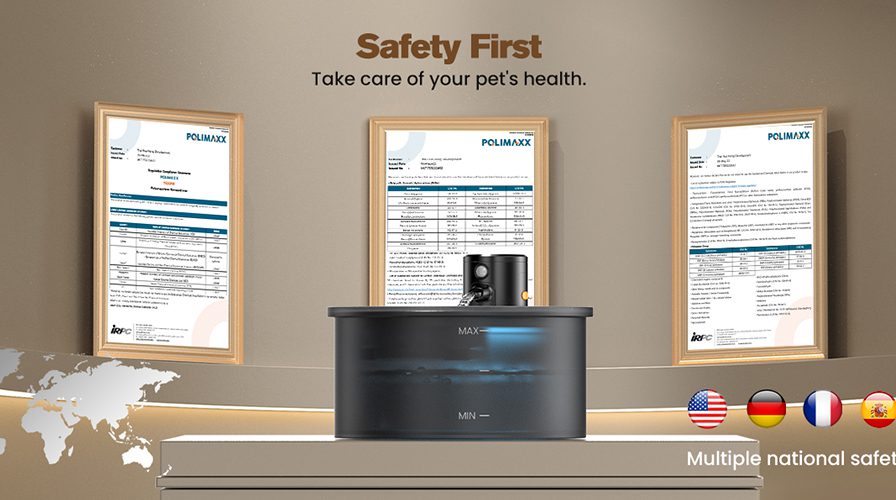
| Certification ownership | Check whose name appears on the product certifications (FCC, CE, RoHS). The certificates should be issued in the name of the actual manufacturer, not a trading company. | If the certification holder is a different company than the one you are negotiating with, you are likely dealing with a trading company that is reselling a factory’s certified product. |
Established manufacturers with transparent operations typically make verification easy. They publish factory photos, list production capabilities, provide certification documentation, and welcome factory visits. Review factory details, manufacturing capabilities, and certification information from manufacturers who operate transparently.
Advantages of Working with a Manufacturer
- Lower per-unit cost: Factory-direct pricing eliminates the intermediary margin. On a bulk order of 500 to 3,000 units, the savings can be 15 to 30 percent compared to a trading company.
- Deeper customization: Manufacturers can modify tooling, adjust product specifications, develop custom pump configurations, and iterate on prototypes directly. This is essential for brands pursuing OEM or ODM product development.
- Stronger quality control: Manufacturers execute QC at every production stage — incoming materials, in-process assembly, and finished goods. They can halt production to address a quality issue in real time. A trading company can only inspect after the fact.
- Faster problem resolution: When a defect is discovered, the manufacturer’s engineers can investigate the root cause on the production floor and implement corrective action immediately. With a trading company, the issue must be communicated to the factory through an intermediary, adding days or weeks to the resolution process.
- Supply chain stability: Manufacturers control their own production schedules, raw material procurement, and capacity allocation. They can commit to delivery dates with greater confidence. Trading companies are dependent on the factory’s schedule, which they do not control.
- Intellectual property protection: Your product design, tooling, and specifications stay within one organization. With a trading company, your IP is shared with both the trading company and the factory, increasing exposure.
- Long-term partnership potential: As your business grows, a manufacturer can scale with you — adding production capacity, developing new products, and improving quality based on your feedback. A trading company’s ability to scale depends entirely on the factory they source from.
Advantages of Working with a Supplier (Non-Manufacturer)
Despite the advantages of manufacturers, non-manufacturer suppliers offer legitimate value in certain situations:
- Lower MOQs: Trading companies and distributors often accept smaller orders because they aggregate demand from multiple buyers. If you are testing the market with a very small first order (50 to 200 units), a trading company may be more willing to accommodate you than a factory with a 500-unit minimum.
- Wider product range: A trading company that sources from multiple factories can offer a broader catalog than any single manufacturer. If you need cat water fountains, dog feeders, and pet grooming tools from one source, a trading company can provide all three — each from a specialized factory.
- Language and communication: Some trading companies invest heavily in English-speaking sales teams, professional marketing materials, and responsive communication. For buyers who do not have Mandarin-speaking staff, this communication advantage can reduce misunderstandings.
- Consolidation and logistics: If you are sourcing multiple product categories from different factories, a trading company or sourcing agent can consolidate everything into one shipment, simplifying your logistics and customs clearance.
- Market knowledge: Experienced trading companies have worked with many factories and many buyers. They can advise you on which factory is best suited for your specific product requirements, which certifications are needed for your target market, and what pricing is reasonable.
- Risk distribution: If a factory has production problems (equipment failure, labor shortage, raw material delay), a trading company that works with multiple factories can shift your order to an alternative source. A single manufacturer has no such fallback.
Risks of Each Model
| Risk | Manufacturer | Supplier (Non-Manufacturer) |
|---|---|---|
| Quality inconsistency | Lower risk. Quality is controlled directly on the production floor. Consistency is maintained through documented QC procedures. | Higher risk. The supplier may switch factories between orders without informing you. Quality depends on the factory’s systems, which the supplier does not control. |
| Pricing transparency | High. You see the factory price. You know exactly what you are paying for materials, labor, and margin. | Low. The supplier’s margin is hidden within the unit price. You do not know the actual factory cost or how much markup is being applied. |
| Communication breakdown | Lower risk. You communicate directly with the production team. Technical questions are answered by engineers. | Higher risk. Your questions are relayed through the supplier to the factory. Technical details may be lost or distorted in translation. |
| Dependency | Moderate. You are dependent on one factory’s capacity and capabilities. If the factory has problems, your supply is disrupted. | Moderate to high. You are dependent on the supplier’s relationship with the factory. If that relationship breaks down, you may lose access to the product entirely — and you may not even know which factory was producing it. |
| IP leakage | Lower risk. IP stays within one organization. NDA and IP agreements are with the entity that actually handles the design. | Higher risk. IP is shared with both the supplier and the factory. Enforcing NDA agreements is more complex when multiple parties are involved. |
| Hidden factory switches | Not applicable. The manufacturer is the factory. | Real risk. Some suppliers switch factories to chase lower costs without informing the buyer. The new factory may not meet the same quality standards. |
| Loss of tooling access | Low risk. Molds and tooling are owned by the manufacturer (or by you, if negotiated). You have visibility and access. | Higher risk. Tooling belongs to the factory, not the supplier. If you change suppliers, you may lose access to the molds you paid for. |
When to Choose a Manufacturer
Working directly with a manufacturer is the better choice in most business scenarios for cat water fountains:
- You are placing orders of 300+ units: Manufacturers’ MOQs are typically achievable at this volume, and the per-unit savings compared to a trading company are significant.
- You want custom branding or product modifications: Private label customization (logo, color, packaging) and ODM modifications (feature changes, design adjustments) require direct access to the production line. A manufacturer can execute these changes efficiently.
- You plan to scale: If you intend to grow your order volume over time, building a direct relationship with a manufacturer gives you the foundation for long-term scaling. A manufacturer can add capacity to match your growth.
- Quality is a priority: If your brand positioning depends on consistent, high-quality products, direct manufacturer control over quality is essential. This is especially true for stainless steel cat fountains, where material grade and pump quality directly affect customer satisfaction.
- You need recurring supply of components: Replacement filters and pumps are ongoing orders. A manufacturer that produces these components in-house can supply them consistently and at lower cost than a trading company sourcing them from a third party. Explore filter and pump production capabilities.
- You want to protect your intellectual property: Custom designs, proprietary features, and brand-specific tooling are best managed within a single manufacturing organization.
When to Choose a Non-Manufacturer Supplier
There are legitimate scenarios where a non-manufacturer supplier is the appropriate choice:
- Very small first orders (under 200 units): If you are testing the market with a minimal investment and cannot meet a manufacturer’s MOQ, a trading company or distributor that offers lower MOQs may be your only option for the first order.
- Sourcing multiple unrelated product categories: If you need cat water fountains, pet beds, grooming tools, and cat toys from a single source, a trading company that aggregates products from multiple specialized factories simplifies your procurement.
- You lack experience in China sourcing: A reputable sourcing agent can provide valuable guidance on factory evaluation, quality inspection, logistics, and customs clearance for first-time importers.
- You need existing stock immediately: If you need products within days rather than weeks, a distributor with existing inventory can ship immediately. This is useful for emergency restocking or testing a product before committing to a factory order.
The Hybrid Model: Best of Both Worlds
The most strategic approach for many businesses is to work with a vertically integrated manufacturer that produces core products in-house and can also support a broad product range. This model combines the quality control, pricing, and customization advantages of a manufacturer with the product breadth and convenience of a supplier.
A vertically integrated cat water fountain manufacturer that also produces pet feeders, air purifiers, replacement filters, and water pumps within the same facility offers:
- Factory-direct pricing on all product categories.
- Consistent quality standards across the entire product range.
- Simplified supply chain — one manufacturer, one purchase order, one quality standard, one shipping arrangement.
- Deep customization on every product category, since all production happens in-house.
- Component compatibility — filters and pumps designed specifically for the manufacturer’s own fountain models, ensuring perfect fit and optimal performance.
- Scalability — as your business grows across multiple product categories, one manufacturer can support all of them.
Review full product catalogs, explore factory capabilities, and assess manufacturer background to evaluate whether a vertically integrated manufacturer meets your sourcing needs.
Decision Framework: Choosing Your Partner
| Your Situation | Recommended Partner | Reason |
|---|---|---|
| First-time buyer, small test order (under 200 units) | Trading company or distributor | Lower MOQs. Less commitment. Good for market testing before investing in a manufacturer relationship. |
| Ready to scale, orders of 300+ units | Manufacturer | Factory-direct pricing, quality control, and customization become essential at this volume. |
| Private label brand (your logo, your packaging) | Manufacturer with private label services | Customization requires direct production access. Private label services from a manufacturer deliver better results at lower cost. |
| OEM / custom product development | Manufacturer with in-house engineering | Custom design, tooling, and prototyping require direct collaboration with production engineers. OEM and ODM capabilities are essential. |
| Multi-category product line | Vertically integrated manufacturer | One manufacturer producing fountains, feeders, filters, pumps, and air purifiers simplifies your supply chain and ensures quality consistency. |
| Amazon seller, single product category | Manufacturer with Amazon seller support | Factory-direct pricing maximizes margins. Certification support and FBA-compliant packaging are often available. Amazon seller solutions streamline the process. |
| Wholesale distributor, multiple product categories | Manufacturer or hybrid supplier | A manufacturer with a broad product range covers your needs. If the manufacturer does not produce a specific category, a hybrid model (manufacturer for core products, trading company for gaps) works. |
| Sourcing multiple unrelated pet product categories | Trading company or sourcing agent | A trading company can aggregate products from multiple specialized factories, simplifying procurement for diverse product needs. |
| No experience with China sourcing | Reputable sourcing agent (short-term) or established manufacturer (long-term) | A sourcing agent provides guidance for your first import. Transition to a direct manufacturer relationship as you gain experience and volume. |
Questions to Ask Any Potential Partner
Whether you are evaluating a manufacturer or a supplier, these questions help you understand who you are really dealing with:
| Question | What a Manufacturer Will Say | What a Trading Company Will Say |
|---|---|---|
| Do you have your own factory? | Yes. Here is our factory address, photos, and production video. | Yes (often untrue). May show photos of a partner factory. Deflects when asked for a live tour. |
| Can I visit your factory? | Yes, anytime. We welcome factory visits and third-party audits. | Hesitation. May offer to “arrange” a visit to a factory (which may not be theirs). May discourage visits citing distance or inconvenience. |
| What is your monthly production capacity for cat water fountains? | Specific number (e.g., 50,000 to 80,000 units per month) with details on production lines and shifts. | Vague answer. May inflate numbers by quoting the capacity of the factory they source from without disclosing the relationship. |
| Who owns the molds and tooling? | We own our production tooling. (Or: the client owns the tooling for custom OEM projects.) | Deflection or confusion. The molds belong to the factory, which the trading company may be reluctant to identify. |
| Can I speak with your production engineer about a technical issue? | Yes. I will connect you with our engineering team. | I will check with the factory and get back to you. (Translation: I need to relay your question to a third party.) |
| What is your defect rate for the last production batch? | Specific number with supporting QC report data. | I will check with the factory. (Cannot answer from direct knowledge.) |
| Whose name is on the product certifications? | Our company name (matches the entity you are negotiating with). | A different company name (the actual factory). This reveals that the seller is not the manufacturer. |
Red Flags: Warning Signs of a Dishonest Supplier
| Red Flag | What It Signals |
|---|---|
| Claims to be a manufacturer but cannot provide a factory address or live video tour | Likely a trading company misrepresenting themselves as a factory. |
| Product range is extremely broad and unrelated (cat fountains, dog food, bird cages, reptile tanks, aquarium filters) | A single factory rarely produces such diverse products. This indicates a trading company aggregating from multiple factories. |
| Pricing is significantly lower than all other quotes | May indicate a bait-and-switch: the sample quality will not match the production quality. Or the supplier plans to use a cheaper factory than the one that produced the sample. |
| Cannot answer basic technical questions about production | The salesperson does not have access to production knowledge because they are not part of a manufacturing organization. |
| Refuses to disclose the factory location or allow third-party inspection | The supplier does not control the factory and fears that direct contact between you and the factory will cut them out of the deal. |
| Certification holder name does not match the company you are negotiating with | You are dealing with a reseller, not the certified manufacturer. |
| Insists on 100% advance payment and refuses escrow or trade assurance | High financial risk. Legitimate manufacturers typically accept the 30/70 payment structure. |
| Sample quality is excellent but the first production batch has noticeable quality differences | The sample was produced by a different (better) factory than the one used for mass production. This is a common issue with trading companies that switch factories to maximize their margin. |
For Businesses: Building a Resilient Supply Chain
The supplier vs manufacturer decision is ultimately about building a supply chain you can depend on for the long term. Here are strategic recommendations by business type:
Amazon Sellers
Start with a manufacturer that offers Amazon seller support. Factory-direct pricing maximizes your margins on a platform where fees consume 15 to 30 percent of revenue. A manufacturer that understands FBA packaging requirements, holds relevant certifications, and can supply replacement filters as a separate ASIN gives you a complete Amazon-ready supply chain.
Wholesale Distributors
Build a primary relationship with a vertically integrated manufacturer for your core product categories (fountains, feeders, filters, pumps). This gives you the best pricing, quality consistency, and supply reliability. For product categories outside the manufacturer’s range, use a vetted trading company as a secondary source. Review wholesale partnership options for structured supply arrangements.
Private Label Brands
Work exclusively with a manufacturer for private label products. Custom branding, packaging, and product modifications require direct production access. A trading company adding a margin on top of factory costs makes private label economics less viable. Ensure your manufacturer agreement includes IP protection clauses and tooling ownership terms. Explore private label services from established manufacturers.
Startups and First-Time Importers
If you are new to sourcing from China, consider a phased approach: use a reputable sourcing agent or trading company for your first small order to learn the process with lower risk. As you gain experience and volume, transition to a direct manufacturer relationship for better pricing, quality control, and long-term partnership. Contact manufacturers early to begin the relationship-building process, even if your first order is small.
Frequently Asked Questions (FAQ)
Is a trading company always worse than a manufacturer?
No. Trading companies serve legitimate purposes, especially for small first orders, multi-category sourcing, and buyers who lack experience with China-based manufacturing. The issue arises when a trading company misrepresents itself as a manufacturer, charging factory prices for intermediary services, or when the buyer expects manufacturer-level quality control and customization from a company that cannot deliver it. The key is to know who you are dealing with and set your expectations accordingly.
How much more expensive is a trading company compared to a manufacturer?
Trading company pricing is typically 10 to 30 percent higher than direct manufacturer pricing for the same product. This margin covers the trading company’s operating costs, profit, and the services they provide (communication, quality inspection, logistics coordination). On a bulk order of 500 cat water fountains at $10 factory price, a trading company might charge $12 to $13 per unit — a difference of $1,000 to $1,500 on the total order.
Can a trading company provide the same quality as a manufacturer?
It depends on the factory they source from and the quality control they exercise. A trading company that sources from a high-quality factory and conducts independent inspections can deliver excellent products. However, the buyer has less visibility into and control over the quality process compared to working directly with the manufacturer. The risk is that the trading company may switch to a cheaper factory without informing you, causing quality to drop between orders.
How do I verify a company’s manufacturing claims?
Use the verification methods outlined in this guide: factory visit or live video tour, technical questions, business license review, product range analysis, certification holder verification, and MOQ/pricing pattern analysis. The most reliable method is an in-person factory visit. The second most reliable is a live video tour where you can ask the person to walk to specific areas of the factory in real time. Review factory details and manufacturing capabilities as examples of transparent manufacturer disclosure.
What if I have been working with a trading company and want to switch to the actual manufacturer?
This is possible but requires careful handling. First, identify the actual factory (through the methods described in this guide). Second, check whether you have any contractual obligations with the trading company (exclusivity clauses, non-compete agreements). Third, be aware that the factory may have an existing agreement with the trading company that prevents them from selling directly to you. Approach the factory professionally and explain your interest in a direct relationship. Many factories welcome direct buyers, especially for larger order volumes.
Should I work with a manufacturer or a supplier for replacement filters and pumps?
Work with the same manufacturer that produces your fountains, if possible. A vertically integrated manufacturer that produces filters and pumps in-house can ensure component compatibility, consistent quality, and lower pricing. If your fountain manufacturer does not produce filters and pumps, source these components from a specialized manufacturer rather than a trading company — the quality and fit of consumable components directly affects your customer satisfaction and recurring revenue.
Can I use both a manufacturer and a trading company for different products?
Yes. Many businesses use a hybrid sourcing strategy: direct manufacturer relationships for their core, high-volume products (cat water fountains, replacement filters) and trading companies for supplementary or low-volume products (pet toys, grooming accessories) where the trading company’s broader product range and lower MOQs are advantageous. The key is to match the sourcing model to the product’s importance and volume.
What certifications should I verify regardless of whether I work with a manufacturer or supplier?
The same certifications apply regardless of who you buy from: FCC, CE, RoHS, UKCA, ISO9001, and food-contact compliance. The difference is in verification. When working with a manufacturer, the certificates should be in the manufacturer’s name. When working with a trading company, the certificates may be in the factory’s name — ask the trading company to disclose which factory holds the certifications and verify independently. Review certification documentation for reference.
Where can I find a reliable cat water fountain manufacturer?
Research manufacturers with dedicated pet product experience, vertically integrated production, valid certifications, and transparent business practices. Review manufacturer background, explore product catalogs, assess factory capabilities, and contact manufacturers directly to begin the evaluation process. You can also explore available solutions for different business models including Amazon seller, wholesale, and private label programs.
Conclusion
The difference between a cat water fountain supplier and a manufacturer is not just semantic — it affects your pricing, quality, customization options, lead times, and long-term business trajectory. Here is a summary of the key takeaways:
- A manufacturer produces the product in their own factory. They offer factory-direct pricing, direct quality control, deep customization, and faster problem resolution.
- A supplier provides the product but may not produce it. Trading companies, sourcing agents, and distributors add value through communication, logistics, and product aggregation, but at a higher price and with less control over quality.
- Verify who you are dealing with. Use factory visits, video tours, technical questions, business license checks, and certification verification to confirm whether a company is a real manufacturer or a reseller.
- Choose a manufacturer for most business scenarios. If you are placing orders of 300+ units, pursuing private label or OEM development, or building a long-term brand, a direct manufacturer relationship is the stronger foundation.
- Non-manufacturer suppliers have legitimate roles. Small test orders, multi-category sourcing, and first-time import guidance are valid reasons to work with a trading company or sourcing agent — as long as you know what you are getting.
- Vertically integrated manufacturers offer the best of both worlds. A manufacturer that produces fountains, feeders, filters, pumps, and air purifiers under one roof combines production depth with product breadth.
Understanding the supply chain is the first step to controlling it. Whether you are a first-time buyer or an experienced distributor, knowing the difference between a supplier and a manufacturer empowers you to make sourcing decisions that protect your margins, your quality, and your brand. Explore cat water fountain products, review manufacturing capabilities, or contact a manufacturer to build a supply chain you can depend on.
