
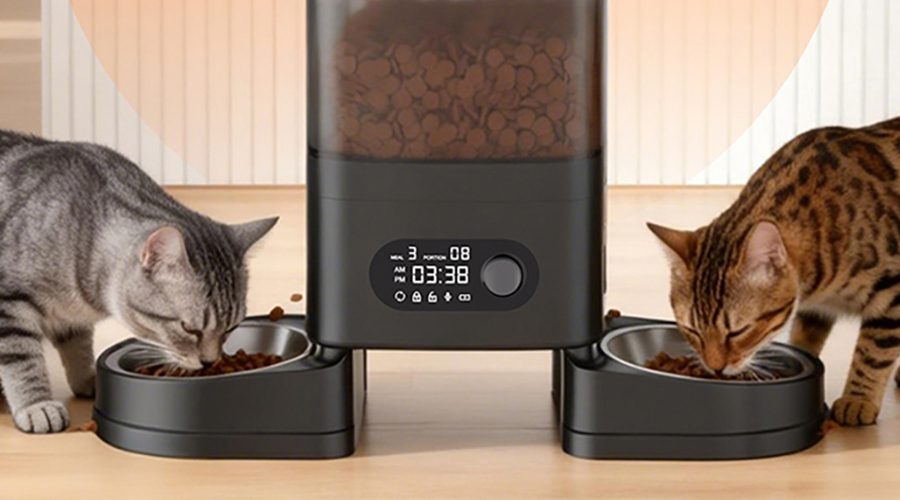
The smart pet product market is growing at 18-22% CAGR globally, and cat products are at the center of that growth. But “smart” means different things to different consumers, and not every feature adds equal value. If you’re developing or sourcing smart cat products, understanding what buyers actually want — versus what sounds impressive on a spec sheet — is critical.
The features that matter most
Based on consumer reviews, sales data, and market research, here’s what cat owners are actually looking for in smart products:
WiFi app control
This is the baseline expectation for any product marketed as “smart.” Cat owners want to control feeding schedules, water flow modes, and operational settings from their phone — whether they’re at work, on vacation, or just in another room.
The most common app ecosystems in the pet product space are Tuya and custom proprietary apps. Tuya offers a proven, reliable platform with broad device compatibility, while proprietary apps offer more brand customization but require more development investment.
HS Smart Pet’s smart feeders use Tuya App integration for WiFi control — a proven platform that reduces development time while delivering a reliable user experience.
Sensor-activated operation
Sensor modes are one of the most requested features in both cat water fountains and feeders. The appeal is clear: the device activates only when the cat approaches, which:
- Saves energy — The pump or motor runs only when needed
- Extends product lifespan — Less continuous operation means less wear
- Reduces noise — Silent when idle, active only when the cat is present
- Improves hygiene — Water isn’t sitting stagnant when the cat isn’t drinking
For fountains, sensor detection range and activation time are key specs. Buyers want reliable detection from 1-2 meters and a fountain that runs for 2-3 minutes after the cat leaves.
Ultra-quiet operation
Noise is consistently the #1 complaint about pet products — and the #1 factor in purchase satisfaction. Cat owners, especially those in apartments, need products that don’t disrupt their living space.
The benchmark for quiet operation is below 35dB — roughly the volume of a quiet library. Achieving this requires purpose-built pumps, not generic motors. Manufacturers who produce their own pumps in-house have a significant advantage in controlling noise levels.
Multi-mode flexibility
Single-mode products feel outdated. Consumers want the flexibility to switch between:
- Timer mode — Scheduled operation at set intervals
- Sensor mode — Activated by pet proximity
- Continuous mode — Always on for cats that prefer constant water flow
This flexibility lets consumers customize the product to their cat’s behavior and their own energy preferences. It also extends the product’s appeal across different use cases and cat personalities.
Rechargeable battery options
Cordless operation is increasingly expected, especially for water fountains. Cat owners want the freedom to place fountains wherever their cat prefers — not just where there’s a nearby outlet.
Battery capacities in the 4000mAh range provide several days of operation in sensor mode, making rechargeable fountains practical for everyday use and travel situations.
Material quality
“Smart” doesn’t mean ignoring the basics. Consumers expect smart products to also be well-made products. This means:
- 304 stainless steel for water-contact components (not just “stainless steel” without grade specification)
- Food-grade plastics that are BPA-free
- Durable construction that survives daily use and regular cleaning
The combination of smart features and premium materials is what justifies higher price points and builds brand loyalty.
What doesn’t matter as much as manufacturers think
Interestingly, some features that manufacturers invest heavily in have minimal impact on purchase decisions:
- Voice control integration (Alexa/Google Home) — Nice to have, but not a purchase driver
- Color customization — Important for brand differentiation, but not a consumer priority
- Multiple app accounts — Rarely mentioned in reviews or purchase decisions
Focus development resources on the features that directly impact daily use: reliability, quiet operation, app stability, and material quality.
How to source smart cat products
If you’re a brand looking to enter the smart cat product category, here’s what to prioritize in a manufacturing partner:
In-house electronics development. Smart features require reliable WiFi modules, stable firmware, and intuitive app interfaces. Manufacturers who develop these capabilities under one roof deliver better integration and faster updates.
Volume production experience. Smart products have more failure points than mechanical ones. Choose a manufacturer with proven volume production and comprehensive testing protocols.
Certification readiness. Smart products with WiFi modules need FCC certification for the US market and CE marking for Europe. Ensure your manufacturer has these certifications in place.
Flexible customization. The ability to customize firmware, app branding, and feature sets — without starting from scratch — is what separates ODM from OEM and determines your time-to-market.
The bottom line
Smart cat products are growing because they solve real problems — diet management, energy efficiency, hygiene, and convenience. But the features that matter most are the ones that improve daily use: quiet pumps, reliable sensors, stable app control, and quality materials.
For brands, the opportunity is to partner with a manufacturer that excels at both smart technology and traditional product quality. HS Smart Pet combines in-house pump manufacturing, electronics development, and vertically integrated production to deliver smart cat products that meet global standards.
