
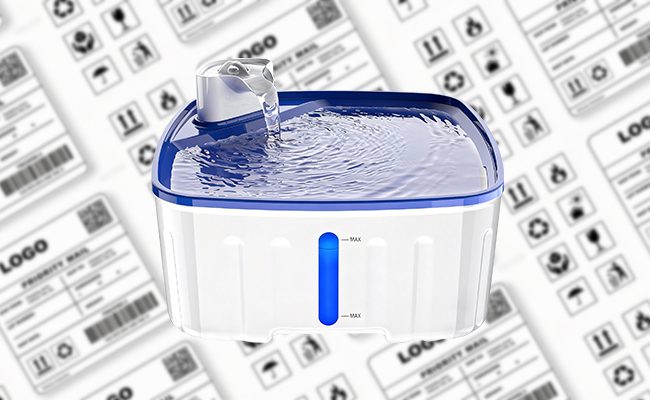
Private label is one of the fastest and most cost-effective ways to launch a branded cat water fountain. Instead of designing a product from scratch, you work with a manufacturer to add your branding to an existing design — getting your own branded fountain to market with lower risk, lower cost, and faster timeline.
Here’s a practical step-by-step guide to developing a private label cat water fountain.
Step 1: Define your brand and market
Before approaching any manufacturer, clarify your positioning:
Target market. Who are you selling to? Health-conscious cat owners? Tech-savvy smart home users? Budget-conscious pet parents? Your target market determines your product features, price point, and marketing approach.
Price point. What retail price are you targeting? This determines which fountain designs are suitable — basic models for budget positioning, feature-rich models for premium positioning.
Differentiation strategy. How will you stand out? Options include: premium materials (stainless steel), smart features (sensor mode, app control), design aesthetics, or consumable bundles (filters included).
Sales channels. Where will you sell? Amazon, your own website, retail stores, or a combination? This affects packaging requirements, MOQ considerations, and pricing strategy.
Step 2: Research manufacturers
Find manufacturers who offer private label solutions for cat water fountains:
Online research. Search for “cat water fountain manufacturer private label” and evaluate company websites for capability, product range, and private label experience.
Trade platforms. Alibaba, Global Sources, and similar platforms list manufacturers with private label capabilities.
Trade shows. Canton Fair, Global Pet Expo, and other trade shows let you meet manufacturers in person.
Industry referrals. Ask other pet product brands about their manufacturing experiences.
Step 3: Evaluate and shortlist
Evaluate potential manufacturers on these criteria:
Product quality. Request samples of existing products. Evaluate build quality, materials, and finish.
Private label capability. Can they add your logo? Customize colors? Create custom packaging?
MOQ requirements. What’s the minimum order quantity? For private label, 200-500 units is typical.
Certifications. Do they have CE, FCC, RoHS, and ISO 9001 certifications? These are essential for international market access.
Communication. Are they responsive, clear, and professional in communications?
Factory access. Can they provide a virtual factory tour or welcome an in-person visit?
Step 4: Select your base product
Choose from the manufacturer’s existing fountain designs:
Basic model. Continuous flow, simple design, lowest cost. Good for budget positioning.
Mid-range model. Multi-mode operation (timer, sensor, continuous), quality filtration. The sweet spot for most brands.
Premium model. Stainless steel, smart features, rechargeable battery, app control. For premium positioning.
Evaluate samples of each option and choose the design that best fits your target market and price point.
Step 5: Customize your branding
Work with the manufacturer on customization:
Logo placement. Where will your logo appear on the product? Common locations include the pump housing, water tank, and control panel.
Color selection. Choose product colors that align with your brand. Most manufacturers offer 3-5 standard colors, with custom colors available for larger orders.
Packaging design. This is where most brand differentiation happens. Design custom packaging that tells your brand story, highlights key features, and looks professional on shelf or in product photos.
Documentation. Custom instruction manuals, warranty cards, and quick-start guides with your branding.
Step 6: Sample approval
Before production, approve final samples:
Branded samples. Samples with your logo, colors, and packaging applied.
Functional verification. Test the fountain for water flow, pump operation, sensor response, and noise level.
Packaging verification. Confirm that packaging is attractive, protective, and complete.
Documentation review. Check instruction manuals and warranty information for accuracy.
Step 7: Initial production
Place your first order:
MOQ confirmation. Confirm the minimum order quantity and per-unit pricing.
Timeline confirmation. Confirm production and shipping timelines.
Payment terms. Typically 30% deposit, 70% before shipment (negotiable for repeat orders).
Quality agreement. Confirm quality standards, inspection procedures, and defect handling.
Step 8: Quality verification
Before products ship:
Sample from production run. Request samples from the actual production batch, not just pre-production samples.
AQL inspection. Consider hiring a third-party inspection company for independent quality verification.
Packaging verification. Confirm that packaged products are complete and presentable.
Step 9: Launch and iterate
With products in hand:
Product photography. Professional product photos for your sales channels.
Listing optimization. Create compelling product listings with keyword-rich titles, detailed descriptions, and lifestyle images.
Customer feedback. Monitor early customer reviews and feedback for product improvement opportunities.
Reorder planning. Plan your next production run based on sales velocity and inventory levels.
The private label advantage
Private label offers several compelling advantages:
Lower risk. You’re using a proven design, reducing the risk of product failure.
Faster launch. 3-5 weeks versus 8-12 weeks for OEM.
Lower investment. No tooling costs, lower MOQs.
Brand ownership. You own the brand and customer relationship.
Consumable revenue. Every fountain creates filter replacement customers.
The bottom line
Private label is the fastest, lowest-risk way to launch a branded cat water fountain. By working with an experienced manufacturer, you can have your own branded fountain on the market in weeks — with lower investment and lower risk than OEM development.
Contact HS Smart Pet to discuss private label solutions for your cat water fountain brand.
