
Choosing a cat water fountain isn’t as simple as picking the prettiest one on the shelf. The “best” fountain depends on your cat’s behavior, your home environment, and your maintenance preferences. Here’s a practical framework for making the right choice.
Start with your cat’s needs
Single cat or multiple cats? A single cat can use a 2-3L fountain comfortably. Multiple cats need 5L+ capacity to avoid running out between refills.
Kitten or adult cat? Kittens may be startled by strong water flow. Look for fountains with adjustable flow or gentle cascade modes.
Picky drinker? Some cats prefer running water, others prefer still water with gentle movement. Sensor-mode fountains let you test different flow patterns.
Health concerns? Cats with urinary or kidney issues benefit most from flowing water. Prioritize fountains with effective filtration.
Material matters
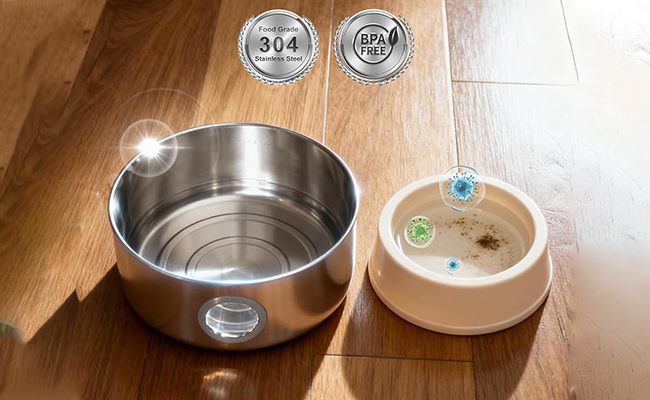
Stainless steel is the premium choice. It’s hygienic (no bacterial hiding spots), durable, easy to clean, and looks great. 304 stainless steel is the food-grade standard.
Plastic is lighter and less expensive, but can develop micro-scratches that harbor bacteria. If you choose plastic, ensure it’s food-grade and BPA-free.
Ceramic is heavy and fragile, but some owners prefer its aesthetic. Not common in modern fountain designs.
Size and capacity
2L-3L — Suitable for single-cat households with daily refilling.
3L-5L — Good for single cats or two cats, with refilling every 2-3 days.
5L-8L — Best for multi-cat households or owners who want less frequent refilling.
Consider your refilling habits honestly. A larger fountain that you forget to fill isn’t better than a smaller one you maintain properly.
Features to prioritize
Quiet operation. Noise is the #1 factor in fountain satisfaction. Look for pumps rated below 35dB. In-house pump manufacturing typically produces quieter, more reliable pumps than outsourced alternatives.
Multi-mode operation. Timer, sensor, and continuous modes give you flexibility to match your cat’s preferences and your energy preferences.
Easy cleaning. Fountains that disassemble quickly and have dishwasher-safe components (at least the water tank) make maintenance much easier.
Quality filtration. Multi-layer filtration with activated carbon and ion exchange removes chlorine, debris, and odors. Cheap filters provide minimal benefit.
Sensor activation. Sensor-mode fountains activate only when your cat approaches, saving energy and extending pump life.
Price ranges
$15-$25 — Basic plastic fountains with continuous flow. Functional but limited features.
$25-$40 — Mid-range fountains with multi-mode operation, quality filtration, and better materials. The sweet spot for most cat owners.
$40-$80 — Premium fountains with stainless steel, sensor modes, rechargeable batteries, and smart features.
$80+ — High-end smart fountains with app control, camera integration, and advanced features.
Red flags to avoid
Loud pumps. If a fountain description doesn’t mention noise level, that’s a warning sign.
Single-layer filtration. Basic mesh-only filters provide minimal water purification.
Hard-to-clean designs. Complex shapes with hard-to-reach crevices make maintenance frustrating.
No certifications. Products without safety certifications may use substandard materials.
Vague specifications. Quality products have clear specifications for capacity, noise level, power consumption, and materials.
The bottom line
The best cat water fountain is one that matches your cat’s needs, fits your lifestyle, and is built to last. Prioritize quiet operation, quality filtration, easy cleaning, and appropriate capacity. Explore HS Smart Pet’s cat water fountain range to find options across all these criteria.
