
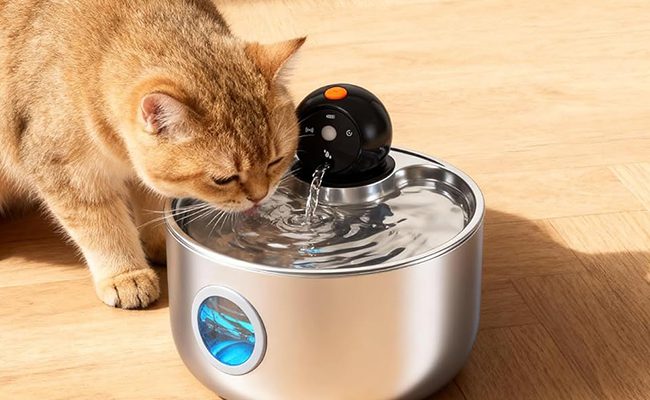
The debate between cat water fountains and traditional water bowls has a clear answer when you look at the evidence. But understanding *why* fountains are better — and when a bowl might still be appropriate — helps you make the best decision for your cat.
The health case for fountains
Cats have a naturally low thirst drive. As descendants of desert-dwelling wildcats, they evolved to get most of their moisture from prey (which is about 70% water). A traditional water bowl doesn’t trigger the same drinking behavior as flowing water.
Veterinary research consistently shows:
- Cats drink more from fountains than from bowls. Multiple studies confirm that flowing water increases water intake.
- Increased water intake reduces urinary disease risk. Diluted urine from proper hydration reduces crystal and stone formation.
- Chronic dehydration is linked to kidney disease. Adequate hydration supports kidney function throughout a cat’s life.
For cats on dry food diets (which contain only about 10% moisture), fountains are particularly important because they need significant additional water intake.
The hygiene case for fountains
Stagnant bowl water accumulates problems throughout the day:
- Bacteria growth — Standing water in open bowls becomes a breeding ground for bacteria
- Hair and debris — Cat hair, dust, and food particles fall into open water
- Staleness — Water that sits for hours loses oxygen and develops flat taste
- Chemical buildup — Chlorine and minerals concentrate as water sits
Fountains address all these issues through continuous circulation and filtration. Multi-layer filtration removes debris, chlorine, and odors while circulating water stays oxygenated and fresh.
The convenience comparison
Bowls are simple. No electricity, no filters, no noise. Just fill and go. For very short-term use or as a backup, bowls are perfectly adequate.
Fountains require electricity (or battery), filter replacement, and regular cleaning. But they also offer:
- Larger water capacity (2L-8L versus typical 300-500ml bowl)
- Less frequent refilling (every 2-5 days versus daily)
- Water level indicators (many fountains include LED indicators)
- Multi-mode operation (timer, sensor, continuous)
The maintenance of a fountain is minimal — a quick weekly rinse and monthly filter replacement. The health benefits far outweigh this modest effort.
When a bowl is acceptable
- As a backup — If your fountain is being cleaned, a bowl provides temporary water access
- For travel — Portable bowls are more practical for travel situations
- For cats that refuse fountains — Some cats are resistant to fountain water flow (though most adapt quickly)
The cost comparison
- Bowls: $2-$10, no ongoing costs
- Fountains: $15-$50, plus $5-$15 for replacement filters every 2-4 weeks
The annual cost of a fountain with filters is approximately $50-$100. Compare this to the potential veterinary costs of dehydration-related conditions ($500-$2,000+), and the fountain is clearly the better investment.
The bottom line
Cat water fountains are better than bowls in virtually every dimension that matters — health, hygiene, and convenience. The modest maintenance requirements are easily justified by the significant health benefits.
If you currently use only bowls, consider adding a cat water fountain as your cat’s primary water source, keeping a bowl as a backup.
