
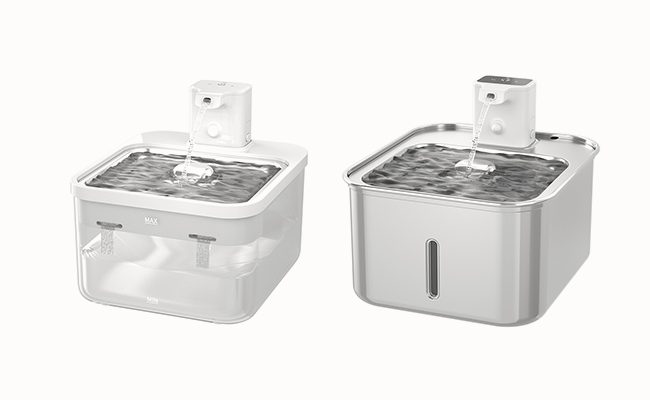
The material of your cat’s water fountain affects hygiene, durability, safety, and aesthetics. Here’s an honest comparison of the materials used in cat water fountains.
Stainless steel (304 grade)
The premium choice.
Stainless steel is the best material for cat water fountains in most situations. Specifically, 304-grade stainless steel (the food-grade standard) offers:
Hygiene: Non-porous surface doesn’t harbor bacteria. Easy to sanitize. Doesn’t develop micro-scratches that trap bacteria.
Durability: Resists chips, cracks, and discoloration. Maintains appearance for years. 304 stainless steel is the standard for food-contact applications.
Safety: Chemically inert. No BPA, phthalates, or other chemicals. Meets food-contact safety standards globally.
Aesthetics: Clean, modern appearance that complements contemporary home decor.
Weight: Heavier than plastic, which adds stability but reduces portability.
Price: Premium pricing ($25-$50+), but better long-term value due to durability.
Food-grade plastic (PP, ABS, AS)
The budget-friendly choice.
Plastic fountains are more affordable and lighter, but come with trade-offs:
Hygiene: Develops micro-scratches over time that harbor bacteria. More difficult to keep truly clean. Associated with feline acne in some cats.
Durability: Can chip, crack, and discolor. Average lifespan of 12-18 months before quality degrades.
Safety: Must be food-grade and BPA-free. Quality varies significantly between manufacturers. Cheap plastic may contain harmful chemicals.
Aesthetics: Functional but often looks utilitarian compared to stainless steel.
Weight: Lighter and easier to handle.
Price: Budget-friendly ($10-$25).
Ceramic
The aesthetic choice.
Ceramic fountains exist but are less common in modern designs:
Hygiene: Non-porous when glazed, easy to clean. But prone to chipping, and chips can harbor bacteria.
Durability: Heavy and fragile. Chips easily if dropped.
Safety: Generally safe when properly glazed. Ensure the glaze is lead-free.
Aesthetics: Available in various colors and styles. Can look very attractive.
Weight: Very heavy — the heaviest fountain option.
Price: Mid-range ($20-$40).
Glass
The rare choice.
Glass fountains are uncommon and typically found in premium, design-forward products:
Hygiene: Non-porous, easy to clean, doesn’t harbor bacteria.
Durability: Fragile. Risk of breakage makes it impractical for most households.
Safety: Chemically inert and safe. But breakage creates safety hazards.
Aesthetics: Very attractive, modern appearance.
Weight: Heavy and fragile.
Price: Premium pricing with limited availability.
The verdict
For most cat owners: stainless steel (304 grade) is the best choice. It offers the best combination of hygiene, durability, safety, and aesthetics. The higher upfront cost is offset by longer lifespan and better health outcomes.
For budget-conscious buyers: quality food-grade plastic is acceptable if you clean it frequently and plan to replace it regularly.
For design-focused buyers: ceramic offers attractive aesthetics, but durability concerns make it less practical for daily use.
The bottom line
Material choice directly affects your cat’s health and your fountain’s lifespan. 304 stainless steel is the gold standard for cat water fountains, offering the best hygiene, durability, and safety profile.
Explore HS Smart Pet’s stainless steel and plastic fountain options.
