
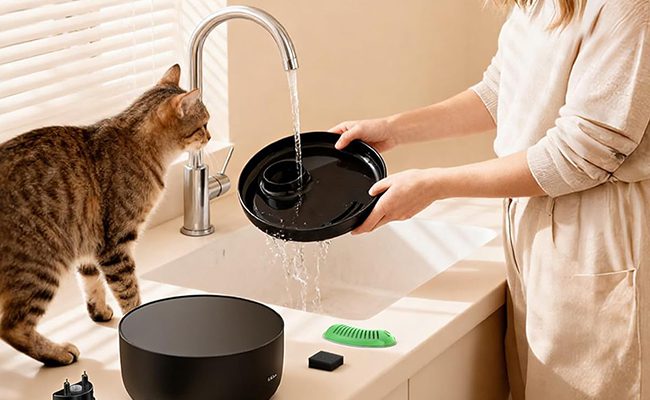
As a professional manufacturer of smart pet water fountains, we understand how essential proper cleaning is for product performance and your pet’s health. A well-maintained fountain ensures clean water, stable pump operation, and long product lifespan. This guide provides factory-level instructions on how to clean your pet water fountain correctly, how often to clean it, and what components require special attention.
If you need replacement filters or pumps, you can find them here: Water Fountain Filters | Water Pumps.
1. Why Regular Cleaning Matters
Pet water fountains continuously circulate water, which means dust, hair, saliva, and micro-debris can accumulate over time. Without proper cleaning, the following issues may occur:
- Reduced water flow
- Increased pump noise
- Bacterial buildup
- Shortened pump lifespan
- Unpleasant odors
A clean fountain ensures your pet drinks more water, stays hydrated, and avoids urinary or kidney-related health issues.
2. How Often Should You Clean Your Pet Water Fountain?
| Pet Type | Recommended Cleaning Frequency | Filter Replacement Frequency |
|---|---|---|
| Cats | Every 5–7 days | Every 2–4 weeks |
| Small Dogs | Every 5–7 days | Every 2–4 weeks |
| Large Dogs | Every 3–5 days | Every 2–3 weeks |
| Multi-Pet Homes | Every 3–5 days | Every 2–3 weeks |
For filter replacements, visit: Filter Replacement Options.
3. Step-by-Step Cleaning Instructions
Step 1: Unplug or Power Off the Fountain
If your fountain is cordless or battery-powered, turn it off before cleaning. For wired models, unplug the USB cable to ensure safety.
Step 2: Disassemble All Components
Remove the following parts:
- Top cover
- Water tray
- Filter housing
- Filter
- Pump
- Water tank
If you need a reference model, explore our fountain designs: Pet Water Fountains.
Step 3: Clean the Pump Thoroughly
The pump is the most important part of the fountain. Factory testing shows that pump noise and reduced flow are usually caused by debris inside the impeller.
Cleaning method:
- Remove the pump cover
- Take out the impeller
- Rinse with warm water
- Use a cotton swab to clean the inner chamber
If your pump is worn out, you can find replacements here: Quiet Pump Replacements.
Step 4: Wash All Plastic Components
Use mild dish soap and warm water. Avoid harsh chemicals, bleach, or boiling water, as these may damage the plastic or filtration system.
Step 5: Clean the Filter Housing
Do not wash the filter itself. Instead, rinse the filter housing and replace the filter if it appears dirty or clogged.
Step 6: Reassemble the Fountain
Ensure all parts are completely dry before reassembly. Fill the tank with fresh water and restart the fountain.
4. Common Cleaning Mistakes to Avoid
- Using boiling water on plastic components
- Washing the filter directly
- Ignoring pump cleaning
- Using vinegar without proper dilution
- Letting water run too low (damages the pump)
5. Frequently Asked Questions (FAQ)
Q1: Can I use vinegar to clean the fountain?
Yes, but only diluted vinegar (1:4 ratio). Rinse thoroughly afterward to avoid odor.
Q2: Why is my pump getting louder?
Pump noise usually indicates debris buildup or low water levels. Clean the pump and ensure the tank is filled.
Q3: How often should I replace the filter?
Every 2–4 weeks depending on usage. Replacement filters are available here: Filter Products.
Q4: Can I put the fountain parts in the dishwasher?
Some parts may be dishwasher-safe, but always check your product manual. Electronic components and pumps should never be placed in a dishwasher.
6. Final Advice from the Factory
Regular cleaning is the key to maintaining water freshness, pump performance, and product longevity. A clean fountain encourages pets to drink more water, supporting better hydration and overall health.
If you need new fountains, filters, or pumps, explore our full product catalog: Pet Product Catalog.
For business inquiries or OEM/ODM cooperation: Contact Us.
