
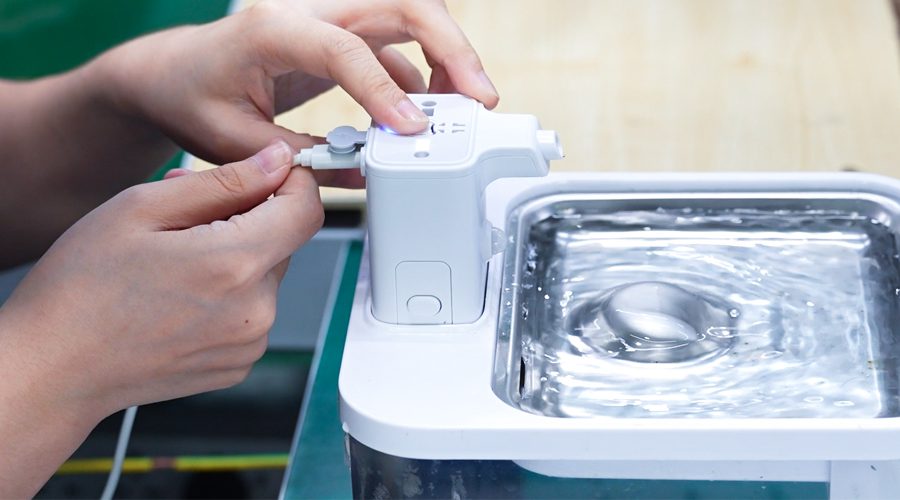
Sensor-activated cat water fountains represent a significant step up from basic continuous-flow models. They activate only when your cat approaches, saving energy, reducing noise, and extending pump life — all while providing fresh water on demand.
How the sensor works
Motion detection
The fountain uses an infrared motion sensor (PIR — Passive Infrared) to detect your cat’s presence. Here’s the process:
1. The sensor monitors for infrared heat signatures in its detection zone
2. When a cat approaches (typically within 1-2 meters), the sensor detects the heat signature
3. The sensor triggers the pump to start circulating water
4. The cat drinks from the flowing water
5. When the cat leaves (typically 2-3 minutes after last detection), the pump stops
6. The cycle repeats the next time a cat approaches
Detection range and angle
Quality sensors have:
- Detection range of 1-2 meters (sufficient for most room layouts)
- Detection angle of 90-120 degrees (wide enough to detect cats approaching from different directions)
- Sensitivity settings — Some fountains allow adjustment to prevent false triggers from passing humans or other movement
The benefits of sensor mode
Energy savings
The pump runs only when your cat is actually drinking. In a typical household, this means the pump runs 30-60 minutes per day instead of 24 hours — reducing energy consumption by 95%+.
Extended pump life
Less running time means less wear on the pump motor, impeller, and bearings. A fountain used primarily in sensor mode can last significantly longer than one running continuously.
Reduced noise
The fountain is completely silent when idle — no pump hum, no water flow noise. The only sound is gentle water flow when your cat is drinking. This is particularly important for:
- Apartment dwellers who need quiet during sleep hours
- Noise-sensitive cats who might be deterred by constant pump sound
- Multi-room homes where the fountain shouldn’t be audible from other rooms
Water freshness
Water circulates when needed and settles when not — a balance that keeps water oxygenated without the continuous exposure to air that can accelerate evaporation and mineral concentration.
Sensor technology in cat products
Modern sensor-activated fountains use several sensor types:
PIR (Passive Infrared) — The most common. Detects infrared heat signatures from living beings. Reliable, low-power, and cost-effective.
Ultrasonic — Uses sound waves to detect movement. Can detect through some barriers but may have false trigger issues.
Capacitive — Detects changes in electrical capacitance caused by nearby objects. Less common in consumer cat products.
HS Smart Pet’s sensor fountains use PIR sensors with optimized detection range and sensitivity for reliable cat detection.
Modes and flexibility
The best sensor fountains offer multiple modes in a single unit:
- Sensor mode — Activates on cat proximity (energy-saving, quiet)
- Timer mode — Runs on a set schedule (predictable operation)
- Continuous mode — Always on (for cats that prefer constant flow)
This flexibility lets you choose the mode that best matches your cat’s behavior and your preferences. You can even switch modes based on time of day — continuous during the day, sensor mode at night.
The bottom line
Sensor-activated cat water fountains are a meaningful upgrade over basic models — saving energy, extending pump life, reducing noise, and providing water on demand. The technology is proven, reliable, and increasingly expected in quality fountain designs.
