
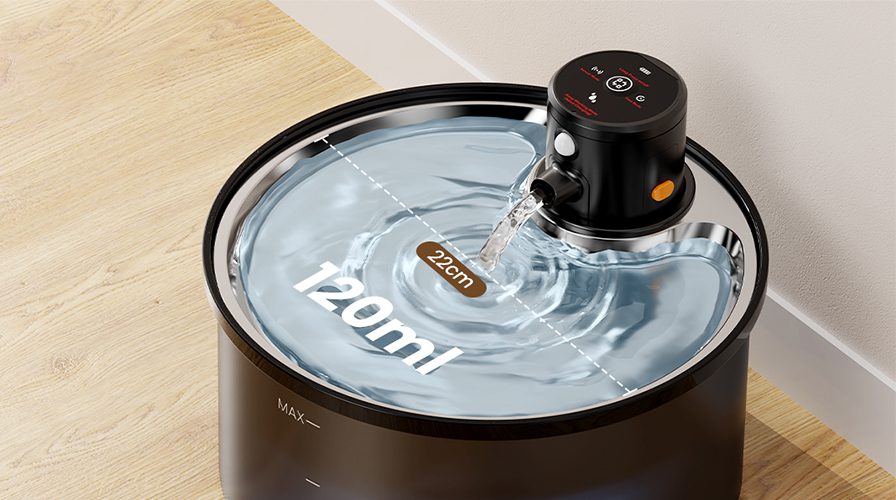
The water pump is the component most likely to determine your fountain’s overall lifespan. Understanding what affects pump life — and how to extend it — saves you money and keeps your cat’s water flowing.
Typical pump lifespan
Quality pump: 2-5 years of continuous operation (15,000-40,000+ hours)
Budget pump: 6-18 months of continuous operation
The difference is dramatic, and it comes down to manufacturing quality, materials, and maintenance.
What affects pump life
Manufacturing quality
The biggest factor in pump lifespan is how the pump was made:
Impeller balance. An unbalanced impeller creates vibration that wears bearings and reduces lifespan. Precision-balanced impellers from quality manufacturers last significantly longer.
Motor winding quality. Properly wound motors run cooler and more efficiently, extending electrical component life.
Magnetic coupling precision. Misaligned coupling creates friction and heat, accelerating wear.
Waterproof sealing. Quality seals prevent water ingress that causes electrical failure.
Water quality
Hard water causes mineral buildup on the impeller and inside the pump chamber, reducing efficiency and eventually causing failure.
Chlorine in tap water can degrade rubber seals over time.
Debris entering the pump can jam the impeller or cause scoring.
Maintenance
Regular cleaning of the pump — especially the impeller chamber — prevents debris buildup that causes premature wear.
Filter replacement reduces the debris load reaching the pump.
Descaling (periodic vinegar soak) removes mineral buildup.
Operating conditions
24/7 operation (continuous mode) runs the pump constantly, wearing components faster than timer or sensor modes.
Sensor mode extends pump life significantly by running only when needed.
Signs your pump needs replacement
- Increased noise — Grinding, rattling, or humming louder than when new
- Reduced flow — Water flow noticeably weaker despite clean filter
- Intermittent operation — Pump stops and starts unpredictably
- Visible wear — Discoloration, mineral deposits, or physical damage
- Leaking — Water entering the motor chamber (rare in quality pumps)
How to extend pump life
Clean the pump weekly. Remove debris from the impeller chamber.
Use filtered water. Reduces mineral buildup and chlorine exposure.
Replace filters on schedule. A clean filter puts less load on the pump.
Use timer or sensor mode. Reduces continuous operation hours.
Descale monthly. Soak the pump in a vinegar-water solution for 30 minutes to dissolve mineral deposits.
Don’t let the pump run dry. Running without water damages the motor. Ensure water level stays above the minimum line.
The bottom line
A quality cat water fountain pump should last 2-5 years with proper maintenance. The difference between a long-lasting pump and a short-lived one is manufacturing quality and regular maintenance.
