
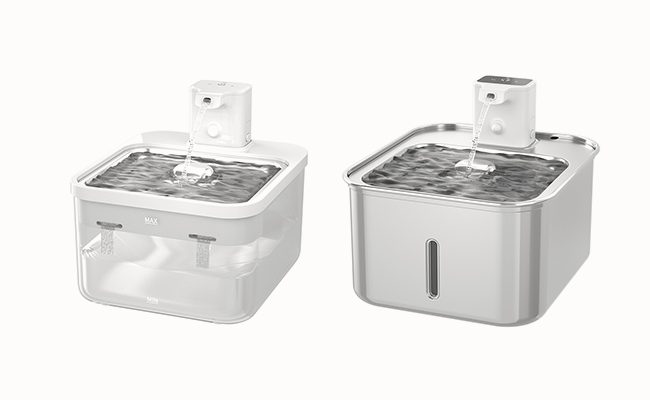
Cats are sensitive creatures. Their whiskers detect subtle textures. Their skin reacts to materials that dogs would never notice. And their drinking habits are directly influenced by the surface they place their chin and tongue against. This is why the material of a cat water fountain matters far more than many pet owners realize. The choice between stainless steel and plastic is not merely cosmetic — it affects your cat’s health, the cleanliness of the water, the lifespan of the product, and your long-term costs. This guide provides a thorough, cat-specific comparison to help you make the right decision.
Why Cats Are More Sensitive to Material Than Other Pets
Before comparing the two materials, it is worth understanding why material selection is uniquely important for cats:
- Feline chin acne: Cats are prone to a condition called feline chin acne (feline acne vulgaris), which manifests as blackheads, swelling, and pustules on the chin. Plastic is the most commonly cited environmental trigger. The porous surface of plastic accumulates bacteria that irritates the chin with every meal and every drink.
- Whisker sensitivity: Cats have highly sensitive whiskers that detect even minor surface textures and vibrations. A rough or scratched plastic surface may create subtle discomfort that discourages drinking.
- Taste sensitivity: Cats have a more refined sense of taste than many animals. Plastic can impart a subtle taste or odor to water, especially as the material ages. Stainless steel and ceramic are taste-neutral.
- Behavioral selectivity: Cats are famously selective about their water source. Many cats refuse to drink from containers that smell, taste, or feel “wrong.” A material that degrades over time can cause a cat to stop using the fountain entirely, defeating the purpose of the investment.
Side-by-Side Comparison
| Factor | Stainless Steel | Plastic (BPA-Free ABS) |
|---|---|---|
| Hygiene | Non-porous surface. Bacteria cannot penetrate or colonize the material. Easy to sanitize completely with soap, water, or dishwasher. | Develops micro-scratches from cleaning and pet contact over time. Bacteria and biofilm accumulate in these crevices, even after washing. |
| Feline chin acne risk | Very low. Stainless steel does not harbor the bacteria that trigger chin acne. Recommended by veterinarians as the first-line material for cats with skin sensitivity. | Higher. Plastic is the most commonly cited material linked to feline chin acne. Even BPA-free plastic can harbor surface bacteria that irritates the chin. |
| Taste and odor neutrality | Completely taste-neutral and odorless. Does not impart any flavor to water regardless of age or use duration. | May develop a subtle plastic taste or odor over time, especially with prolonged exposure to water and repeated washing. Some cats detect this and reduce their water intake. |
| Durability | Highly resistant to cracks, chips, warping, and discoloration. Maintains structural integrity and appearance for years. | Prone to surface scratching, yellowing, and cloudiness within months. May crack or warp with exposure to hot water or dishwasher heat cycles. |
| Noise | Denser material absorbs pump vibrations. Produces less resonance and echo. Generally quieter operation. | Thinner walls amplify pump vibrations. Can produce a hollow, resonant sound that increases as the plastic thins with wear. |
| Weight and stability | Heavier. More difficult for a cat to tip over, especially active kittens or larger breeds. | Lighter. Easier to move, but also easier for a cat to push, nudge, or accidentally tip. |
| Aesthetic longevity | Retains its original appearance indefinitely. Does not yellow, cloud, or discolor. | Visible degradation over time: cloudiness, yellowing, surface scratches, and staining from food or water minerals. |
| Design variety | Fewer color and shape options. Typically available in silver/brushed finish, white, or black. Sleek, modern aesthetic. | Wide range of colors, shapes, and playful designs. Can be molded into creative forms (flowers, animals, abstract shapes). |
| Price | Higher upfront cost. Typically 30 to 80 percent more expensive than comparable plastic models. | Lower upfront cost. The most affordable option for cat owners on a budget. |
| Long-term cost | Lower total cost of ownership. Lasts 3 to 5+ years with proper care. No need for frequent replacement. | Higher total cost of ownership. Should be replaced every 12 to 18 months due to surface degradation. Replacement cost accumulates over time. |
| Environmental impact | Fully recyclable. Longer lifespan means fewer units in landfills over time. | Recyclability depends on plastic type. Shorter lifespan means more frequent disposal and replacement. |
| Dishwasher safe | Yes. Stainless steel components withstand repeated dishwasher cycles without degradation. | Varies. Some plastic fountains are labeled dishwasher safe, but repeated dishwasher cycles accelerate surface degradation, clouding, and warping. |
| Veterinarian recommendation | Widely recommended. Stainless steel is the standard recommendation for cats with chin acne, skin allergies, or sensitive skin. | Not recommended for cats with skin sensitivity. Acceptable for healthy cats without chin acne history, but stainless steel is still preferred. |
Deep Dive: Hygiene and Bacterial Growth
The hygiene difference between stainless steel and plastic is the single most important factor for cat health. Here is why:
How Bacteria Colonize Plastic
Plastic is a polymer with a molecular structure that, at the microscopic level, is not perfectly smooth. When a cat drinks from a plastic fountain, their tongue and chin create friction against the surface. Over weeks and months, this friction — combined with the mechanical action of cleaning — creates micro-scratches. These scratches are invisible to the naked eye but are large enough for bacteria to enter and colonize.
Once bacteria establish themselves in these micro-scratches, they form biofilm — a thin, sticky layer of microorganisms that adheres to the surface. Biofilm is resistant to normal washing and can only be removed by aggressive scrubbing or chemical sanitization. Even then, the scratches remain, and biofilm quickly re-establishes. This is why a plastic fountain that looks clean may still harbor significant bacterial contamination.
Why Stainless Steel Resists Bacteria
Stainless steel (particularly 304 food-grade stainless steel) has a chromium oxide layer on its surface that is naturally smooth and non-porous at the microscopic level. Bacteria cannot penetrate this surface. While bacteria can still exist on the surface of stainless steel, they are easily removed with normal washing because there are no crevices for them to anchor into. Studies on food-contact surfaces consistently show that stainless steel retains significantly less bacterial contamination than plastic after equivalent cleaning procedures.
What This Means for Your Cat
A cat that drinks from a fountain with bacterial contamination in the plastic surface is exposed to those bacteria dozens of times per day, every time they drink. For most healthy cats, this exposure may not cause obvious illness. But for cats with compromised immune systems, skin sensitivity, or a predisposition to chin acne, this constant bacterial contact can trigger or worsen health conditions. Switching from plastic to stainless steel is one of the simplest and most effective interventions a veterinarian can recommend.
Deep Dive: Feline Chin Acne
Feline chin acne deserves special attention because it is directly linked to the material of food and water bowls and fountains.
What Is Feline Chin Acne?
Feline chin acne is a common skin condition characterized by comedones (blackheads), swelling, redness, and sometimes pustules on the chin and lower lip. In mild cases, it appears as dark specks on the chin that resemble dirt. In severe cases, the chin becomes swollen, painful, and may develop secondary bacterial infections requiring veterinary treatment.
How Plastic Contributes
The exact mechanism is not fully understood, but veterinary dermatologists believe the primary contributing factors are:
- Bacterial transfer: Bacteria colonizing micro-scratches in plastic surfaces transfer to the cat’s chin during eating and drinking, causing follicular irritation and plugging.
- Contact irritation: Some cats have a contact sensitivity or allergy to components in plastic materials. Even BPA-free plastics contain other compounds that may trigger a reaction in sensitive individuals.
- Sebum accumulation: The chin is rich in sebaceous glands. Repeated contact with a contaminated surface can cause excess sebum production and follicular plugging.
The Stainless Steel Solution
Veterinarians consistently recommend switching to stainless steel (or ceramic) as the first step in managing feline chin acne. In many cases, the condition improves significantly or resolves entirely within two to four weeks of the material change, without any other treatment. This clinical reality makes stainless steel the medically preferred material for cat water fountains.
Deep Dive: Durability and Replacement Cycle
| Timeline | Stainless Steel Fountain | Plastic Fountain |
|---|---|---|
| Month 1 | Looks and performs like new. | Looks and performs like new. |
| Month 6 | Looks and performs like new. | Minor surface scratches may be visible. Performance unchanged. |
| Month 12 | Looks and performs like new. | Noticeable cloudiness or yellowing. Surface scratches visible under bright light. Possible faint odor. |
| Month 18 | Looks and performs like new. | Significant discoloration. Deep scratches. Persistent odor even after thorough cleaning. Recommended replacement point. |
| Year 2 to 3 | Looks and performs like new. Filters and pump may need replacement, but the housing is unchanged. | Second plastic unit in use. Same degradation cycle repeating. |
| Year 3 to 5 | Still in use. Original housing intact. Total cost: one fountain purchase. | Third or fourth plastic unit. Total cost: three to four fountain purchases. |
When you calculate the total cost of ownership over a three to five year period, stainless steel is often the more economical choice despite its higher initial price. A $40 stainless steel fountain that lasts five years costs $8 per year. A $20 plastic fountain replaced every 18 months costs $13.33 per year — and generates more waste.
Deep Dive: Noise and Cat Behavior
Noise affects cat behavior more than most owners realize. Cats have hearing sensitivity that far exceeds human perception. A sound that is merely “noticeable” to a human can be “loud” or even “disturbing” to a cat.
How Material Affects Noise
- Stainless steel: The denser, heavier material absorbs pump vibrations rather than amplifying them. The result is a lower, more muted sound profile. The heavier weight also prevents the fountain from vibrating against the surface it sits on (countertop, floor), eliminating a secondary source of noise.
- Plastic: Thinner walls and lower density mean less vibration absorption. The pump’s vibrations resonate through the plastic housing, creating a higher-pitched, more audible hum. As the plastic ages and thins, this resonance can increase. The lighter weight also means the fountain may vibrate against the countertop, adding a secondary rattling sound.
Impact on Cat Drinking Behavior
A cat that is bothered by fountain noise will drink less frequently or avoid the fountain altogether. This defeats the primary purpose of the fountain — encouraging hydration. In multi-cat households, a noisy fountain may cause timid cats to avoid it while dominant cats claim it, creating unequal access to fresh water. A quiet fountain benefits all cats in the household equally.
Quality water pumps designed for cat fountains prioritize low-noise operation. When paired with a stainless steel housing that absorbs vibrations, the result is a fountain that operates at or below 25 to 30 decibels — quiet enough for bedroom placement without disturbing sleep.
Deep Dive: Design and Aesthetic Considerations
While stainless steel wins on hygiene and durability, plastic has a clear advantage in design flexibility. This matters for product positioning and market appeal.
| Design Aspect | Stainless Steel | Plastic |
|---|---|---|
| Color options | Limited: silver/brushed, white, black, occasionally pastel tones with powder coating. | Virtually unlimited: any Pantone color, translucent options, multi-color combinations. |
| Shape complexity | Limited by metal forming constraints. Typically clean, geometric shapes. | Highly flexible. Can be molded into organic, curved, flower-shaped, or playful designs. |
| Surface finish | Brushed, mirror-polished, or matte. Consistent and premium-looking. | Matte, gloss, soft-touch, or textured. Can mimic other materials (wood grain, stone). |
| Brand differentiation | Harder to differentiate visually from competitors using the same material. Differentiation comes from form factor, features, and brand positioning. | Easier to create visually distinctive products through unique colors and shapes. |
| Photography appeal | Clean, modern look that photographs well for premium brand positioning. | Colorful, eye-catching images that stand out in e-commerce search results. |
For brands building a product line, offering both materials allows you to serve different market segments. A stainless steel model for health-conscious cat owners and a colorful plastic model for budget-conscious or design-focused buyers creates a tiered product range. Explore cat water fountain categories to see how different materials and designs are positioned in the market.
Cost Comparison: Short-Term vs Long-Term
| Cost Factor | Stainless Steel | Plastic |
|---|---|---|
| Initial purchase price | $30 to $60 (typical retail) | $15 to $35 (typical retail) |
| Expected lifespan | 3 to 5+ years | 12 to 18 months |
| Replacement cost over 5 years | $30 to $60 (one purchase) | $50 to $120 (three to four purchases) |
| Replacement filters (annual) | $30 to $60 (same for both materials) | $30 to $60 (same for both materials) |
| Replacement pump (if needed) | $8 to $15 (once in 3 to 5 years) | $8 to $15 (may be needed with each replacement unit) |
| Veterinary costs (chin acne treatment) | $0 (low risk) | $50 to $200+ if chin acne develops |
| Total 5-year cost estimate | $70 to $135 | $140 to $400+ |
The long-term cost analysis strongly favors stainless steel. The initial price premium is recovered within the first replacement cycle, and every year after that represents savings. When potential veterinary costs for chin acne treatment are factored in, the financial case for stainless steel becomes even stronger.
Which Material Is Better for Specific Cat Situations?
| Cat Situation | Recommended Material | Reason |
|---|---|---|
| Healthy single cat, no skin issues | Stainless steel (preferred) or plastic (acceptable) | Both work, but stainless steel offers better long-term hygiene and value. |
| Cat with chin acne or skin sensitivity | Stainless steel (strongly recommended) | Eliminates the primary environmental trigger. Improvement often visible within two to four weeks. |
| Cat with kidney disease or urinary issues | Stainless steel (strongly recommended) | Maximum hygiene is critical for immunocompromised cats. Stainless steel provides the cleanest drinking surface. |
| Kitten | Stainless steel | Heavier weight prevents tipping. Establishes good material habits from the start. |
| Multi-cat household | Stainless steel | Higher hygiene standards needed when multiple cats share one fountain. Easier to sanitize between uses. |
| Senior cat (10+ years) | Stainless steel | Older cats are more susceptible to infections and benefit from the cleanest possible water source. |
| Budget-conscious owner, healthy cat | Plastic (BPA-free, with regular replacement plan) | Acceptable if the owner commits to replacing the unit every 12 to 18 months and cleaning it thoroughly and frequently. |
| Owner who values aesthetics and design variety | Plastic (for color/shape options) or stainless steel (for modern/minimal aesthetic) | Plastic offers more visual variety. Stainless steel suits a clean, contemporary design preference. |
Maintenance Comparison
| Maintenance Task | Stainless Steel | Plastic |
|---|---|---|
| Weekly cleaning | Disassemble, wash with mild detergent, rinse, air dry. Dishwasher safe. | Disassemble, wash gently with soft cloth (avoid abrasive scrubbers that create scratches), rinse, air dry. |
| Deep cleaning (monthly) | Soak in white vinegar solution for 15 minutes. Rinse thoroughly. No special precautions needed. | Soak in white vinegar solution for 15 minutes. Use soft cloth only. Avoid prolonged soaking in harsh chemicals. |
| Filter replacement | Every 2 to 4 weeks (same for both materials). | Every 2 to 4 weeks (same for both materials). |
| Pump cleaning | Monthly. Disassemble pump, clear debris from impeller, rinse, reassemble. | Monthly. Same process. |
| Replacement schedule | No scheduled replacement needed for the housing. Replace filters and pump as needed. | Replace the entire fountain every 12 to 18 months, or sooner if discoloration, odor, or deep scratches appear. |
| Scratch management | Not applicable. Stainless steel does not develop surface scratches from normal use and cleaning. | Use only soft cloths for cleaning. Avoid abrasive sponges. Despite precautions, micro-scratches will accumulate over time. |
For both materials, using model-specific replacement filters ensures proper fit and optimal filtration performance. Browse filter options compatible with your fountain model.
For Businesses: Material Strategy for Cat Fountain Product Lines
If you are a retailer, Amazon seller, or brand developing a cat fountain product line, material selection is a strategic decision that defines your market positioning.
Single-Material Strategy
| Strategy | Pros | Cons |
|---|---|---|
| Stainless steel only | Strong health and quality positioning. Higher margins. Fewer returns due to durability. Appeals to the fastest-growing market segment. | Higher price point limits the addressable market. Fewer design options for visual differentiation. |
| Plastic only | Lower price point captures the largest volume segment. More design options for visual differentiation. | Lower margins. Higher return rates. Vulnerable to competition from stainless steel brands positioning on health and quality. |
Dual-Material Strategy (Recommended)
Offering both stainless steel and plastic models under one brand allows you to capture multiple market segments:
- Entry-level plastic model: Priced at $15 to $30. Captures budget-conscious buyers and first-time fountain customers. Serves as a gateway product that introduces customers to your brand.
- Premium stainless steel model: Priced at $35 to $60. Targets health-conscious cat owners, multi-cat households, and customers upgrading from plastic. Higher margins and stronger customer loyalty.
- Replacement filter compatibility: Design both models to use the same replacement filter if possible. This simplifies your inventory and creates a unified recurring revenue stream.
Working with a manufacturer that produces both stainless steel and plastic fountains under one roof ensures consistent quality across your product line. A vertically integrated factory with its own injection molding, stainless steel processing, and assembly capabilities can produce both material types efficiently. Review factory capabilities to assess dual-material production capacity.
Market Positioning Tips
- Lead with stainless steel in your marketing: Even if you offer both materials, position your brand around the health benefits of stainless steel. This establishes your brand as health-conscious and quality-focused, which elevates the perception of your entire product line — including the plastic model.
- Educate your customers: Use product descriptions, A+ content, blog posts, and social media to explain why material matters for cats. Informed customers are willing to pay more for stainless steel once they understand the health implications.
- Leverage veterinarian endorsements: If possible, obtain endorsements or testimonials from veterinarians recommending stainless steel for cats. Vet recommendations are one of the most powerful purchase drivers in the pet product category.
- Bundle for value: Offer bundles that include the fountain plus a multi-pack of replacement filters. This increases average order value and locks in recurring filter purchases.
For Amazon sellers, material is a strong keyword differentiator. “Stainless steel cat water fountain” is a high-intent search term with strong conversion rates. For wholesale buyers, stocking both materials allows retailers to offer choice on the shelf. Brands pursuing private label strategies can customize both material tiers with their own branding and packaging.
Frequently Asked Questions (FAQ)
Is stainless steel really better than plastic for cats?
Yes, for most cats, stainless steel is the better material. It is more hygienic (non-porous surface resists bacterial growth), does not cause or worsen feline chin acne, is taste-neutral, lasts significantly longer, and is easier to sanitize. The only advantage of plastic is its lower initial price and wider design variety. For cats with any history of chin acne or skin sensitivity, stainless steel is strongly recommended by veterinarians.
Can plastic cat water fountains be safe if they are BPA-free?
BPA-free plastic eliminates one specific chemical concern (bisphenol A), but it does not address the broader hygiene issue. BPA-free plastic still develops micro-scratches over time that harbor bacteria. It can still cause chin acne in sensitive cats. It still degrades in appearance and may develop odors. BPA-free is a necessary baseline for plastic fountains, but it does not make plastic equivalent to stainless steel in terms of hygiene or safety.
My cat has chin acne. Will switching to a stainless steel fountain help?
In most cases, yes. Switching from plastic to stainless steel is the first intervention veterinarians recommend for feline chin acne. Many cats show significant improvement within two to four weeks of the material change. If the chin acne is severe or does not improve after switching materials, consult your veterinarian for additional treatment options (topical medications, antibiotics for secondary infections).
Are stainless steel cat fountains noisier than plastic ones?
No. Stainless steel fountains are generally quieter than plastic ones. The denser material absorbs pump vibrations rather than amplifying them. The heavier weight also prevents the fountain from vibrating against the countertop or floor. Noise complaints are more common with plastic fountains, especially as the plastic ages and thins.
How often should I replace a plastic cat water fountain?
Replace a plastic cat water fountain every 12 to 18 months, or sooner if you notice discoloration (yellowing or cloudiness), persistent odor after cleaning, visible surface scratches, or if your cat develops chin acne. Do not wait for the plastic to crack or break — the hygiene degradation occurs long before structural failure.
How long does a stainless steel cat water fountain last?
A stainless steel cat water fountain housing can last five years or more with proper care. The pump and filters are consumable components that will need periodic replacement (pump every one to two years, filters every two to four weeks), but the stainless steel housing itself does not degrade, discolor, or develop hygiene issues over time.
Do cats prefer drinking from stainless steel or plastic?
Cats do not express a universal material preference, but they do respond to taste, odor, and surface texture. Since stainless steel is taste-neutral and odorless while plastic can develop subtle tastes and smells over time, cats are more likely to maintain consistent drinking habits with a stainless steel fountain. Cats that avoid a plastic fountain after several months of use may be reacting to material degradation rather than the fountain concept itself.
Is ceramic a good alternative to both stainless steel and plastic?
Ceramic is a good material for cat water fountains — it is non-porous (when properly glazed), taste-neutral, heavy and stable, and does not cause chin acne. However, ceramic fountains are fragile, heavy to ship, limited to smaller capacities, and more expensive than plastic. They occupy a niche between stainless steel and plastic. For most cat owners, stainless steel offers the best combination of hygiene, durability, and practicality.
Can I find both stainless steel and plastic cat fountains from the same manufacturer?
Yes. Manufacturers with vertically integrated production facilities that include both injection molding (for plastic) and stainless steel processing can produce both material types. This is advantageous for brands that want to offer a tiered product line. Review cat water fountain product categories to see both material options, and contact manufacturers to discuss dual-material sourcing.
What certifications should cat water fountains have regardless of material?
Both stainless steel and plastic cat water fountains require the same certifications: FCC (US), CE and RoHS (EU), UKCA (UK). Food-contact compliance (FDA in the US, EU 1935/2004 in Europe) is required for all water-contact surfaces regardless of material. The manufacturer should hold ISO9001 quality management certification. Review full certification details for compliance requirements.
Where can I source stainless steel and plastic cat water fountains for my business?
Look for manufacturers with experience in both materials, vertically integrated production, valid certifications, and private label capabilities. Review product catalogs, explore factory capabilities, check manufacturer background, and contact manufacturers directly to discuss your sourcing needs for both stainless steel and plastic cat water fountains.
Conclusion
For cat owners, the choice between stainless steel and plastic comes down to a simple question: how much do you value your cat’s health and your long-term costs? Stainless steel wins on every health and durability metric. It is more hygienic, safer for cats with skin sensitivity, quieter, longer-lasting, and more economical over time. Plastic wins on initial price and design variety, making it an acceptable choice for budget-conscious owners of healthy cats who commit to regular replacement.
Here is the bottom line:
- Choose stainless steel if: Your cat has chin acne or skin sensitivity. You want the most hygienic option. You prefer a product that lasts for years. You are willing to pay more upfront for better long-term value.
- Choose plastic if: Budget is the primary constraint. Your cat has no history of skin issues. You want a specific color or design that is only available in plastic. You are committed to replacing the unit every 12 to 18 months.
- For businesses: Offer both materials to capture the full market, but lead your brand positioning with stainless steel. The health and quality narrative resonates with the growing segment of cat owners who prioritize their pet’s wellbeing.
Explore stainless steel and plastic cat water fountain options, review replacement filter availability, or contact a manufacturer to discuss the right material strategy for your needs.
