
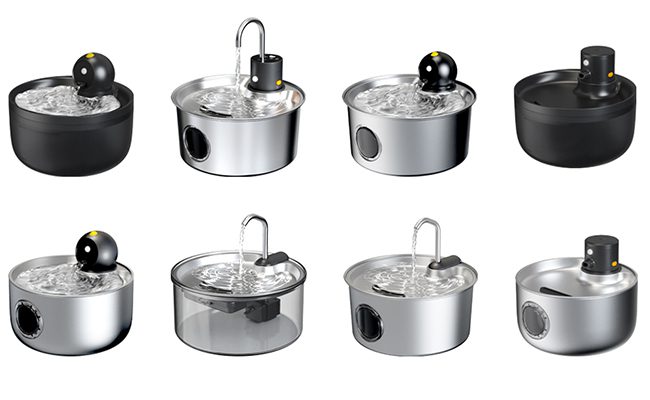
Pet water fountains come in a range of sizes, and choosing the right capacity is one of the most important decisions you will make. A fountain that is too small requires constant refilling and may run dry while you are away. A fountain that is too large wastes water, takes up unnecessary counter or floor space, and may not maintain optimal water freshness. This guide compares the four most common capacities — 2 liters, 3 liters, 4 liters, and 8 liters — across every factor that matters, so you can match the fountain to your household with confidence.
Why Capacity Matters More Than You Think
Capacity is not just about how often you refill. It directly affects several aspects of your pet’s drinking experience and your daily routine:
- Hydration consistency: A properly sized fountain ensures your pet always has access to fresh, flowing water, even if you are away for a full day or a weekend.
- Water freshness: Water that sits in a reservoir for too long can develop stale taste or bacterial buildup, even with filtration. A right-sized fountain keeps water cycling through at a healthy rate.
- Pump longevity: Running a fountain below its minimum water line stresses the pump motor and shortens its lifespan. Adequate capacity provides a buffer against low-water situations.
- Refill frequency: Smaller tanks mean more frequent refills. For busy households or frequent travelers, this can become a daily burden.
- Physical footprint: Larger capacity fountains take up more space. In small apartments or crowded kitchens, this is a real constraint.
Quick Comparison: 2L vs 3L vs 4L vs 8L
| Factor | 2 Liters | 3 Liters | 4 Liters | 8 Liters |
|---|---|---|---|---|
| Best suited for | Single small cat or small dog | One to two cats or one medium dog | Two to three cats, one large dog, or multi-pet households | Large dogs, multi-pet households, or extended absences |
| Typical refill frequency | Every 1 to 2 days | Every 2 to 3 days | Every 3 to 5 days | Every 5 to 7 days |
| Physical footprint | Compact; fits on small countertops, shelves, or nightstands | Small to medium; fits on most countertops and floor areas | Medium; suitable for floor placement or larger countertops | Large; floor placement recommended |
| Weight when full | Approximately 2 kg | Approximately 3 kg | Approximately 4 kg | Approximately 8 kg |
| Water freshness cycle | Fast turnover; water is filtered frequently due to small volume | Balanced turnover; good ratio of filtration speed to volume | Moderate turnover; adequate filtration with comfortable buffer | Slower turnover; larger volume means water sits longer between full cycles |
| Travel-friendly (weekend away) | Not recommended for more than one day unattended | Suitable for a two-day trip | Comfortable for a three to four day trip | Ideal for a full week away |
| Price range | Lowest | Low to mid | Mid | Mid to high |
| Common materials | Plastic, stainless steel | Plastic, stainless steel, ceramic | Plastic, stainless steel | Stainless steel, heavy-duty plastic |
Deep Dive: 2-Liter Pet Water Fountain
Who It Is For
A 2-liter fountain is the entry-level size, designed for single-pet households with small animals. It works well for a single cat, a small-breed dog (under 10 kg), or a kitten. It is also a practical choice for pet owners who want a compact, discreet fountain that does not dominate a room.
Advantages
- Small footprint: Fits easily on a kitchen counter, bathroom shelf, or beside a nightstand. Ideal for apartments, dorm rooms, or offices where space is limited.
- Lightweight and portable: Easy to move between rooms or take along when visiting friends or traveling with your pet.
- Fast water turnover: The small volume means the pump circulates the entire reservoir many times per day, keeping water well-filtered and oxygenated.
- Lower cost: Both the initial purchase and replacement filters tend to be less expensive than larger models.
Limitations
- Frequent refilling: A single cat can drink 150 to 300 ml of water per day. With evaporation and splashing, a 2-liter fountain may need refilling every one to two days.
- Not suitable for multi-pet homes: Two cats drinking from a 2-liter fountain will deplete it quickly, increasing the risk of the pump running dry.
- Limited travel buffer: You cannot safely leave a 2-liter fountain unattended for a full weekend without risking a dry reservoir.
Deep Dive: 3-Liter Pet Water Fountain
Who It Is For
The 3-liter fountain is the most popular size for a reason — it strikes a practical balance between capacity and footprint. It suits households with one to two cats, a single medium-sized dog (10 to 20 kg), or a kitten that will grow into an adult cat. It is the default recommendation for most first-time fountain buyers.
Advantages
- Balanced refill schedule: For a single cat, a 3-liter fountain typically lasts two to three days between refills, making it manageable for most routines.
- Reasonable footprint: Still compact enough for countertop placement in most kitchens or utility areas.
- Good filtration efficiency: The volume is large enough to provide a buffer against low-water warnings but small enough that the filter processes the full reservoir multiple times daily.
- Widest product selection: Because 3 liters is the most popular capacity, you will find the broadest range of designs, materials, and price points at this size. Browse available water fountain models to compare options.
Limitations
- Insufficient for large dogs: A large-breed dog can drink 500 ml to 1 liter of water per day. A 3-liter fountain would need refilling daily, negating the convenience of a fountain.
- Tight for multi-pet households: While it can serve two cats, three or more pets sharing a 3-liter fountain will require daily refilling and may compete for drinking space.
Deep Dive: 4-Liter Pet Water Fountain
Who It Is For
A 4-liter fountain is the sweet spot for multi-cat households, homes with a single large dog, or pet owners who travel occasionally and need a longer buffer between refills. It is also a strong choice for households in warm climates where pets drink more water than average.
Advantages
- Comfortable multi-pet capacity: Two to three cats can share a 4-liter fountain with refills needed only every three to five days.
- Travel-friendly: A four-liter reservoir can sustain a single large dog or two cats for a long weekend trip without running dry.
- Warm climate suitability: Pets in hot or dry environments drink significantly more water. A 4-liter capacity accommodates this increased intake without constant monitoring.
- Reduced pump stress: The larger water volume provides a greater buffer before the water level drops to the minimum line, protecting the pump from dry-run damage.
Limitations
- Larger footprint: A 4-liter fountain requires more counter or floor space. Measure your intended placement area before purchasing.
- Heavier when full: At approximately 4 kg when full, it is less convenient to move for cleaning or refilling compared to smaller models.
- Higher cost: Both the fountain unit and replacement filters tend to cost more than 2-liter or 3-liter models.
Deep Dive: 8-Liter Pet Water Fountain
Who It Is For
The 8-liter fountain is the maximum capacity commonly available for home use. It is designed for large dogs, households with three or more pets, or pet owners who are frequently away for extended periods. It is also popular in small veterinary clinics, pet boarding facilities, and offices that allow pets.
Advantages
- Maximum independence: An 8-liter fountain can sustain a large dog or multiple cats for a full week without refilling, making it ideal for frequent travelers.
- Multi-pet powerhouse: Three or four cats, or two large dogs, can drink freely from an 8-liter fountain with minimal maintenance.
- Reduced daily maintenance: The large volume means less frequent attention, which is valuable for busy households or commercial settings.
- Commercial and semi-commercial use: Suitable for small pet shops, veterinary waiting rooms, or office environments where multiple animals may need water throughout the day.
Limitations
- Large physical size: An 8-liter fountain is significantly larger than standard models. It requires dedicated floor space and may not fit in small apartments.
- Heavy when full: At approximately 8 kg when full, it is cumbersome to lift, move, and clean. Consider placement carefully before filling.
- Slower water turnover: The large volume means the pump takes longer to circulate the full reservoir. If the fountain is only partially filled (for a single pet), the water may sit longer than ideal between filtration cycles.
- Higher upfront cost: 8-liter fountains are premium products with higher price points for both the unit and replacement components.
- Overkill for single small pets: A single cat does not need 8 liters of continuously circulating water. The excess capacity wastes filtered water and electricity without providing meaningful benefit.
How to Choose: Decision Framework
Use the following decision guide to match your situation to the right capacity:
| Your Situation | Recommended Capacity | Reasoning |
|---|---|---|
| Single cat, small apartment | 2L or 3L | Space-efficient; adequate for one cat’s daily intake. Choose 3L if you want less frequent refilling. |
| Single cat, occasional weekend travel | 3L | Provides enough buffer for a two-day trip without running dry. |
| Two cats | 3L or 4L | 3L works if you refill every two days. 4L is better if you prefer less frequent maintenance. |
| Three or more cats | 4L or 8L | 4L handles three cats with every-other-day refills. 8L is better for four or more cats or if you travel. |
| Single small dog (under 10 kg) | 2L or 3L | Small dogs drink less water. 3L provides a comfortable buffer. |
| Single medium dog (10 to 25 kg) | 3L or 4L | Medium dogs drink 300 to 600 ml per day. 4L ensures multi-day independence. |
| Single large dog (over 25 kg) | 4L or 8L | Large dogs can drink 500 ml to 1 liter daily. 8L is ideal for breeds like Labradors, Golden Retrievers, or German Shepherds. |
| Mixed household (cats and dogs) | 4L or 8L | Multiple species with different drinking habits benefit from larger capacity and wider dispensing surfaces. |
| Frequent traveler (3+ day trips) | 4L or 8L | Capacity must sustain your pets for the full duration of your absence plus a safety margin. |
| Hot or dry climate | One size up from your base recommendation | Pets drink 30 to 50 percent more water in warm conditions. Evaporation also increases. Upgrade accordingly. |
| Office or small commercial setting | 8L | Multiple animals and unpredictable schedules demand maximum capacity and minimal maintenance. |
Water Intake Reference: How Much Does Your Pet Drink?
Understanding your pet’s daily water needs helps you calculate the right capacity. The general guideline is that cats and dogs need approximately 50 to 60 ml of water per kilogram of body weight per day. Active pets, nursing mothers, and animals in warm climates may need significantly more.
| Pet | Typical Weight | Daily Water Intake | Days Before Empty (2L) | Days Before Empty (3L) | Days Before Empty (4L) | Days Before Empty (8L) |
|---|---|---|---|---|---|---|
| Small cat | 3 to 4 kg | 150 to 240 ml | 6 to 10 days | 10 to 15 days | 13 to 20 days | 26 to 40 days |
| Medium cat | 4 to 5 kg | 200 to 300 ml | 5 to 7 days | 7 to 11 days | 10 to 15 days | 20 to 30 days |
| Large cat | 5 to 7 kg | 250 to 420 ml | 3 to 6 days | 5 to 9 days | 7 to 12 days | 14 to 24 days |
| Small dog | 5 to 10 kg | 250 to 600 ml | 2 to 5 days | 3 to 8 days | 5 to 11 days | 10 to 22 days |
| Medium dog | 10 to 25 kg | 500 to 1,500 ml | 1 to 2 days | 1 to 4 days | 2 to 5 days | 4 to 10 days |
| Large dog | 25 to 45 kg | 1,250 to 2,700 ml | Less than 1 day | 1 to 2 days | 1 to 2 days | 2 to 4 days |
Note: The table above calculates raw consumption only. In practice, evaporation, splashing, and the need to keep the water level above the pump minimum line reduce the effective capacity by 20 to 30 percent. Always factor in this margin when choosing a capacity.
Material Considerations by Capacity
Capacity and material are often linked. Smaller fountains (2L and 3L) are widely available in both plastic and stainless steel. Larger fountains (4L and 8L) are more commonly produced in stainless steel or heavy-duty plastic due to the structural demands of holding more water.
- Stainless steel is recommended for all capacities if hygiene is your priority. It is non-porous, resists bacterial buildup, and does not leach chemicals. It is especially important for cats prone to chin acne. Explore stainless steel fountain options across multiple capacities.
- Plastic (BPA-free) is acceptable for all capacities but requires more frequent replacement. Scratches from cleaning accumulate over time and can harbor bacteria. Always verify that the plastic is food-grade and BPA-free.
- Ceramic is occasionally available in the 2L to 3L range. It is heavy, hygienic, and aesthetically appealing, but fragile and not practical for larger capacities.
For a detailed comparison of stainless steel and plastic materials, refer to the companion guide on pet water fountain material selection.
For Businesses: Capacity Strategy for Product Lines
If you are a retailer, Amazon seller, or brand developing a pet fountain product line, capacity selection is a strategic decision that affects your market positioning, inventory management, and customer satisfaction.
Recommended Product Line Structure
| Tier | Capacity | Target Customer | Positioning |
|---|---|---|---|
| Entry | 2L | Budget-conscious buyers, single-pet apartments, first-time fountain users | Low price point; drives trial purchases and reviews. |
| Core | 3L | Mainstream cat owners, small-dog households | Best-seller candidate; highest volume potential. |
| Premium | 4L | Multi-pet households, frequent travelers, quality-conscious buyers | Higher margin; justifies premium features like smart sensors or app connectivity. |
| Specialty | 8L | Large-dog owners, commercial users, pet boarding facilities | Niche but high-value; strong differentiation from competitors. |
Offering multiple capacities allows you to capture different market segments with a single brand. Manufacturers with flexible production capabilities can produce all four sizes on the same production lines, reducing per-unit costs and simplifying supply chain management. Review manufacturing capabilities and product catalogs to evaluate capacity options.
For Amazon sellers, listing multiple capacities under a single parent ASIN with child variations is a proven strategy for maximizing search visibility and conversion. Ensure all variations carry the necessary certifications — FCC, CE, RoHS, and UKCA — to avoid listing restrictions. See certification details for compliance information.
Brands pursuing private label strategies can work with manufacturers to develop capacity-specific designs rather than simply scaling the same shell up or down. A 2-liter fountain optimized for countertop use should have a different form factor than an 8-liter fountain designed for floor placement. OEM and ODM partnerships make this level of customization possible. You can also explore OEM and ODM service details and review past project examples to understand what is achievable.
For wholesale buyers, stocking multiple capacities reduces the risk of overcommitting to a single size that may not match your customer base. Start with the 3-liter core tier and expand into entry and premium tiers based on sales data.
Frequently Asked Questions (FAQ)
What is the most popular pet water fountain capacity?
The 3-liter capacity is the most popular size for pet water fountains. It offers a practical balance between refill frequency, physical footprint, and suitability for the most common household type: one to two cats or a single small to medium dog. It is also the capacity with the widest product selection across brands and materials.
Is a 2-liter fountain enough for one cat?
A 2-liter fountain is sufficient for a single cat in terms of daily water intake. A typical cat drinks 150 to 300 ml per day, so a full 2-liter reservoir can last several days. However, you should refill it every one to two days to maintain water freshness and ensure the water level stays above the pump minimum line. If you want less frequent refilling, a 3-liter model is a better choice.
Can I use an 8-liter fountain for a single cat?
You can, but it is not recommended. An 8-liter fountain is oversized for a single cat. The large volume means water sits in the reservoir longer between full filtration cycles, which can reduce freshness. The fountain also takes up significantly more space and costs more to purchase and maintain. A 2-liter or 3-liter fountain is a better fit for a single cat.
How do I calculate the right capacity for multiple pets?
Add up the daily water intake of all your pets using the 50 to 60 ml per kilogram of body weight guideline, then multiply by the number of days you want between refills. Add a 20 to 30 percent buffer for evaporation and the pump minimum line. For example, two cats drinking 250 ml each per day (500 ml total) with a desired three-day refill cycle would need at least 1.5 liters plus a 30 percent buffer, totaling approximately 2 liters. A 3-liter fountain would provide a comfortable margin.
Does a larger capacity fountain use more electricity?
Not significantly. The pump in a pet water fountain consumes the same amount of electricity regardless of reservoir size — typically 1 to 5 watts. A larger reservoir does not require a larger or more powerful pump in most consumer models. The primary cost difference between capacities is the fountain unit price, not operating cost.
What happens if the water level drops too low in my fountain?
When the water level falls below the pump’s minimum operating line, the pump begins to draw air instead of water. This causes increased noise, reduced flow, and potential motor damage if sustained. Most fountains have a minimum fill line marked on the reservoir. Some smart fountains include low-water alerts. Always refill before the level reaches the minimum line. If you need replacement pumps or components, browse water pump options and pump categories.
Should I choose a larger capacity if I live in a hot climate?
Yes. In hot or dry climates, pets drink 30 to 50 percent more water than in temperate conditions. Evaporation also increases, especially in open-bowl fountain designs. If your base recommendation is 3 liters, consider upgrading to 4 liters in a warm climate. This ensures your pet always has adequate water and reduces the risk of the reservoir running low.
How often should I clean a large-capacity fountain?
Cleaning frequency depends on capacity and number of pets, not just size. A general rule is to perform a full disassembly and wash every week, regardless of whether the fountain is 2 liters or 8 liters. Larger fountains may accumulate more debris due to longer water residence times, so weekly cleaning is especially important for 4-liter and 8-liter models. Replace filters according to the manufacturer’s schedule — typically every 2 to 4 weeks. Compatible replacement filters are available for all standard capacities.
Can I find all four capacities from the same manufacturer?
Manufacturers with broad product lines and vertically integrated production facilities typically offer multiple capacities within their fountain range. This is advantageous for businesses that want to source a complete tiered product line from a single supplier. You can explore full fountain product ranges or contact the manufacturer to discuss specific capacity requirements.
What certifications should pet water fountains of any capacity have?
All capacities should meet the same safety and quality standards. Look for ISO9001 (quality management system), FCC (US electromagnetic compliance), CE (European conformity), RoHS (restriction of hazardous substances), and UKCA (UK conformity assessment). These certifications apply to the electrical components, materials, and manufacturing processes regardless of reservoir size. Review full certification information for details.
Is it better to buy one large fountain or two smaller ones for a multi-pet household?
This depends on your home layout and pet behavior. Two smaller fountains placed in different rooms can reduce competition between pets and encourage drinking by providing multiple access points. However, two units mean double the maintenance — two filters to replace, two pumps to clean, and two reservoirs to refill. A single larger fountain (4L or 8L) is simpler to maintain but may create bottlenecks if multiple pets want to drink at the same time. Many multi-pet owners find that one large fountain supplemented by one small fountain in a different area works best.
Conclusion
There is no single “best” capacity for a pet water fountain — the right size depends on your pet’s size, the number of animals in your household, your daily routine, and your local climate. Here is a summary of the key takeaways:
- 2 liters is best for single small pets in space-limited environments where frequent refilling is acceptable.
- 3 liters is the versatile default for most single-pet or two-pet households, offering the best balance of convenience, footprint, and cost.
- 4 liters is the right choice for multi-pet homes, large dogs, warm climates, and pet owners who travel occasionally.
- 8 liters is designed for large dogs, multiple pets, extended absences, and semi-commercial settings where maximum capacity and minimal maintenance are priorities.
Whichever capacity you choose, pair it with a quality pump, model-specific filters, and a consistent cleaning schedule to keep the water fresh and your pets healthy. Explore the full range of pet water fountains, replacement filters, and water pumps to find the right combination for your needs, or contact the manufacturer to discuss custom capacity and design requirements.
