
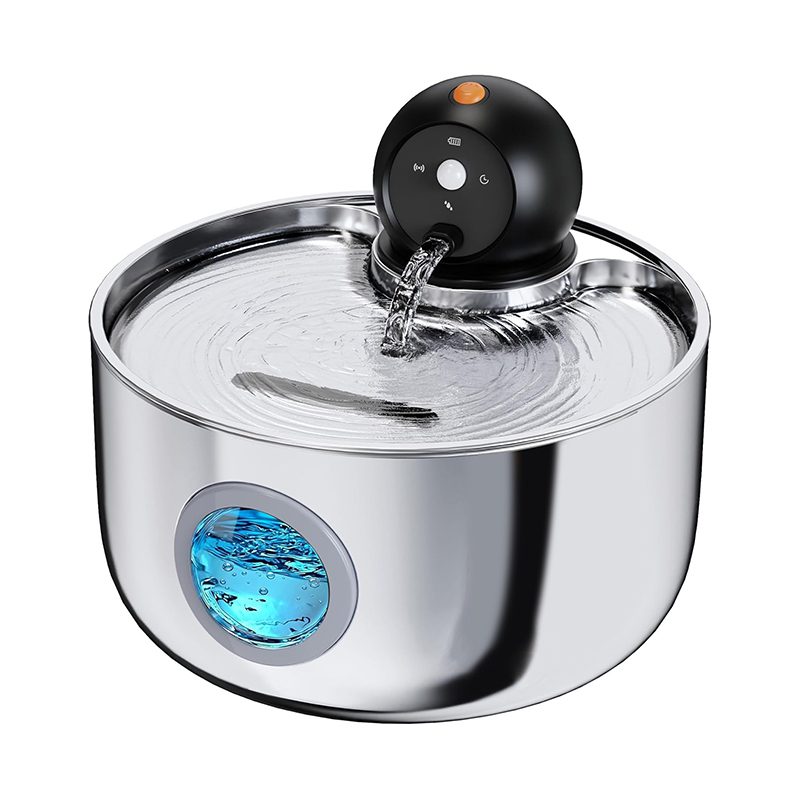
Chin acne is most often triggered by the fountain, not the food. Plastic fountain rims accumulate micro-scratches that harbor bacteria; every drink transfers that bacteria to your cat’s chin. The first-line fix, recommended by veterinary dermatology, is switching to a non-porous material — 304 stainless steel or glazed ceramic — with full disassembly cleaning every 6-7 days. Most mild cases visibly improve within 2-4 weeks of the material switch alone. See your vet if you find swelling, bleeding, or pus.
You notice it one morning: a cluster of black specks on your cat’s chin, maybe some redness, maybe a few pimples. Your cat starts pawing at its face — or subtly stops drinking from the fountain you spent good money on.
Vets call it feline chin acne. And before you blame food or hormones, look at what your cat presses its chin against twenty times a day: the rim of the water fountain.
How we put this guide together
This article draws on three sources. First, veterinary dermatology literature on feline chin acne (acne vulgaris) and the material factors documented in case studies. Second, aggregated owner reports from Reddit communities (r/cats, r/CatAdvice) and Amazon verified reviews — specifically the pattern of onset timing relative to fountain purchase, and recovery after material change. Third, material science: surface porosity, micro-scratch accumulation, and biofilm formation mechanics, which determine why some fountain surfaces become chronic irritants and others don’t.
Where owner-reported experience diverged from manufacturer claims, owner reports were weighted more heavily. Real-world use patterns are messier than lab conditions, and a maintenance guide should reflect that.
What chin acne actually is
Chin acne is a follicular skin condition. Hair follicles on the chin become clogged with sebum and debris, then oxidize into the blackheads owners first notice. In mild cases it’s cosmetic. Left unmanaged, it progresses to swelling, pustules, and secondary bacterial infection that needs veterinary treatment.
The chin is a hotspot for bacteria transfer for a structural reason: it’s the only part of the cat’s face pressed against a wet surface during every single drink. Cats don’t lap with a dangling tongue — they lower their chin to the waterline. That repeated contact makes the fountain rim the single most important environmental variable in chin acne cases.
Why plastic fountains are the usual suspect
Plastic seems smooth, but under magnification it’s riddled with micro-scratches — from cleaning pads, from cat teeth, from the naturally barbed surface of a cat’s tongue. Once bacteria move into those scratches, normal washing can’t reach them. They form biofilm: a slimy, protective colony that recontaminates the water — and the chin — with every drink.
The telltale pattern plastic-fountain owners recognize:
- Acne appears weeks or months after the fountain starts being used, not immediately.
- Cleaning more often helps briefly, then the specks return within days.
- Full replacement of the fountain — not just cleaning — is what finally clears the skin.
That third point is the clue. A condition that resolves when you replace the surface is a condition caused by the surface.
| Material | Surface porosity | Biofilm resistance | Chin acne risk profile |
|---|---|---|---|
| ABS / PP plastic | High — micro-scratches accumulate with use | Low — bacteria anchors in grooves | High — most commonly cited trigger |
| 304 stainless steel | Near-zero when properly finished | High — slime slides off with a standard wash | Very low — vet-recommended material |
| Glazed ceramic (high-fired) | Zero — glaze forms a glass-like seal | Very high | Very low — avoid low-end, poorly glazed units |
Six signs your cat’s fountain is causing the problem
Don’t wait for the calendar. If the fountain is already showing these signals, the cleaning window has been missed — and the chin is paying for it:
- Black specks appear within days of a thorough cleaning. Recurrence faster than a week points to a compromised surface, not a lazy cleaning routine.
- The rim feels slick under your thumb. That gelatinous coating is active biofilm. Topping up water only dilutes it.
- Your cat tests the water and walks away. Cats detect bacterial off-gassing we can’t register. Water refusal is the behavioral equivalent of a check-engine light.
- The filter has yellowed. A discolored filter has been failing for a while and is now pushing debris into the water path.
- Visible micro-scratches on the drinking surface. Hold it under bright light. Scratched plastic is already colonized below the waterline.
- Chin acne flares in multi-cat homes first. More chins per rim means more repeated inoculation of the same bacterial load.
The fix that actually works: change the material
Veterinary dermatology keeps arriving at the same first-line recommendation, and it’s almost boring in its simplicity: switch to 304 food-grade stainless steel or properly glazed ceramic.
Why it works:
- Non-porous surface — bacteria can’t anchor or hide. What sits on the surface washes right off.
- No micro-scratch accumulation — steel maintains its finish through years of cleaning; ceramic glaze behaves the same.
- Taste-neutral — no plastic taste leaching into water as the material ages, so cats keep drinking normally.
- Dishwasher-safe housings exist — a full-steel basin can be sanitized at temperatures that would warp plastic.
In most mild cases, owners report visible improvement within two to four weeks of the material switch — often with no other treatment than continued basic cleaning. If the condition is severe (swelling, pustules, bleeding), the material switch removes the trigger but the skin still needs veterinary treatment — do both.
Choosing a replacement fountain that stays clean
Material is the headline, but three design details decide whether a steel fountain actually stays hygienic in daily use. This is the buyer’s checklist — whether you’re purchasing one unit or sourcing fifty for retail:
- Fully removable pump. If you can’t pull the pump apart and scrub the impeller by hand, biofilm simply moves from the bowl to the pump housing. Snap-off, tool-free designs are the difference between a 5-minute weekly clean and a fountain that never truly gets clean.
- One-piece basin, minimal seams. Every joint, glue line, and label recess is a place for gunk to hide. A single-piece pressed steel basin with a polished interior leaves fewer anchors than a multi-part assembly.
- Filter discipline on a schedule. A quality fountain’s filter (every 2-4 weeks depending on cat count) handles dissolved contaminants the surfaces can’t. Replace it with the basin wash, never instead of it.
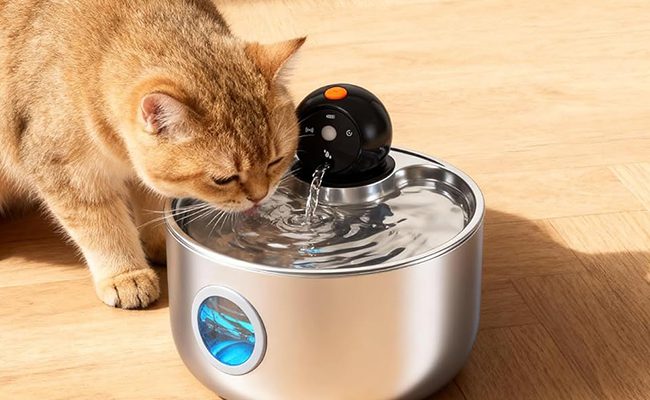
Our 304 stainless steel fountain line is built around exactly these three points: full steel construction throughout the water path, a visible water window so you always know the level, and a quick-release pump that comes apart in seconds for cleaning.
The maintenance schedule after the switch
Changing material reduces the problem structurally — it doesn’t eliminate maintenance. Here’s the realistic schedule once you’re on steel or ceramic:
| Task | Frequency (steel/ceramic) | Notes |
|---|---|---|
| Full water change | Every 2-3 days (single cat), 1-2 days (multi-cat) | Replace, don’t top off — topping off dilutes bacterial load instead of removing it |
| Basin wash | Every 6-7 days | Warm water + mild unscented soap, soft sponge only |
| Filter replacement | Every 3-4 weeks | Do it together with a basin wash |
| Pump deep clean | Every 4-6 weeks | Disassemble, inspect impeller for hair wrap and scale |
| Vinegar descale | Every 6-8 weeks (sooner in hard-water areas) | 50/50 white vinegar soak, 20 minutes, rinse thoroughly |
What NOT to use when cleaning
Two cleaning habits cause more damage than no cleaning at all:
No bleach or harsh disinfectants. Plastic is slightly permeable and absorbs chemical odor into the material. Cats have a far more sensitive olfactory system — a bowl that smells “clean” to you can smell strongly of chlorine to a cat, triggering fountain avoidance and chronic dehydration. On steel, bleach is unnecessary: a normal detergent wash removes biofilm completely because nothing is embedded.
No abrasive scrubbers on any surface. A green scouring pad is fine-grit sandpaper. On plastic, it accelerates the micro-scratch cycle that caused the problem. On steel, it dulls the finish and creates the very texture you bought steel to avoid. Soft sponges and purpose-made fountain brushes only.
From the factory side, the difference between a “stainless steel fountain” and a genuinely acne-safe one comes down to surface finish quality, decided during tooling — not at the cleaning brush. A properly finished 304 basin is polished to a roughness low enough that bacteria has no mechanical anchor; a cheap steel unit that leaves drawn lines or weld seams inside the basin recreates the plastic problem in a more expensive material. That’s why we specify interior surface finishing as a critical-to-quality parameter on our OEM fountain programs, alongside pump disassembly design. The maintenance burden customers experience years later is set in the tooling phase.
When to see a vet instead
Material change fixes the environmental trigger, but see your vet if you find any of these:
- Swelling or pustules — follicles may already be infected and need topical or antibiotic treatment.
- Bleeding or open sores — self-trauma from pawing has broken the skin barrier.
- No improvement after 4 weeks of the material switch — this suggests a secondary cause (hormonal, allergic, or immune-related) that needs diagnosis.
- Sudden onset in a senior cat — unusual patterns warrant a full check-up.
Fix the fountain and treat the skin, and most cats don’t look back.
Frequently Asked Questions (FAQ)
Can chin acne come back after switching to stainless steel?
It can, but rarely. If the fountain was the main trigger, steel usually keeps it away permanently. Recurrence often points to a second trigger — plastic food bowls (the chin touches those too), uncleaned feeders, or a hormonal/skin condition your vet should evaluate. Check every surface the chin contacts, not just the water station.
How long before chin acne improves after the material switch?
Owner reports consistently cluster at 2-4 weeks for mild cases (blackheads and slight redness). Severe cases with infection need veterinary treatment on top of the switch — the material removes the trigger but doesn’t heal existing lesions.
Is ceramic as good as stainless steel?
Both are non-porous and acne-safe when properly made. Ceramic is heavier and breakable (and cheap units may have thin glaze that crazes over time); steel is dishwasher-safe and chew-proof. For most homes — especially multi-cat or kitten households — steel is the more practical default.
How often should a stainless steel fountain be cleaned to prevent acne?
Weekly full disassembly: rinse the tank, wash the basin with mild unscented soap, pull the pump apart and clear the impeller. Replace the filter every 3-4 weeks. Monthly vinegar descale handles mineral buildup. The schedule is lighter than plastic — the reason is the material, not looser standards.
Can other plastic items cause chin acne too?
Yes. Plastic food bowls are the second most common trigger after fountains. If acne persists after a steel fountain switch, audit the bowl, the slow-feeder, and any plastic surface the chin contacts daily. Replace them with steel or ceramic as well.
Is dishwasher cleaning safe for stainless steel fountains?
The steel basin and lid: generally yes. The pump and any silicone or electronic components: always hand-wash. Check that the pump housing specifically is rated before assuming the whole unit is dishwasher-safe — the base label often refers only to the bowl.
Dealing with chin acne right now? Talk to our team about steel fountain models — factory-direct from Huizhou, with private label options for brands building a health-forward product line. Sample units ship within 3-5 business days.
