
China is the world’s largest manufacturing hub for pet water fountains, offering unmatched variety, competitive pricing, and scalable production capacity. But importing from China involves more than finding a cheap supplier and placing an order. Navigating supplier evaluation, product compliance, international shipping, and customs clearance requires careful planning. This guide walks you through the entire import process in clear, actionable steps.
Step 1: Define Your Product Requirements
Before contacting any supplier, clarify exactly what you need. A well-defined product brief saves weeks of back-and-forth and prevents costly misunderstandings.
| Decision | Options | Considerations |
|---|---|---|
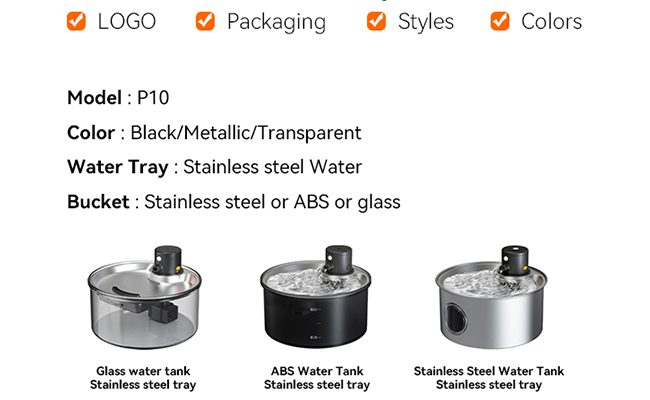
| Material | Stainless steel, ABS plastic, ceramic | Stainless steel offers the best hygiene and durability. Plastic is lower cost. Ceramic is niche and fragile. |
| Capacity | 2L, 3L, 4L, 8L | 3L is the most popular. 4L+ suits multi-pet homes. Match to your target customer. |
| Features | Basic pump, adjustable flow, LED indicator, Wi-Fi / app control | Smart features increase price and require additional certifications (FCC wireless, app development). |
| Branding | Standard (supplier brand), private label (your logo/colors), full OEM | Private label is the fastest path. Full OEM requires more time and investment but offers maximum differentiation. |
| Target market | US, EU, UK, other | Determines which certifications you need (FCC, CE, UKCA, etc.). |
| Order quantity | First order: 200 to 500 units typical | Lower MOQs for standard products. Higher MOQs for custom colors, packaging, or OEM designs. |
Step 2: Find and Evaluate Suppliers
Not all suppliers are equal. The key distinction is between actual manufacturers and trading companies that resell factory products with a markup.
Where to Find Suppliers
- Industry trade shows: Canton Fair (Guangzhou), Interzoo (Nuremberg), Global Pet Expo (Orlando). Meet manufacturers face-to-face and examine products firsthand.
- B2B platforms: Online sourcing platforms list thousands of suppliers, but require careful vetting to separate factories from traders.
- Direct research: Search for manufacturers with dedicated pet product websites, detailed product catalogs, and transparent factory information. Review product catalogs and factory details as examples of what established manufacturers provide.
- Referrals: Recommendations from other importers or industry contacts carry the most weight.
Evaluation Checklist
| Criterion | What to Verify |
|---|---|
| Manufacturing capability | In-house production (injection molding, pump assembly, final assembly) vs reselling. Request a factory tour or video walkthrough. |
| Certifications | ISO9001, FCC, CE, RoHS, UKCA. Request copies and verify independently. See certification details. |
| Product range | A manufacturer offering fountains, feeders, filters, and pumps can support future line expansion. |
| Communication | Response time, English proficiency, technical knowledge. Poor communication during sales predicts worse communication after payment. |
| MOQ and pricing | Compare quotes from at least three suppliers. Be suspicious of prices significantly below market average. |
| References | Ask for references from existing clients. Review past project cases. |
Step 3: Order and Evaluate Samples
Never skip this step. Samples reveal the real product quality that photos and descriptions cannot convey.
- Order samples from two to three suppliers for side-by-side comparison. Typical sample cost: $30 to $100 per unit plus shipping.
- Test the pump continuously for 72+ hours. Monitor noise, flow consistency, and temperature.
- Inspect material quality: Surface finish, weight, odor (plastic), magnetic properties (stainless steel).
- Test filter fit: Install and remove multiple times. Check for water bypass.
- Evaluate packaging: Retail box quality, print accuracy, product protection.
- Sample costs are often credited against your first production order. Confirm this with the supplier.
Step 4: Confirm Certifications
Before placing a production order, verify that the product and supplier hold all certifications required for your target market.
| Market | Required Certifications |
|---|---|
| United States | FCC (mandatory), UL/ETL (strongly preferred), FDA food-contact (for water-contact parts), Prop 65 (California) |
| European Union | CE (LVD + EMC + RoHS), REACH, WEEE registration, EU food-contact compliance |
| United Kingdom | UKCA, UK RoHS, UK WEEE registration |
| Canada | IC (wireless), cUL/CSA (electrical safety) |
| Australia | RCM mark |
Request certificate copies and verify them independently. Include certification guarantees in your purchase agreement. Review full certification documentation from established manufacturers for reference.
Step 5: Negotiate Terms and Place Your Order
Key Commercial Terms
| Term | Typical Arrangement | Tip |
|---|---|---|
| Payment | 30% deposit, 70% before shipment (after inspection) | Never pay 100% upfront for a first order. Use the 30/70 split to retain leverage. |
| Incoterms | FOB (supplier delivers to port of origin) | FOB gives you control over freight forwarder and shipping costs. CIF is simpler but less transparent. |
| Lead time | 20 to 40 days for production (existing products) | Build in a 1 to 2 week buffer for unexpected delays. |
| Quality standard | AQL 2.5 for major defects, AQL 4.0 for minor defects | Define acceptable defect rates in writing. Zero defects is unrealistic; define what is acceptable. |
| Warranty | 12 months against manufacturing defects | Ensure the supplier’s warranty to you mirrors the warranty you offer your customers. |
What Your Purchase Agreement Should Include
- Detailed product specifications (material, dimensions, features, color, weight)
- Certification requirements and guarantees
- Packaging specifications (retail box, master carton, labeling)
- MOQ, unit price, and payment terms
- Production lead time and delivery deadline
- Quality standards and inspection rights
- Defective unit policy and warranty terms
- Intellectual property protection (if applicable)
Explore wholesale partnership options and private label services for structured commercial arrangements.
Step 6: Arrange Pre-Shipment Inspection
A pre-shipment inspection is one of the highest-ROI investments in the import process. For $300 to $600, a third-party inspector verifies that the finished goods match your specifications before you release the balance payment.
- Hire an independent inspection company: SGS, Bureau Veritas, Intertek, or AsiaInspection.
- Inspection scope: Random sampling based on AQL standards. Checks include product dimensions, functionality, appearance, packaging, labeling, and carton condition.
- Timing: Schedule inspection when production is 100% complete and at least 80% of goods are packed.
- If inspection fails: The supplier must rework or replace defective units and reschedule inspection before shipment. Do not approve shipment of goods that fail inspection.
Step 7: Ship Your Goods
Shipping Method Comparison
| Method | Transit Time | Cost (relative) | Best For |
|---|---|---|---|
| Sea freight (FCL) | 3 to 6 weeks | Lowest | Large orders filling a full container (typically 500+ units). |
| Sea freight (LCL) | 4 to 7 weeks | Low | Smaller orders that share container space. Minimum charge applies (typically 1 CBM). |
| Air freight | 5 to 10 days | 4 to 6x sea freight | Urgent orders, small volumes, or high-value products where speed justifies the cost. |
| Express courier (DHL, FedEx, UPS) | 3 to 7 days | Highest per kg | Sample shipments, very small orders, or emergency restocking. |
Shipping Checklist
- Appoint a freight forwarder experienced with pet products and your origin/destination route.
- Confirm HS code for pet water fountains in your destination country to determine import duty rates.
- Arrange cargo insurance (0.3 to 0.5% of cargo value). Always insure bulk shipments.
- Prepare shipping documents: Commercial invoice, packing list, bill of lading (sea) or airway bill (air), certificate of origin, and copies of all relevant certifications.
Step 8: Clear Customs and Receive Your Goods
US Import Process
- File an ISF (Importer Security Filing) 72 hours before vessel departure for sea freight.
- Work with a licensed customs broker to file the entry documents (CBP Form 3461).
- Pay applicable import duties (typically 0 to 4.5% for pet water fountains, depending on HS code and country of origin) plus Merchandise Processing Fee (MPF) and Harbor Maintenance Fee (HMF).
- CBP may inspect the shipment. Having all certifications and documentation ready expedites clearance.
EU Import Process
- Appoint a customs broker or fiscal representative in the destination EU member state.
- Prepare all documentation: commercial invoice, packing list, CE Declaration of Conformity, test reports, and EORI number (Economic Operators Registration and Identification).
- Pay applicable customs duties and import VAT (VAT rates vary by country, typically 19 to 27%).
- Products must bear the CE mark and comply with all applicable EU directives before they can be released from customs.
Common Customs Issues
| Issue | Cause | How to Avoid |
|---|---|---|
| Shipment detained | Missing or invalid certifications | Verify all certifications before shipment. Carry copies in your customs documentation package. |
| Incorrect duty rate | Wrong HS code classification | Confirm the HS code with your customs broker before shipment. Misclassification can result in penalties. |
| Labeling non-compliance | Missing country of origin, CE mark, or required warnings | Review all product labels and packaging against destination market requirements before production begins. |
| Document discrepancies | Invoice values, quantities, or descriptions do not match actual goods | Ensure the commercial invoice accurately reflects the goods. Discrepancies trigger inspections and delays. |
Common Mistakes to Avoid
| Mistake | Consequence | Prevention |
|---|---|---|
| Choosing the cheapest supplier | Poor quality, high defect rates, certification failures | Evaluate on total value, not just unit price. |
| Skipping samples | Receiving products that do not match expectations | Always order and test samples before production. |
| Ignoring certifications | Customs seizure, platform delisting, fines | Verify certifications before ordering. Include compliance guarantees in your contract. |
| No pre-shipment inspection | Discovering defects after goods arrive (too late to reject easily) | Always arrange third-party inspection before releasing the balance payment. |
| Underestimating total landed cost | Margin erosion; pricing products too low to be profitable | Calculate all costs: product + shipping + insurance + duties + customs fees + inland transport. |
| Not insuring the shipment | Total loss if goods are damaged or lost in transit | Always purchase cargo insurance. The cost is minimal (0.3 to 0.5% of cargo value). |
Frequently Asked Questions (FAQ)
How much does it cost to import pet water fountains from China?
Total landed cost per unit typically ranges from $8 to $25 depending on the product type, material, features, and shipping method. This includes the FOB product cost ($5 to $18), shipping ($1 to $4 per unit for sea freight on bulk orders), import duties (0 to 4.5% in the US), customs fees, and inland transportation. Always calculate the full landed cost, not just the product price, to set accurate retail prices and margins.
Do I need an import license to bring pet water fountains into the US?
No specific import license is required for pet water fountains in the US. However, you need a customs bond (continuous or single-entry) for customs clearance, an EIN (Employer Identification Number) or social security number for CBP filings, and all required product certifications (FCC, FDA food-contact). Work with a licensed customs broker to handle the entry process.
How long does the entire import process take?
From placing a production order to receiving goods at your warehouse: approximately 8 to 14 weeks for sea freight (3 to 5 weeks production + 3 to 6 weeks shipping + 1 to 2 weeks customs and inland transport). Air freight reduces this to 4 to 7 weeks. Add 2 to 4 weeks upfront for sampling and supplier evaluation if this is your first order.
What is the best shipping method for a first-time import?
For a first order of 200 to 500 units, LCL (Less than Container Load) sea freight is the most cost-effective option. If the order is urgent or under 100 units, air freight may be justified despite the higher cost. Avoid express courier for bulk orders — the per-unit cost is prohibitively high.
How do I protect myself from supplier fraud?
Use these safeguards: (1) Verify the supplier is a real manufacturer through factory visits or video tours. (2) Start with a small first order. (3) Use the 30/70 payment structure — never pay 100% upfront. (4) Arrange third-party pre-shipment inspection. (5) Use secure payment methods (bank wire to a verified company account, or trade assurance on B2B platforms). (6) Get everything in writing — specifications, quality standards, delivery terms, and warranty.
Can the manufacturer handle certifications for me?
Established manufacturers typically already hold the major certifications (FCC, CE, RoHS, ISO9001) for their existing products. When you private label a certified product, those certifications usually transfer to your branded version. If additional testing is needed, the manufacturer can coordinate with accredited testing laboratories. Always verify that certifications are current and cover your specific product configuration. Review certification details for what to expect.
What if the products arrive damaged or defective?
If you arranged a pre-shipment inspection and the goods passed, the damage likely occurred during shipping — file a claim with your cargo insurance provider. If the defects are manufacturing-related and were missed during inspection, document the issues with photos and videos, notify the supplier immediately, and invoke the warranty and defective unit terms from your purchase agreement. This is why a well-written purchase agreement and pre-shipment inspection are essential.
Where can I find a reliable pet water fountain manufacturer in China?
Research manufacturers with dedicated pet product experience, vertically integrated production, valid certifications, and transparent business practices. Review manufacturer background, explore product catalogs, assess factory capabilities, and contact manufacturers directly to begin the evaluation process. You can also browse available solutions for different business models including Amazon seller, wholesale, and private label programs.
Conclusion
Importing pet water fountains from China is a proven business model with strong profit potential — but success depends on doing the groundwork properly. Define your requirements clearly, evaluate suppliers thoroughly, test samples rigorously, verify certifications independently, inspect before you ship, and plan your logistics carefully.
The eight steps in this guide provide a structured framework that minimizes risk and maximizes your chances of a successful import. Start with a conservative first order, build the supplier relationship, and scale with confidence as you gain experience and market feedback.
Ready to begin? Explore pet water fountain products, review manufacturing capabilities, or contact a manufacturer to start your import journey.
