
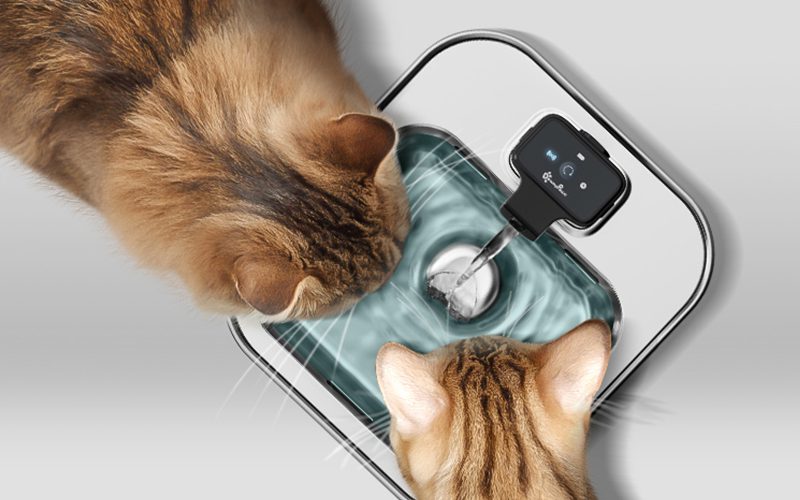
A stale bowl in a quiet corner may not interest your cat, even when fresh water is available. A moving stream can attract some cats and encourage more frequent drinking, but each cat has its own preference. Cornell Feline Health Center notes that some cats drink more from fountains, while others do not.
Stainless steel is popular because it is durable, smooth, and less likely to hold odors than scratched plastic. Still, the material alone does not make a fountain hygienic. Pump design, water flow, cleaning access, and daily care matter just as much.
A top rated stainless steel cat fountain should fit your cat’s habits and your cleaning routine. Compare the steel construction, usable capacity, pump noise, filter costs, safety features, replacement parts, warranty, and long-term review patterns. Guidance from Cornell Feline Health Center on feline hydration and the AAHA/AAFP feline life-stage guidelines supports keeping clean, accessible water available while respecting individual drinking preferences.
Choose a Top Rated Stainless Steel Cat Fountain for the Right Reasons
Check the steel grade and build quality
Look for clear information about the stainless steel grade, food-contact use, and corrosion resistance. Smooth surfaces, rounded edges, strong welds, and a stable base are useful signs of careful construction.
Some fountains have a stainless steel drinking dish but plastic tanks, spouts, pump covers, and tubing. That may still be a good design, but check which parts touch the water. A thin steel insert offers less protection from plastic contact than a fountain with a stainless reservoir and drinking surface.
Compare steel with plastic and ceramic
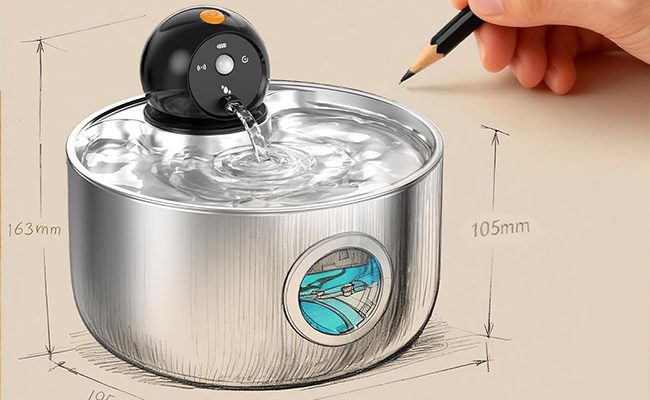
Stainless steel is usually durable and easy to wipe clean. Plastic costs less and weighs less, but scratches can make cleaning harder. Ceramic is heavy and smooth, though chips and cracks can develop if the fountain is dropped.
No material removes the need for washing. Replace any part with deep scratches, cracks, chips, or a lasting odor. The drinking area should be smooth and undamaged, whatever material you choose.
Look for cat-friendly access
A wide, shallow drinking area gives whiskers more room. Low entry points help older cats and cats with joint pain, while non-slip feet reduce sliding and spills. A raised rim can help contain splashes.
Some cats prefer a gentle bubble, while others like a falling stream. AAHA guidance says cats may respond to water freshness, movement, taste, and bowl shape. Keep a separate bowl available while your cat tests the fountain.
Match Capacity and Flow to Your Cat
Select a useful reservoir size
Capacity depends on the number of cats, their size, their drinking habits, and how often you can refill the unit. Cornell estimates that cats need about 4 ounces of water per 5 pounds of lean body weight each day, though wet food can provide much of that water.
Advertised capacity does not show how much water remains usable above the pump. Check the minimum water line and calculate how often you will need to refill it. A smaller tank that gets refreshed often may suit one cat better than a large tank that sits neglected.
Choose the right stream or bubbling design
Waterfall, faucet, spout, and bubbling designs create different drinking experiences. Adjustable flow is useful when you do not know whether your cat prefers a soft bubble or a stronger stream. Removable spouts also let you change the flow without buying another fountain.
Independent testing from Wirecutter’s cat and dog fountain guide found that individual cats do not all prefer moving water. Its testers also favored wide, shallow designs that give sensitive whiskers more space.
Make refilling easy
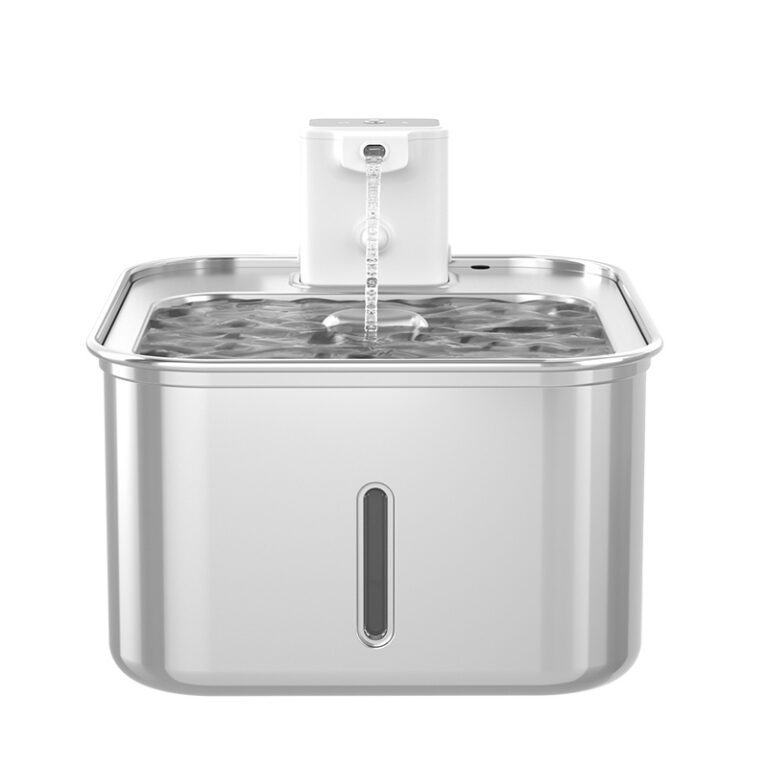
A visible water window or clear fill line helps you spot low water before the pump struggles. A wide opening makes refilling easier and lets you see fur, dust, or buildup. Look for a removable reservoir if you want to clean it at the sink without carrying the whole unit.
Before buying, record the advertised capacity, minimum operating level, refill method, low-water shutoff, and whether the pump can run safely as the water drops. A fountain that hides its water level can lead to missed refills and a dry-running pump.
Prioritize Quiet, Reliable Pump Performance
Identify features that reduce noise
A stable pump housing, non-slip feet, water-cushioned operation, and adjustable flow can reduce sound. Noise often increases when water runs low, the pump collects debris, or the fountain sits unevenly.
Read reviews that mention nighttime use, buzzing, splashing, and noise after several weeks. Wirecutter tested 21 fountains after considering 39 models, using a decibel meter and checking performance at both high and low water levels. That kind of testing gives more useful information than a single “silent” product claim.
Check power and placement needs
USB, wall-powered, battery, and rechargeable fountains each affect placement. Check cord length, adapter requirements, charging time, and whether the unit can run continuously when plugged in. Keep plugs and electrical connections away from spill areas, and follow the manufacturer’s instructions.
A battery model may help if outlets are scarce, but it can stop flowing between charges. A corded model may run all day, yet the cord needs careful placement. No power system is right for every home.
Investigate replacement parts
Search the manufacturer’s website for replacement pumps, impellers, filters, tubing, adapters, and manuals before purchasing. A low-cost fountain becomes poor value if a failed pump forces you to replace the entire unit.
Check the warranty length, repair process, and customer-service contact details. Also confirm that replacement parts are listed for the exact model, since similar-looking fountains may not share compatible components.
Make Cleaning and Filtration Simple Enough to Maintain
Choose easy-to-clean parts
A good fountain should come apart without special tools. Look for a wide tank opening, a removable pump cover, an accessible impeller, smooth channels, and dishwasher-safe parts labeled by the manufacturer.
Avoid narrow crevices and sealed chambers that you cannot scrub. Even stainless steel fountains collect fur, saliva, food particles, mineral deposits, and biofilm in the tank and pump.
Understand the filter’s limits
Activated carbon may help with odor and taste. Foam filters can catch fur and larger debris, while mesh or layered filters may trap particles. Filters do not replace washing and do not guarantee that every contaminant is removed.
Check the filter type, replacement schedule, price, and availability. Wirecutter’s testing found that filters can catch fur and debris, but it did not recommend choosing a fountain based on filtration alone.
Set a routine you can follow
Check the water daily and remove visible hair or food. Follow the manual for water changes, washing, pump cleaning, filter replacement, and descaling. Wirecutter reports that veterinarians it consulted recommended refreshing water daily and washing fountains at least once or twice a week.
Hard water may require more frequent descaling. Wash the pump and small channels instead of cleaning only the visible steel dish. Consistent care matters more than buying a premium-looking fountain.
Verify Safety, Ratings, and Long-Term Value
Use a practical comparison table
| Feature | What to check |
|---|---|
| Steel construction | Grade, food-contact details, smooth finish, plastic water-contact parts |
| Capacity | Usable volume, minimum water level, refill access |
| Flow | Bubble, spout, waterfall, adjustable, or removable attachments |
| Pump | Noise reports, low-water shutoff, replacement availability |
| Filter | Type, change schedule, ongoing cost |
| Cleaning | Tool-free parts, pump access, dishwasher guidance |
| Safety | Stable base, cord design, electrical certification where applicable |
| Ownership cost | Filters, pumps, adapters, shipping, warranty limits |
Treat missing material details, vague electrical information, unavailable manuals, and unclear warranty terms as warning signs. Labels such as “premium” or “healthy” do not replace product documentation.
Read reviews for repeated problems
Filter reviews for verified purchases and longer ownership periods. Look for repeated comments about leaks, rust, pump failure, clogged impellers, hard-to-clean channels, expensive filters, and poor customer service.
One defective unit may be bad luck. The same complaint across many reviews points to a design or quality issue. Give extra weight to reviews that explain the cat’s response, such as fear of loud pumps, dislike of falling water, or trouble reaching a narrow bowl.
Match the fountain to your home
Choose a wide drinking area for a whisker-sensitive cat and low-flow operation for a noise-sensitive cat. A larger reservoir may help in a multi-cat home, while a smaller tank can support more frequent water changes for one cat.
The best fountain is not always the most expensive or the highest-rated overall. It is the one that your cat will use and you will clean on schedule.
Conclusion
A top rated stainless steel cat fountain should offer a smooth drinking surface, stable construction, suitable capacity, cat-friendly access, and a quiet pump. It should also come apart easily, use replaceable filters and pumps, show its water level, and provide clear safety and warranty information.
Start by comparing two or three models. Check the steel details, read the manual, price replacement parts, and study reviews for repeated maintenance or reliability issues. Introduce the fountain gradually, keep another water source available, and choose the model that fits both your cat’s preference and your ability to maintain it.
