
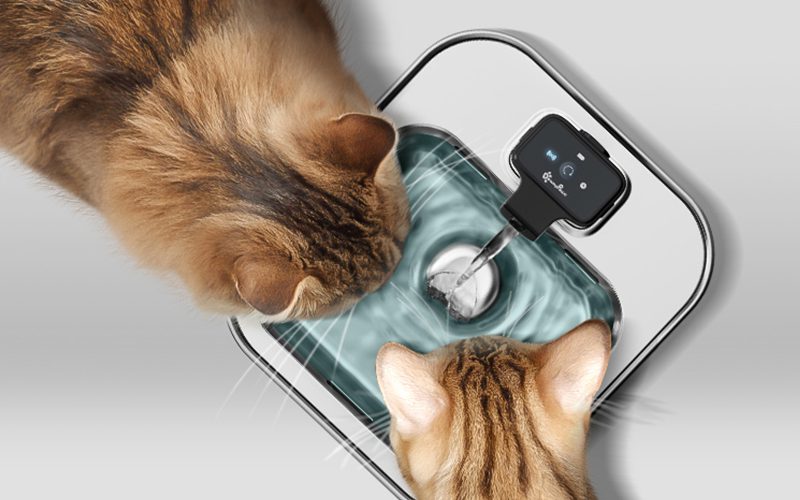
Noise is the #1 factor in cat fountain satisfaction — and the #1 complaint when a fountain doesn’t deliver. Understanding what makes a fountain quiet helps you choose better products and maintain them properly.
The noise benchmark
Below 35dB is the standard for quiet operation. For reference:
- 20dB — Rustling leaves, quiet whisper
- 30dB — Quiet library, soft breathing
- 35dB — Quiet room, background hum
- 40dB — Refrigerator hum, quiet office
- 50dB — Normal conversation, rainfall
A fountain operating below 35dB is essentially inaudible in a normal home environment.
What creates noise in a fountain
Pump noise (the primary source)
The pump is responsible for most fountain noise. Key factors:
Impeller balance. An unbalanced impeller creates vibration — the dominant source of pump noise. Even small imbalances produce audible vibration at high RPM.
Magnetic coupling precision. Proper alignment between motor and impeller magnets ensures smooth, vibration-free operation.
Motor quality. Precision-wound motors produce more consistent electromagnetic fields, resulting in smoother rotation and less noise.
Housing resonance. The pump housing can amplify vibration if not properly designed. Quality housings dampen vibration rather than amplifying it.
Water flow noise
Water hitting surfaces creates noise. The level depends on:
Flow height. Water falling from a greater height creates more splash noise. Shorter falls are quieter.
Surface design. Smooth, angled surfaces create less splash than flat surfaces. Cascading designs can be quieter than direct pours.
Flow rate. Higher flow rates create more water movement noise. Adjustable flow settings let you find the quietest setting that still provides adequate circulation.
Resonance
Fountain components can vibrate sympathetically with pump vibration:
Loose components. Ill-fitting parts rattle and vibrate against each other.
Surface contact. A fountain sitting on a hard surface can transmit vibration. A rubber pad underneath dampens this.
Water level. Very low water levels can cause the pump to cavitate (draw air), creating noise.
What separates quiet fountains
In-house pump manufacturing. Manufacturers who produce their own pumps can optimize every aspect of pump design for quiet operation — impeller balance, magnetic coupling precision, housing resonance.
100% noise testing. Factories that test every pump’s noise level (not just samples) ensure consistent quiet operation across all units.
Quality materials. Soft silicone feet, rubber dampeners, and resonance-absorbing materials reduce transmitted vibration.
Smart design. Water flow paths designed to minimize splash and fall height reduce water noise.
How to keep your fountain quiet
Keep the pump clean. Debris in the impeller chamber causes vibration and noise.
Maintain proper water level. Low water causes cavitation noise.
Place on a soft surface. A rubber mat or towel underneath dampens vibration.
Check for loose components. Ensure all parts are properly seated.
Use timer or sensor mode. Less pump operation means less noise exposure.
The bottom line
Quiet operation depends primarily on pump quality — specifically impeller balance, magnetic coupling precision, and housing design. Choosing a fountain from a manufacturer with in-house pump production and comprehensive noise testing is the best way to ensure a quiet fountain.
