
Feeding multiple cats with an automatic feeder presents unique challenges — food aggression, different dietary needs, and higher food consumption. Here’s how to choose a feeder that handles the demands of a multi-cat household.
The core challenge: food aggression
When multiple cats share one food source, the dominant cat may eat more than its share while the submissive cat goes hungry. This leads to:
- Weight imbalance — One cat overeats while another under-eats
- Stress and conflict — Mealtime becomes a source of tension
- Health monitoring difficulty — You can’t track individual intake
The solution: dual outlets
Dual-outlet feeders address this problem directly:
Physical separation — Two feeding positions spaced apart prevent one cat from guarding both bowls.
Individual portion control — Set different amounts for each outlet (useful when cats have different dietary needs).
Simultaneous dispensing — Both cats eat at the same time, reducing the competitive dynamic.
Different food types — Some dual-outlet feeders allow different food in each hopper (useful for cats with different dietary requirements).
Capacity considerations
Multi-cat households need more capacity:
Two cats: 5L minimum, 6L preferred. Provides 5-7 days between refills.
Three cats: 6L+ or multiple feeders. A single 5L feeder won’t last more than 4-5 days.
Consider your absence patterns. If you travel frequently, larger capacity reduces the risk of running dry.
Portion control accuracy
With multiple cats, portion accuracy matters more:
Individual portion settings — Each cat may need different amounts based on size, age, and activity level.
Consistent dispensing — Inaccurate portions lead to uneven feeding between cats.
Tracking capability — WiFi feeders that log feeding history help you monitor each cat’s intake.
Smart features for multi-cat households
WiFi app control — Monitor and adjust feeding remotely. Particularly valuable when you’re away from home.
Feeding history — Track which outlet dispenses more (indicating which cat eats more).
Notifications — Alerts for completed meals, low food, and errors.
Multi-user access — Share feeding management with family members.
HS Smart Pet’s WiFi feeders with dual outlets are designed specifically for multi-cat households.
Alternative approaches
Multiple single-outlet feeders. Instead of one dual-outlet feeder, use two separate feeders in different locations. This provides maximum separation and reduces competition.
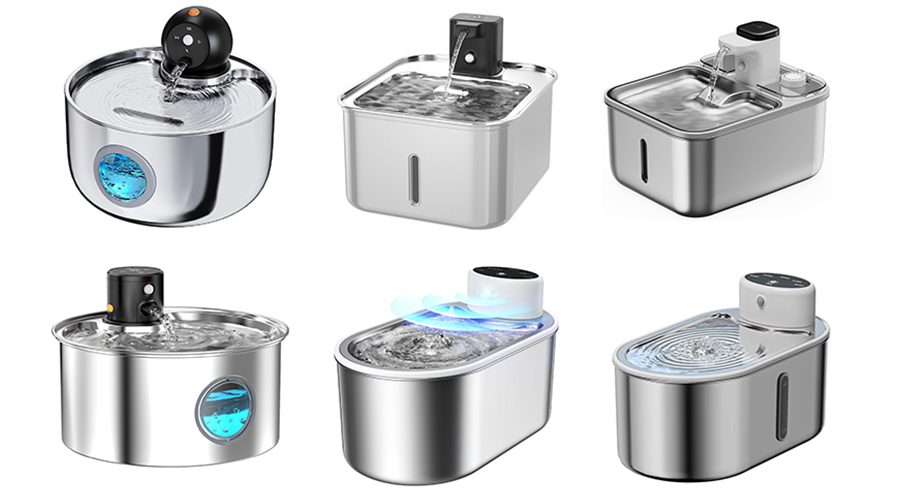
Feeder + fountain combination. Pair the feeder with a cat water fountain to create separate feeding and hydration stations — further reducing mealtime stress.
The bottom line
Multi-cat households need feeders with dual outlets, adequate capacity, accurate individual portion control, and smart monitoring features. Dual-outlet feeders are the most effective solution for preventing food aggression and managing different dietary needs.
