
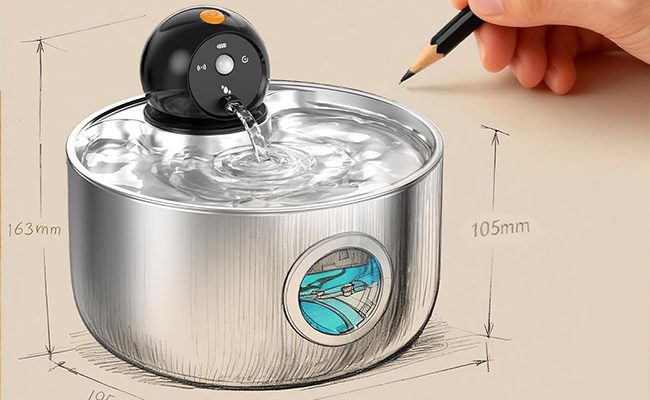
Water circulation is what transforms a container of standing water into a health-promoting hydration system. Understanding how circulation works helps you appreciate why fountains are superior to bowls and why pump quality matters.
The circulation cycle
Every cat water fountain follows the same basic circulation pattern:
1. Water sits in the reservoir (the main water tank)
2. The pump draws water from the reservoir through the intake
3. Water passes through the filter — removing debris, chlorine, and minerals
4. Filtered water flows to the drinking surface — the bowl, dish, or cascade
5. The cat drinks from the flowing water
6. Excess water drains back into the reservoir through the return path
7. The cycle repeats continuously or on a schedule
This closed-loop circulation keeps water moving, filtered, and oxygenated throughout the day.
Why circulation matters
Oxygenation
Moving water absorbs more oxygen from the air than standing water. Oxygenated water tastes fresher and more appealing to cats — the same reason humans prefer sparkling water over flat water.
Filtration effectiveness
Water must pass through the filter to be cleaned. Without circulation, water sits stagnant in the tank — unfiltered and accumulating debris. Circulation ensures all water passes through the filter multiple times per day.
Temperature regulation
Circulating water stays cooler than standing water in warm environments. The movement prevents heat buildup and maintains a more consistent, comfortable temperature for drinking.
Bacterial control
Continuous circulation makes it harder for bacteria to establish colonies. Bacteria prefer stagnant environments where they can multiply undisturbed. Moving water disrupts this process.
Flow patterns
Different fountain designs create different flow patterns:
Cascade flow — Water flows down a series of steps or levels, creating a gentle waterfall effect. This is visually appealing and creates pleasant water sounds.
Bubbling flow — Water bubbles up from a central spout, creating a natural spring effect. Cats that prefer still water with gentle movement often prefer this pattern.
Sheet flow — Water flows across a flat surface in a thin sheet. This provides a wide drinking area and minimal noise.
Stream flow — Water flows through a channel or stream, mimicking natural water sources. This appeals to cats that prefer running water from a specific point.
The best fountains offer multiple flow patterns — or adjustable flow — so you can find what your specific cat prefers.
Pump flow rate
Flow rate (measured in liters per hour) determines how quickly water circulates:
- 100-150 L/h — Gentle flow, suitable for single cats
- 150-250 L/h — Moderate flow, suitable for most households
- 250+ L/h — Strong flow, suitable for multi-cat households
Higher flow rates provide faster circulation but may create more noise. The ideal balance depends on your household size and your cat’s preferences.
The bottom line
Water circulation is the fundamental mechanism that makes cat fountains healthier than bowls. It oxygenates water, enables filtration, regulates temperature, and controls bacteria. Understanding circulation helps you choose fountains with appropriate flow rates and flow patterns for your cat.
