
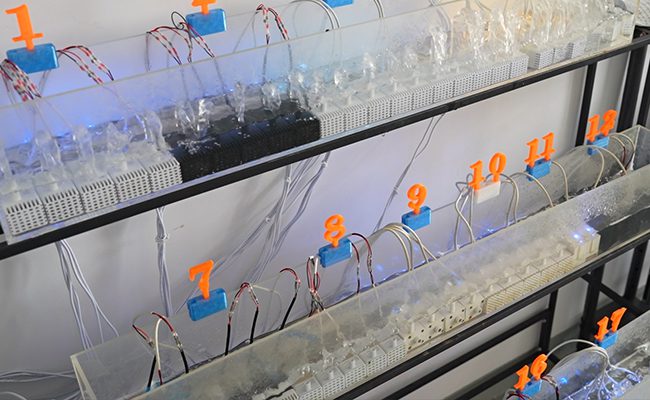
The pump is the heart of every pet water fountain. It determines how quietly the unit runs, how long it lasts, how much energy it consumes, and ultimately how satisfied your customers will be. Yet for many businesses entering the pet product market, the pump is treated as an afterthought — a commodity component sourced at the lowest possible price. This approach leads to high return rates, negative reviews, and damaged brand reputation. Choosing the right pump supplier is one of the most consequential sourcing decisions you will make. This guide provides a structured framework for evaluating suppliers, understanding quality indicators, and building a supply chain you can depend on.
Why the Pump Supplier Matters More Than the Pump Itself
A pump is only as reliable as the manufacturer behind it. Two pumps with identical specifications on paper can perform very differently in the real world depending on the quality of raw materials, precision of assembly, consistency of quality control, and the supplier’s willingness to stand behind their product. Here is what is at stake:
- Product failure rates: A poorly manufactured pump fails within months, generating returns, warranty claims, and one-star reviews that are difficult to recover from.
- Noise complaints: Pump noise is the single most common complaint in pet water fountain reviews. A supplier that does not control impeller balance, bearing quality, and housing tolerances will produce pumps that rattle, hum, and buzz.
- Supply continuity: A supplier that cannot deliver consistent volumes on schedule disrupts your inventory planning, causes stockouts, and costs you sales.
- Compliance risk: Pumps that lack proper electrical safety certifications can be seized at customs, delisted from e-commerce platforms, or trigger product liability issues.
- Total cost of ownership: The cheapest pump per unit often becomes the most expensive when you factor in returns, replacements, customer service costs, and reputational damage.
Evaluation Framework: 10 Criteria for Choosing a Pump Supplier
| Criterion | What to Evaluate | Why It Matters |
|---|---|---|
| 1. Manufacturing capability | Does the supplier manufacture pumps in-house or resell third-party products? What production equipment, assembly lines, and testing facilities do they operate? | In-house manufacturing gives the supplier direct control over quality, tolerances, and production schedules. Resellers add a layer of indirection that makes quality assurance and problem resolution harder. |
| 2. Quality management system | Is the supplier ISO9001 certified? Do they have documented quality control procedures for incoming materials, in-process inspection, and finished goods testing? | ISO9001 certification indicates that the supplier follows standardized quality management practices. It is the baseline expectation for any serious B2B supplier. |
| 3. Product certifications | Do the pumps carry FCC, CE, RoHS, UKCA, or other relevant market certifications? Are the certificates current and issued by accredited testing bodies? | Certifications are mandatory for selling in most major markets. A supplier that cannot provide valid certificates is a compliance liability. |
| 4. Material quality | What materials are used for the impeller, housing, bearings, seals, and electrical components? Are material specifications documented and traceable? | Material quality directly determines pump lifespan, noise level, and safety. Cheap bearings and low-grade plastics are the primary causes of premature pump failure. |
| 5. Testing and inspection protocols | Does the supplier perform life-cycle testing, noise testing, flow rate verification, and electrical safety testing on every production batch? What is the acceptable defect rate? | Systematic testing catches defects before they reach your customers. A supplier that skips batch testing is gambling with your brand reputation. |
| 6. Production capacity and lead times | What is the supplier’s monthly production capacity? What are standard lead times for new orders and repeat orders? Can they handle rush orders? | Capacity determines whether the supplier can grow with your business. Lead times affect your inventory planning and ability to respond to demand spikes. |
| 7. Customization and engineering support | Can the supplier customize flow rate, voltage, connector type, housing dimensions, noise level, or other specifications? Do they have an in-house engineering team? | Off-the-shelf pumps may not fit your fountain design perfectly. A supplier with engineering capabilities can develop pumps tailored to your specific product requirements. |
| 8. Track record and references | How long has the supplier been in business? Who are their existing clients? Can they provide references or case studies? | Established suppliers with a proven track record are lower risk than new entrants. References from other pet product brands provide real-world validation. |
| 9. Communication and responsiveness | How quickly does the supplier respond to inquiries? Do they provide clear, detailed answers? Is there a dedicated account manager or technical contact? | Communication quality predicts how the supplier will handle problems, order changes, and technical questions during the partnership. |
| 10. After-sales support and warranty | What warranty does the supplier offer on pumps? What is their policy on defective units? Do they provide replacement parts and technical documentation? | A supplier that stands behind their product with a meaningful warranty demonstrates confidence in their quality and reduces your financial risk. |
Deep Dive: Manufacturing Capability
In-House vs Outsourced Production
The most important distinction when evaluating a pump supplier is whether they manufacture pumps themselves or source them from third-party factories and resell them. This distinction affects every other factor in the evaluation framework.
| Factor | In-House Manufacturer | Reseller / Trading Company |
|---|---|---|
| Quality control | Direct control over every production stage, from raw material inspection to final testing. | Relies on the third-party factory’s quality systems. Limited ability to intervene or verify. |
| Customization | Can modify tooling, adjust specifications, and develop custom pump designs. | Limited to what the third-party factory offers. Customization requires coordination through an intermediary. |
| Pricing | Lower per-unit cost due to no intermediary markup. | Higher per-unit cost due to reseller margin layered on top of factory cost. |
| Lead time | Shorter and more predictable. Production schedules are managed directly. | Longer and less predictable. Depends on the third-party factory’s availability and the reseller’s coordination. |
| Problem resolution | Direct access to production engineers for root cause analysis and corrective action. | Issues must be relayed through the reseller to the factory, adding delay and potential miscommunication. |
| Scalability | Can add production lines, shifts, or equipment to increase capacity. | Dependent on the third-party factory’s capacity, which the reseller does not control. |
Suppliers with dedicated pump production workshops — including motor winding stations, impeller molding lines, assembly lines, and automated testing equipment — represent the strongest manufacturing capability. For example, a vertically integrated pet product manufacturer that operates its own pump production workshop alongside injection molding, filter production, and final assembly facilities can control quality from raw material to finished fountain. You can review factory capabilities to understand what vertically integrated production looks like in practice.
Key Production Equipment to Look For
- Motor winding machines: Automated or semi-automated equipment for winding copper coils in pump motors. Consistent winding quality directly affects motor efficiency and lifespan.
- Injection molding machines: For producing pump housings, impellers, and connector components. In-house molding ensures dimensional consistency and material traceability.
- Impeller balancing equipment: Precision tools for verifying that impellers are balanced. An unbalanced impeller is the primary cause of pump vibration and noise.
- Automated flow testing stations: Equipment that measures flow rate, pressure, and power consumption on every pump unit before packaging.
- Life-cycle testing rigs: Test stations that run pumps continuously for thousands of hours to validate lifespan claims and identify failure modes before mass production.
- Noise measurement chambers: Acoustic testing environments for measuring pump decibel levels under standardized conditions.
Deep Dive: Quality Management and Certifications
Essential Certifications
When sourcing pumps for pet water fountains, the following certifications are non-negotiable for selling in major markets:
| Certification | What It Covers | Required For |
|---|---|---|
| ISO9001 | Quality management system. Ensures the manufacturer follows standardized processes for design, production, inspection, and continuous improvement. | Baseline expectation for all B2B manufacturing suppliers worldwide. |
| FCC | Electromagnetic compatibility. Ensures the pump’s electrical components do not emit excessive electromagnetic interference. | United States market. |
| CE | European conformity. Covers electrical safety, electromagnetic compatibility, and restriction of hazardous substances for products sold in the European Economic Area. | European Union and EEA markets. |
| RoHS | Restriction of hazardous substances. Ensures the pump does not contain lead, mercury, cadmium, or other restricted materials above permitted levels. | European Union (mandatory); increasingly expected globally. |
| UKCA | UK conformity assessment. The UK’s post-Brexit equivalent of CE marking for products sold in Great Britain. | United Kingdom market. |
| UL / ETL | Electrical safety testing by accredited US-based laboratories. Not always mandatory but strongly preferred by major US retailers. | United States (preferred by large retailers like Amazon, Walmart, Target). |
Always request copies of current certificates and verify their validity. Certificates should be issued by accredited testing laboratories (such as SGS, TUV, Bureau Veritas, or Intertek), not self-declared by the manufacturer. Review full certification details from established manufacturers to understand what properly documented compliance looks like.
Beyond Certifications: Quality Control in Practice
Certifications confirm that a quality system exists. The real question is whether the supplier actually follows it in daily production. Here are the quality control checkpoints a reliable pump supplier should demonstrate:
- Incoming material inspection: Raw materials (copper wire, plastic pellets, magnets, bearings, seals) are tested against specifications before entering production. Materials that fail inspection are rejected and quarantined.
- In-process inspection: Critical dimensions, assembly torque, and electrical connections are verified at multiple points during assembly. Statistical process control (SPC) data should be available for review.
- End-of-line testing: Every finished pump is tested for flow rate, power consumption, noise level, and insulation resistance before packaging. Defective units are removed from the production stream.
- Batch sampling and life testing: Random samples from each production batch are subjected to extended life-cycle testing (typically 1,000 to 5,000 hours of continuous operation) to validate long-term reliability.
- Traceability: Each pump or batch is traceable to its production date, raw material lot, and inspection records. This enables rapid root cause analysis if a field issue arises.
A supplier that can show you documented evidence of these checkpoints — inspection reports, test data sheets, SPC charts, and traceability records — is a supplier that takes quality seriously. Ask for these documents during your evaluation visit or audit.
Deep Dive: Material Quality and Component Sourcing
The performance and lifespan of a pet fountain pump depend heavily on the quality of its individual components. Understanding what to look for in each component helps you ask the right questions during supplier evaluation.
| Component | Quality Indicator | Red Flag |
|---|---|---|
| Impeller | Precision-molded from food-grade or chemical-resistant polymer. Balanced to minimize vibration. Smooth surface finish. | Rough mold lines, visible flash, or inconsistent blade geometry. Imbalanced impellers cause noise and premature bearing wear. |
| Motor coil (copper wire) | High-purity copper winding with consistent gauge and tight coil density. Proper insulation coating. | Aluminum wire substituted for copper (lower cost but higher resistance, more heat, shorter life). Loose or uneven winding. |
| Bearings | Ceramic or high-grade stainless steel bearings. Low friction, corrosion resistant, rated for continuous submerged operation. | Low-grade metal bearings that corrode in water. Plastic bushings that wear quickly under continuous use. |
| Shaft | Ceramic or hardened stainless steel shaft. Corrosion-resistant and wear-resistant. | Uncoated carbon steel shaft that rusts in water contact. Soft metal shaft that develops grooves over time. |
| Seals and gaskets | Silicone or EPDM rubber seals rated for continuous water submersion. Maintain elasticity over thousands of hours. | Low-grade rubber that hardens, cracks, or degrades with prolonged water exposure, leading to leaks. |
| Housing | ABS or PC plastic with consistent wall thickness. Clean mold lines. Properly sealed electrical compartment. | Thin, brittle plastic. Poorly sealed seams that allow water ingress into the electrical compartment. |
| Power cord and connector | Properly rated gauge wire. Strain relief at connection points. Certified plug or USB connector. | Undersized wire gauge that overheats. No strain relief, leading to wire fatigue and breakage at the connector. |
Suppliers that produce their own water pumps in dedicated workshops have the advantage of controlling component sourcing directly. They can specify exact material grades, maintain relationships with verified sub-suppliers, and inspect incoming components before they enter the assembly line. This level of control is difficult to achieve when sourcing pumps through trading intermediaries.
Deep Dive: Customization and Engineering Support
Off-the-shelf pumps work for generic products, but if you are building a branded pet water fountain with specific performance targets, you need a supplier that can customize. Here are the key parameters that a capable pump supplier should be able to adjust:
| Parameter | Customization Range | Impact on Product |
|---|---|---|
| Flow rate | 50 to 500 liters per hour | Determines how quickly water circulates. Higher flow rates suit larger fountains; lower rates are quieter for small units. |
| Voltage and power | 5V USB, 12V DC, or custom voltage | Affects power adapter requirements, energy consumption, and market-specific electrical compliance. |
| Noise level | Under 25 dB to under 40 dB | Critical for pet owner satisfaction. Lower noise requires better bearings, balanced impellers, and vibration-dampening housing design. |
| Connector type | Barbed fitting, quick-connect, threaded, custom | Must match the fountain’s internal tubing and assembly design. Mismatched connectors cause leaks. |
| Housing dimensions | Custom length, width, height | Must fit within the fountain’s reservoir footprint. Oversized pumps limit reservoir capacity; undersized pumps may lack power. |
| Cord length | 0.5 meters to 3 meters (or custom) | Affects placement flexibility and safety. Longer cords need proper gauge to avoid voltage drop. |
| Flow control | Fixed speed, adjustable dial, or electronic multi-speed | Adjustable flow adds user convenience and allows pet owners to customize the water stream to their pet’s preference. |
| Smart features | Low-water sensor, app connectivity, auto-shutoff | Enables premium product positioning and higher retail price points. |
A supplier with in-house engineering capabilities can work with you to develop a pump that matches your fountain design precisely, rather than forcing you to design your fountain around an available pump. This is particularly important for brands pursuing OEM or ODM partnerships, where product differentiation is a competitive advantage. Review OEM and ODM service details to understand the scope of customization that experienced manufacturers can provide.
Deep Dive: Production Capacity and Lead Times
Understanding a supplier’s production capacity helps you plan inventory, manage cash flow, and avoid stockouts. Here are the key questions to ask:
Capacity Questions
- What is your monthly pump production capacity (units per month)?
- What percentage of that capacity is currently committed to existing clients?
- How quickly can you scale production if my order volume increases by 50 percent or 100 percent?
- Do you have backup production lines or equipment for surge capacity?
Lead Time Questions
- What is the standard lead time for a new order (from PO to shipment)?
- What is the lead time for repeat orders of the same specification?
- What is the lead time for a custom pump design (from design approval to first production batch)?
- Can you accommodate rush orders, and if so, what is the surcharge or minimum order adjustment?
Capacity Benchmarks
For context, a well-equipped pump production workshop within a vertically integrated pet product factory typically produces 50,000 to 100,000 or more pump units per month. A manufacturer that also produces complete pet water fountains — not just pumps — can coordinate pump production with fountain assembly schedules, reducing lead times and eliminating the coordination overhead of managing a separate pump supplier. For reference, established pet product manufacturers with integrated facilities may produce tens of thousands of pumps monthly alongside other product lines such as water fountains, feeders, and air purifiers.
Red Flags: Warning Signs of an Unreliable Pump Supplier
| Red Flag | What It Signals | Risk to Your Business |
|---|---|---|
| No ISO9001 certification | Lack of standardized quality management processes. | Inconsistent product quality. Higher defect rates. No formal corrective action process. |
| Cannot provide valid product certifications (FCC, CE, RoHS) | Products have not been tested by accredited laboratories, or certificates have expired. | Customs seizures, e-commerce listing removals, legal liability in case of product incidents. |
| Refuses factory visits or audits | Potentially hiding substandard conditions, outsourced production, or capacity limitations. | You cannot verify claims about manufacturing capability, quality systems, or working conditions. |
| No life-cycle testing data available | The supplier has not validated how long their pumps actually last under continuous operation. | You are the test subject. Premature failures will surface in your customer base. |
| Unusually low pricing (significantly below market average) | Corners are being cut on materials, testing, or labor. Possible use of aluminum wire instead of copper, low-grade bearings, or skipped inspection steps. | Short pump lifespan, noise issues, safety risks. The savings per unit are dwarfed by return costs and brand damage. |
| Vague or evasive answers to technical questions | The sales contact may not have access to engineering knowledge, or the supplier lacks technical depth. | Difficulty resolving technical issues. Customization requests will be slow or impossible to fulfill. |
| No warranty or very short warranty period | The supplier does not stand behind their product quality. | You bear the full financial risk of product failures. |
| Inconsistent sample quality vs production quality | The supplier can produce good samples but cannot maintain quality at scale. | What you approved is not what you will receive in bulk orders. |
| Single-source raw materials with no backup suppliers | Vulnerable to supply disruptions if their material supplier has issues. | Your orders may be delayed by problems entirely outside your visibility. |
| No documented traceability system | Cannot trace defective units back to specific production batches or material lots. | If a field issue arises, the supplier cannot perform targeted recalls or root cause analysis. |
Supplier Evaluation Checklist
Use this checklist during your evaluation process. Score each criterion on a 1 to 5 scale (1 = unacceptable, 5 = excellent) and calculate a total score. A score of 40 or above (out of 50) indicates a strong candidate. Below 30 warrants serious concern.
| # | Evaluation Item | Score (1-5) | Notes |
|---|---|---|---|
| 1 | In-house pump manufacturing capability | ||
| 2 | ISO9001 certification (current and valid) | ||
| 3 | Product certifications (FCC, CE, RoHS, UKCA) | ||
| 4 | Material quality and traceability | ||
| 5 | End-of-line testing on every unit | ||
| 6 | Life-cycle testing data available | ||
| 7 | Customization and engineering support | ||
| 8 | Production capacity meets your volume needs | ||
| 9 | Lead times acceptable for your business model | ||
| 10 | Warranty terms and after-sales support |
The Advantage of Vertically Integrated Suppliers
For businesses sourcing complete pet water fountains — not just standalone pumps — working with a vertically integrated manufacturer that produces pumps, filters, housings, and finished fountains under one roof offers significant advantages:
- Single point of accountability: If a pump issue affects fountain performance, there is no finger-pointing between separate pump and fountain suppliers. One manufacturer owns the entire quality chain.
- Optimized component integration: Pumps designed specifically for the manufacturer’s own fountain models fit better, run quieter, and perform more efficiently than generic pumps adapted to fit.
- Simplified supply chain: One purchase order, one shipping arrangement, one quality standard. This reduces administrative overhead, logistics complexity, and the risk of component incompatibility.
- Cost efficiency: Eliminating intermediary margins on pumps, filters, and other components reduces the total cost of the finished product.
- Faster product development: When pump engineering, fountain design, and manufacturing all happen within the same organization, new product development cycles are shorter and iteration is faster.
A manufacturer that operates dedicated production workshops for pumps, filters, water fountains, feeders, and air purifiers within a single facility exemplifies this vertically integrated model. You can explore factory details and manufacturing capabilities to assess whether a supplier’s integration level meets your needs.
For Different Business Types: Tailored Sourcing Strategies
Amazon Sellers
If you sell pet water fountains on Amazon, pump quality directly impacts your seller metrics. Defective pumps generate returns, negative reviews, and A-to-Z claims that can jeopardize your account health. Prioritize suppliers with end-of-line testing on every unit and valid FCC certification (mandatory for electronic products sold in the US). Ensure the supplier can provide documentation for Amazon’s compliance verification process. Explore Amazon seller solutions for sourcing support tailored to e-commerce requirements.
Wholesale Distributors
Wholesale buyers need consistent quality across large volumes and predictable lead times for inventory planning. Negotiate quality agreements that specify acceptable defect rates, batch testing protocols, and corrective action timelines. A supplier with monthly pump production capacity in the tens of thousands can support wholesale volumes without compromising quality. Review wholesale partnership options for volume-based sourcing.
Private Label Brands
Private label brands differentiate through product design, features, and quality positioning. Work with a pump supplier that offers customization — adjustable flow rates, low-noise designs, smart sensor integration — so your fountain stands out from competitors using generic components. A vertically integrated manufacturer that offers private label services can develop a complete, cohesive product where the pump, filter, housing, and dispensing design are engineered as a unified system.
ODM / OEM Partners
If you are developing a custom pet water fountain from scratch, the pump supplier must be a true engineering partner, not just a component vendor. They should participate in the design process, provide input on pump selection and placement, and iterate on specifications based on prototype testing. Look for suppliers with in-house R&D teams and a track record of ODM projects in the pet product category. Reviewing past project cases can reveal the supplier’s depth of experience and range of completed customizations.
Cost vs Quality: Finding the Right Balance
Price is always a factor in sourcing decisions, but it should never be the only factor. The table below illustrates how to think about pump cost in the context of total business impact:
| Cost Factor | Cheapest Pump | Quality Pump |
|---|---|---|
| Unit cost | Lowest | 15 to 40 percent higher |
| Expected lifespan | 6 to 12 months | 2 to 3+ years |
| Noise complaints (estimated) | 10 to 20 percent of reviews | Under 3 percent of reviews |
| Return rate due to pump failure | 5 to 15 percent | Under 2 percent |
| Customer lifetime value impact | Negative — dissatisfied customers do not repurchase | Positive — reliable products drive repeat purchases and referrals |
| Warranty claim costs | High | Low |
| Total cost per unit (including returns, support, and brand impact) | Significantly higher than unit price suggests | Lower than unit price suggests when total cost is calculated |
The cheapest pump is almost never the most economical choice when you account for the full cost of ownership. Investing in a quality pump from a reliable supplier protects your margins, your brand, and your customer relationships.
Frequently Asked Questions (FAQ)
What certifications should a pet water fountain pump supplier have?
At minimum, the supplier should hold ISO9001 quality management certification. The pumps themselves should carry FCC (for the US market), CE (for the European market), RoHS (hazardous substance compliance), and UKCA (for the UK market) certifications. These certificates should be current, issued by accredited testing laboratories, and available for you to verify. Review certification documentation from established manufacturers as a reference for what properly certified products look like.
How can I tell if a supplier manufactures pumps in-house or resells them?
Request a factory tour (in person or via video) and look for dedicated pump production equipment: motor winding machines, impeller molding lines, automated flow testing stations, and life-cycle testing rigs. Ask specific technical questions about impeller design, bearing materials, and coil winding specifications. A reseller will typically struggle to answer detailed manufacturing questions. You can also request to see production records and raw material inventory, which an in-house manufacturer will have readily available.
What is a reasonable defect rate to expect from a quality pump supplier?
A well-managed pump production line should achieve a defect rate of under 1 percent at end-of-line testing. The best suppliers target defect rates below 0.5 percent. Ask the supplier what their current defect rate is, how they measure it, and what corrective actions they take when defects are detected. A supplier that tracks and openly shares this data is more trustworthy than one that claims zero defects (which is unrealistic) or refuses to disclose the number.
How important is noise level in a pet water fountain pump?
Noise level is critically important. Pump noise is the number one complaint in pet water fountain reviews across all major e-commerce platforms. A pump that exceeds 40 decibels will generate negative feedback. The best pet fountain pumps operate below 30 decibels — quieter than a whisper. Achieving this requires precision-balanced impellers, high-quality ceramic or stainless steel bearings, and vibration-dampening housing design. Ask suppliers for noise test data measured under standardized conditions.
Should I source pumps separately or from the same manufacturer that makes my fountains?
Sourcing pumps from the same manufacturer that assembles your complete fountains is generally the better approach. It eliminates component compatibility issues, simplifies logistics, creates a single point of accountability for quality, and often reduces total cost. Vertically integrated manufacturers that produce pumps, filters, and fountain assemblies in-house can optimize the entire system as a unified product rather than assembling mismatched components from different suppliers.
What warranty should I expect from a pump supplier?
A reliable pump supplier should offer a minimum 12-month warranty against manufacturing defects. Premium suppliers may offer 18 to 24 months. The warranty should cover motor failure, seal leaks, and electrical faults under normal use conditions. Clarify the warranty claim process upfront: how are defective units reported, returned, and replaced? A supplier with a clear, documented warranty process is preferable to one with vague verbal assurances.
How do I verify that a supplier’s certifications are genuine?
Request the certificate numbers and verify them directly with the issuing certification body. For CE certificates, check with the notified body listed on the certificate. For FCC, verify the FCC ID on the FCC database. For ISO9001, confirm with the accredited registrar. Be cautious of certificates that appear to be self-declared, lack a certificate number, or are issued by unrecognized bodies. Established manufacturers typically make their certification information readily available for verification.
Can a pump supplier customize pumps for my specific fountain design?
Yes, if the supplier has in-house engineering and tooling capabilities. Customizable parameters include flow rate, voltage, connector type, housing dimensions, cord length, noise level, and smart features like low-water sensors. Customization typically requires a minimum order quantity to justify the tooling and engineering investment. Discuss your requirements early in the evaluation process to confirm the supplier can meet your specifications. OEM and ODM service providers with dedicated engineering teams are best positioned for this type of customization.
What is the typical lead time for ordering pet fountain pumps?
Standard lead times vary by supplier and order size, but typical ranges are 15 to 30 days for repeat orders of existing specifications and 30 to 60 days for new custom designs (including tooling and sample approval). Rush orders may be accommodated with a surcharge or adjusted minimum order quantity. Confirm lead times during your supplier evaluation and build buffer time into your inventory planning to account for shipping and customs clearance.
How do I handle quality issues if they arise after receiving a pump shipment?
A reliable supplier will have a documented corrective action process. The typical workflow is: (1) you report the issue with photos, videos, and affected unit quantities; (2) the supplier acknowledges and investigates within a defined timeframe; (3) the supplier provides a root cause analysis and corrective action plan; (4) replacement units or credit are issued per the warranty terms. Establish these expectations in your supply agreement before placing your first order. Suppliers with strong quality systems, such as those certified to ISO9001 standards, will have formal procedures for handling non-conforming products.
Where can I find reliable pet water fountain pump suppliers?
Industry trade shows, B2B sourcing platforms, and direct referrals from other pet product brands are common starting points. When evaluating potential suppliers, review their product catalogs, request factory tours, verify certifications, and ask for references from existing clients. You can also explore established manufacturers with integrated pump production capabilities through their contact pages or review company background information to assess their suitability as a long-term supply partner.
Conclusion
Choosing a reliable pet water fountain pump supplier is a decision that affects every aspect of your business — product quality, customer satisfaction, return rates, brand reputation, and long-term profitability. The cheapest option is rarely the most economical when you account for the full cost of poor quality.
Use the evaluation framework in this guide to assess potential suppliers systematically. Prioritize in-house manufacturing capability, valid certifications, documented quality control processes, material traceability, and engineering support. Visit factories, request test data, verify certificates, and talk to existing customers before committing to a supply agreement.
A vertically integrated manufacturer that produces pumps, filters, and complete pet water fountains under one roof offers the strongest combination of quality control, cost efficiency, and supply chain simplicity. Whether you are an Amazon seller, a wholesale distributor, or a brand pursuing private label growth, investing time in supplier evaluation pays dividends for years to come.
Explore pump product details, review manufacturing capabilities, or contact a manufacturer to begin your supplier evaluation process with a partner that meets the standards outlined in this guide.
