
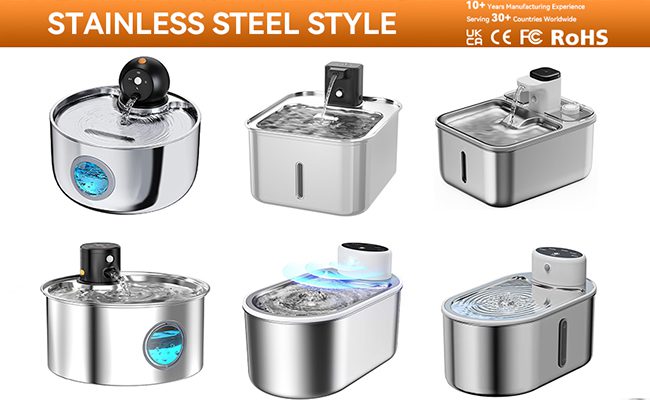
Selling pet products in the United States and the European Union requires compliance with a range of safety, electromagnetic compatibility, chemical safety, and environmental regulations. These certifications are not optional — they are legal requirements that protect consumers, pets, and the environment. Products that lack proper certifications can be seized at customs, delisted from e-commerce platforms, recalled from the market, or subject to significant fines. For pet brands, retailers, and e-commerce sellers, understanding the certification landscape is not just a legal necessity — it is a competitive advantage. Properly certified products inspire buyer confidence, unlock access to premium sales channels, and reduce the risk of costly compliance failures. This guide covers every major certification required for pet products in the US and EU markets, explains what each one means, and provides practical guidance on how to obtain and maintain compliance.
Why Certifications Matter for Pet Products
Pet products — especially electronic items like water fountains, automatic feeders, and air purifiers — are subject to the same regulatory frameworks as consumer electronics. The reasoning is straightforward: these products use electricity, contain electronic components, and come into direct contact with animals and their food and water. A defective product can cause electrical shock, fire, chemical exposure, or harm to a pet. Certifications exist to verify that products have been tested against established safety standards and are safe for their intended use.
Here is what is at stake when certifications are missing or invalid:
- Customs seizure: Customs authorities in the US and EU can inspect imported goods and detain products that lack required certifications or markings. Seized products may be destroyed, and the importer may face fines.
- Platform delisting: Amazon, Walmart, eBay, and other e-commerce platforms require sellers to provide proof of compliance for listed products. Listings without valid certifications can be suspended or permanently removed.
- Product recalls: Regulatory agencies (CPSC in the US, national market surveillance authorities in the EU) can mandate product recalls if a product is found to be non-compliant after it reaches the market. Recalls are expensive, damaging to brand reputation, and logistically complex.
- Legal liability: If a non-compliant product causes injury or property damage, the seller, importer, and manufacturer may face lawsuits and significant financial liability.
- Loss of retailer access: Major retail chains (Petco, PetSmart, Walmart, Target) require suppliers to provide complete certification documentation before accepting products into their inventory. Without certifications, wholesale distribution is not possible.
- Brand reputation damage: Negative publicity from a safety incident or regulatory action can permanently damage a brand’s credibility in the market.
The investment in proper certification is modest compared to the consequences of non-compliance. Working with a manufacturer that already holds relevant certifications for their product lines significantly reduces the time, cost, and complexity of the compliance process. Review certification documentation from established pet product manufacturers to understand what properly certified products look like.
Certification Overview: US vs EU at a Glance
| Certification | Market | Scope | Mandatory or Voluntary | Applies To |
|---|---|---|---|---|
| FCC | United States | Electromagnetic compatibility (EMC) | Mandatory | All electronic products, including pet water fountains, feeders, and air purifiers. |
| UL / ETL (NRTL) | United States | Electrical safety | Voluntary but strongly expected | Electronic products, especially those with motors, heating elements, or direct electrical connection. |
| FDA (food contact) | United States | Food-contact material safety | Mandatory for food-contact components | Components that contact pet food or water (bowls, hoppers, dispensing mechanisms, fountain basins). |
| CPSIA | United States | Consumer product safety (children’s products) | Mandatory if product is classified as a children’s product | Pet products marketed for use by children or in households with children (rare but possible edge case). |
| California Prop 65 | United States (California) | Chemical exposure warnings | Mandatory for products sold in California | Products containing any of the 900+ listed chemicals above safe harbor levels. |
| CE | European Union / EEA | Conformity with EU health, safety, and environmental directives | Mandatory | All products placed on the EU market that fall under relevant directives (electrical equipment, EMC, RoHS, etc.). |
| RoHS | European Union (global expectation) | Restriction of hazardous substances | Mandatory in EU; increasingly expected globally | Electrical and electronic equipment, including pet electronics. |
| REACH | European Union | Chemical safety (registration, evaluation, authorization, restriction) | Mandatory | All products placed on the EU market. Broader scope than RoHS, covering a wider range of chemical substances. |
| WEEE | European Union | Waste electrical and electronic equipment | Mandatory | Electronic products. Requires producer registration and contribution to e-waste recycling programs. |
| UKCA | United Kingdom | UK conformity assessment (post-Brexit replacement for CE) | Mandatory | Products placed on the Great Britain market that previously required CE marking. |
| LFGB | Germany (EU reference) | Food-contact material safety (German standard) | Mandatory for food-contact products sold in Germany | Food-contact components. Often used as a benchmark for EU-wide food-contact compliance. |
| PAHs (Polycyclic Aromatic Hydrocarbons) | European Union (Germany, AfPS standard) | Restriction of PAHs in consumer products | Mandatory in Germany; recommended across EU | Products with rubber or plastic components that may come into skin contact (pet feeder components, fountain surfaces). |
US Market Certifications in Detail
FCC (Federal Communications Commission)
What It Is
FCC certification verifies that an electronic product does not emit electromagnetic interference (EMI) that could disrupt other electronic devices, communications systems, or medical equipment. The FCC regulates all electronic products sold in the United States under Part 15 of the FCC Rules for unintentional radiators (devices that are not designed to emit radio frequency energy but may do so as a byproduct of their operation).
Why It Matters for Pet Products
Every electronic pet product — water fountains with pumps, automatic feeders with motors and timers, air purifiers with fans and ionizers, and any product with a Wi-Fi or Bluetooth module — falls under FCC jurisdiction. Products with wireless connectivity (Wi-Fi, Bluetooth) require more extensive FCC testing under the relevant radio frequency rules (Part 15 Subpart C for intentional radiators).
FCC Compliance Levels
| Level | Applicable Products | Process | Documentation |
|---|---|---|---|
| FCC Verification | Class A digital devices (for commercial use) and some simple unintentional radiators. | Manufacturer self-testing or third-party testing. No FCC filing required. | Verification documentation retained by manufacturer. Declaration of conformity. |
| FCC Declaration of Conformity (DoC) | Class B digital devices (for residential use) — most consumer pet products fall here. | Testing by accredited lab. Results documented in a Declaration of Conformity. | DoC document, test report, and user information. No FCC ID assigned. |
| FCC Certification | Products with intentional radiators (Wi-Fi, Bluetooth, RF modules). Smart pet feeders and Wi-Fi-enabled water fountains require this. | Testing by accredited lab. Application filed with FCC (directly or through a Telecommunication Certification Body). FCC ID assigned. | FCC ID number, grant of equipment authorization, test report, user manual with compliance statements. |
Key Requirements
- Products must bear the FCC mark or FCC ID (for certified products) on the product label.
- User manuals must include the FCC compliance statement, including the Part 15 disclaimer.
- Test reports must be from accredited laboratories recognized by the FCC.
- For products with modular wireless components (e.g., a Wi-Fi module sourced from a third-party supplier), the module may hold its own FCC certification, but the final product still requires testing to verify that the integration does not create new interference issues.
Timeline and Cost
- Testing duration: 2 to 4 weeks for standard products. 4 to 6 weeks for products with wireless modules requiring full FCC certification.
- Cost: $1,500 to $5,000 for standard EMC testing. $3,000 to $10,000+ for products requiring full FCC certification with wireless testing.
UL / ETL (NRTL Certification)
What It Is
UL (Underwriters Laboratories) and ETL (Intertek’s Electrical Testing Labs) are Nationally Recognized Testing Laboratories (NRTLs) that test products for electrical safety. UL certification verifies that a product does not pose risks of electrical shock, fire, or other hazards under normal use and foreseeable misuse conditions.
Why It Matters for Pet Products
UL certification is technically voluntary for most consumer pet products — there is no federal law that universally requires UL listing. However, in practice, UL or ETL listing is strongly expected by major US retailers (Walmart, Target, Petco, PetSmart, Costco) and is often required by building codes and insurance companies. Amazon does not currently mandate UL listing for pet products, but it is increasingly referenced in product safety evaluations. For products with motors, pumps, heating elements, or direct AC power connection, UL listing is a practical necessity for serious market participation.
Relevant UL Standards for Pet Products
| UL Standard | Scope | Applies To |
|---|---|---|
| UL 1017 | Vacuum cleaners and motor-operated appliances | Pet air purifiers with motor-driven fans. |
| UL 73 | Motor-operated appliances (general) | Pet water fountain pumps, automatic feeder motors. |
| UL 60335-1 | Household and similar electrical appliances — safety (general requirements) | General standard applicable to most household pet electronics. |
| UL 60335-2-40 | Electrical heat pumps, air-conditioners, and dehumidifiers | Pet air purifiers with advanced filtration or ionization features (if applicable). |
| UL 62368-1 | Audio/video, information, and communication technology equipment | Smart pet products with Wi-Fi modules, cameras, or advanced electronics. |
Timeline and Cost
- Testing duration: 4 to 8 weeks for initial listing. Follow-up inspections (Factory Production Inspection, or FPI) are conducted quarterly or semi-annually.
- Cost: $5,000 to $20,000+ depending on product complexity, number of applicable standards, and testing laboratory. Ongoing costs include annual listing maintenance fees and factory inspection fees.
FDA (Food and Drug Administration) — Food-Contact Compliance
What It Is
The FDA regulates materials that come into contact with food (and by extension, pet food and water) under the Federal Food, Drug, and Cosmetic Act. Any component of a pet product that touches pet food or drinking water must be made from materials that are safe and do not leach harmful substances.
Why It Matters for Pet Products
Pet water fountains, automatic feeders, and their components (bowls, hoppers, dispensing mechanisms, tubing, seals) all have surfaces that contact pet food or water. These surfaces must comply with FDA food-contact regulations. The relevant regulations are found in Title 21 of the Code of Federal Regulations (21 CFR), particularly:
- 21 CFR 170 to 199: Food-additive regulations covering polymers (plastics), coatings, adhesives, and other materials used in food-contact applications.
- 21 CFR 175 to 178: Specific regulations for indirect food additives (substances that may migrate from packaging or equipment into food).
Key Requirements
- All food-contact materials must be tested for migration limits — the amount of substance that can transfer from the material to the food or water under intended use conditions (temperature, duration, food type).
- Manufacturers should maintain documentation including material safety data sheets (MSDS), food-contact compliance declarations, and third-party test reports from accredited laboratories.
- Common food-contact compliant materials for pet products include: food-grade 304 stainless steel, food-grade polypropylene (PP), food-grade silicone, and BPA-free Tritan copolyester.
Timeline and Cost
- Testing duration: 2 to 4 weeks for material migration testing.
- Cost: $500 to $3,000 per material, depending on the number of tests required and the testing laboratory.
California Proposition 65 (Prop 65)
What It Is
Proposition 65, officially the Safe Drinking Water and Toxic Enforcement Act of 1986, requires businesses to provide warnings to California consumers about significant exposures to chemicals that cause cancer, birth defects, or other reproductive harm. The Prop 65 list currently contains over 900 chemicals.
Why It Matters for Pet Products
If you sell pet products in California (which includes selling online to California customers), your products must either: (1) be free of Prop 65-listed chemicals above safe harbor levels, or (2) carry a clear and reasonable warning label. Common Prop 65 concerns for pet products include lead (in electronics, solder, or metal components), phthalates (in plastic or rubber components), and BPA (in polycarbonate plastics).
Compliance Options
| Option | Description | When to Use |
|---|---|---|
| Product testing and reformulation | Test products for Prop 65-listed chemicals. If levels exceed safe harbor limits, reformulate the product to eliminate or reduce the chemical. | Preferred approach. Eliminates the need for warning labels and avoids consumer concern. |
| Prop 65 warning label | Apply a Prop 65 warning to the product and/or packaging if listed chemicals are present above safe harbor levels. | Used when reformulation is not feasible or cost-effective. Warning labels are common but can negatively affect consumer perception. |
| Third-party testing and certification | Engage an accredited lab to test for specific Prop 65 chemicals and document compliance. | Provides documented evidence of compliance. Useful for defending against enforcement actions. |
Timeline and Cost
- Testing duration: 1 to 3 weeks for chemical screening.
- Cost: $300 to $2,000 per product, depending on the number of chemicals tested.
CPSIA (Consumer Product Safety Improvement Act)
What It Is
CPSIA establishes safety standards for consumer products, with a primary focus on children’s products. It requires third-party testing for children’s products and mandates compliance with various safety standards including lead content, phthalate limits, and mechanical safety.
Why It Matters for Pet Products
Most pet products are not classified as children’s products and are not subject to CPSIA’s children’s product requirements. However, edge cases exist: if a pet product is marketed for use by children (e.g., a child’s first pet care kit), or if the product’s design and marketing appeal primarily to children, it may be reclassified as a children’s product under CPSIA. Additionally, all consumer products — including pet products — must comply with CPSIA’s general certificate of conformity (GCC) requirements, which attest that the product complies with all applicable consumer product safety standards.
Key Requirements for General Consumer Products
- General Certificate of Conformity (GCC) for non-children’s products, certifying compliance with applicable consumer product safety standards.
- Compliance with applicable standards for lead content in surface coatings and substrate materials.
- Compliance with the Consumer Product Safety Commission (CPSC) tracking label requirements (manufacturer identification, production date, and batch information).
EU Market Certifications in Detail
CE Marking
What It Is
CE marking (Conformite Europeenne) indicates that a product complies with all applicable EU directives and regulations. It is the manufacturer’s declaration that the product meets EU health, safety, and environmental protection requirements. CE marking is mandatory for a wide range of products placed on the European Economic Area (EEA) market.
Why It Matters for Pet Products
Electronic pet products (water fountains, feeders, air purifiers) fall under multiple EU directives that require CE marking. The CE mark is not a quality mark or a certification issued by a third party — it is the manufacturer’s self-declaration that the product meets all applicable requirements. However, this declaration must be supported by documented evidence (test reports, technical files) and, for some product categories, third-party testing by a notified body.
Applicable EU Directives for Pet Products
| EU Directive / Regulation | Scope | Applies To |
|---|---|---|
| Low Voltage Directive (LVD) 2014/35/EU | Electrical safety for equipment operating within certain voltage ranges (50 to 1000V AC, 75 to 1500V DC). | Pet products powered by mains electricity (most water fountains, feeders, and air purifiers with AC adapters fall under LVD if the AC side exceeds 50V). |
| EMC Directive 2014/30/EU | Electromagnetic compatibility. Ensures the product does not generate electromagnetic disturbance exceeding levels allowing radio and telecommunications equipment to operate as intended, and has an adequate level of immunity. | All electronic pet products. |
| RoHS Directive 2011/65/EU (amended by 2015/863/EU) | Restriction of hazardous substances in electrical and electronic equipment. | All electrical and electronic pet products. |
| Radio Equipment Directive (RED) 2014/53/EU | Requirements for radio equipment (Wi-Fi, Bluetooth, and other wireless communication devices). | Smart pet products with Wi-Fi or Bluetooth connectivity. |
| General Product Safety Directive (GPSD) 2001/95/EC | General safety requirement for all consumer products. | All pet products, including non-electronic items. |
CE Marking Process
- Identify applicable directives: Determine which EU directives apply to your product based on its characteristics (electrical, electronic, wireless, etc.).
- Identify applicable harmonized standards: Harmonized European standards (EN standards) provide the technical specifications for meeting directive requirements. Common standards for pet electronics include EN 60335-1 (household appliance safety), EN 60335-2-40 (specific requirements for certain appliances), EN 55014-1/2 (EMC for household appliances), and EN 62368-1 (audio/video and ICT equipment safety).
- Test the product: Conduct testing against the applicable harmonized standards. Testing can be performed in-house (for some directives) or by an accredited third-party laboratory.
- Compile the technical file: Assemble a comprehensive technical file containing design drawings, test reports, risk assessments, component specifications, and manufacturing process descriptions.
- Issue the Declaration of Conformity (DoC): The manufacturer (or authorized representative) signs a formal Declaration of Conformity stating that the product meets all applicable directive requirements.
- Apply the CE mark: Affix the CE mark to the product, packaging, and documentation according to the specified size and placement requirements.
Timeline and Cost
- Testing duration: 3 to 5 weeks for standard products. 5 to 8 weeks for products with wireless modules (RED testing adds complexity).
- Cost: $2,000 to $8,000 for LVD + EMC + RoHS testing. $4,000 to $15,000+ if RED testing is required for wireless products.
RoHS (Restriction of Hazardous Substances)
What It Is
RoHS restricts the use of specific hazardous substances in electrical and electronic equipment. The current RoHS directive (2011/65/EU, amended by 2015/863/EU) restricts ten substances:
| Restricted Substance | Maximum Concentration (by weight in homogeneous material) |
|---|---|
| Lead (Pb) | 0.1 percent (1000 ppm) |
| Mercury (Hg) | 0.1 percent (1000 ppm) |
| Cadmium (Cd) | 0.01 percent (100 ppm) |
| Hexavalent Chromium (Cr6+) | 0.1 percent (1000 ppm) |
| Polybrominated Biphenyls (PBB) | 0.1 percent (1000 ppm) |
| Polybrominated Diphenyl Ethers (PBDE) | 0.1 percent (1000 ppm) |
| Bis(2-ethylhexyl) phthalate (DEHP) | 0.1 percent (1000 ppm) |
| Butyl benzyl phthalate (BBP) | 0.1 percent (1000 ppm) |
| Dibutyl phthalate (DBP) | 0.1 percent (1000 ppm) |
| Diisobutyl phthalate (DIBP) | 0.1 percent (1000 ppm) |
Why It Matters for Pet Products
All electrical and electronic pet products sold in the EU must comply with RoHS. This includes the product’s electronic components (PCBs, solder, wires, connectors), housing materials (plastics, coatings), and any accessories (power adapters, USB cables). RoHS compliance is typically verified through XRF (X-ray fluorescence) screening and wet chemical analysis of materials.
Key Requirements
- Each homogeneous material in the product must be tested individually. A “homogeneous material” is a material that cannot be mechanically separated into different materials (e.g., a plastic housing is one homogeneous material; a PCB with solder joints contains multiple homogeneous materials).
- Manufacturers must maintain a technical file documenting RoHS compliance for each product, including material declarations from component suppliers and test reports.
- RoHS compliance is a prerequisite for CE marking under the RoHS Directive.
Timeline and Cost
- Testing duration: 1 to 2 weeks for XRF screening. 2 to 4 weeks if wet chemical analysis is required.
- Cost: $500 to $3,000 per product, depending on the number of homogeneous materials and the testing method.
REACH (Registration, Evaluation, Authorization, and Restriction of Chemicals)
What It Is
REACH is the EU’s comprehensive chemical safety regulation. It applies to all chemical substances manufactured, imported, or used in the EU — including those in finished products. REACH is broader than RoHS, covering a much wider range of chemical substances and requiring manufacturers and importers to understand and manage the risks associated with the chemicals in their products.
Why It Matters for Pet Products
All pet products placed on the EU market must comply with REACH. Key REACH requirements relevant to pet products include:
- Substances of Very High Concern (SVHC): REACH maintains a “Candidate List” of SVHCs that are subject to communication requirements. If your product contains an SVHC above 0.1 percent weight by weight, you must inform your customers and, in some cases, notify the European Chemicals Agency (ECHA).
- Restricted substances (Annex XVII): REACH Annex XVII lists substances that are restricted in specific applications. Restrictions relevant to pet products include limits on lead in jewelry and accessories (which may apply to decorative elements on pet products), phthalates in soft plastic components, and nickel in components with prolonged skin contact.
- SVHC Candidate List updates: The SVHC Candidate List is updated twice per year (typically January and June). Manufacturers must monitor updates and assess whether new SVHCs are present in their products.
Timeline and Cost
- Testing duration: 2 to 3 weeks for REACH screening (SVHC and Annex XVII substances).
- Cost: $1,000 to $5,000 per product, depending on the range of substances tested and the materials involved.
WEEE (Waste Electrical and Electronic Equipment)
What It Is
The WEEE Directive (2012/19/EU) requires producers of electrical and electronic equipment to finance the collection, treatment, recycling, and environmentally sound disposal of their products at end of life. “Producers” include manufacturers, importers, and distributors who place EEE on the EU market.
Why It Matters for Pet Products
If you sell electronic pet products (water fountains, feeders, air purifiers) in the EU, you are considered a “producer” under the WEEE Directive and must:
- Register with the national WEEE register in each EU member state where you sell products.
- Finance the collection and recycling of WEEE from consumers (typically through membership in a compliance scheme).
- Mark products with the crossed-out wheeled bin symbol.
- Report the quantities of EEE placed on the market in each member state.
Key Considerations
- WEEE registration is country-specific. If you sell in Germany, France, Italy, and Spain, you must register in each country separately.
- Non-EU companies typically need to appoint an authorized representative in the EU to fulfill WEEE obligations.
- WEEE compliance costs vary significantly by country and by the volume and category of products placed on the market.
UKCA (UK Conformity Assessment)
What It Is
UKCA is the UK’s post-Brexit conformity marking that replaced CE marking for products placed on the Great Britain market (England, Scotland, and Wales). Northern Ireland continues to accept CE marking under the Windsor Framework.
Why It Matters for Pet Products
If you sell electronic pet products in Great Britain, you need UKCA marking in addition to (or instead of) CE marking. The technical requirements for UKCA are largely aligned with CE requirements, but the conformity assessment must be performed under UK-specific regulations and, where applicable, by UK-recognized conformity assessment bodies.
Key Differences from CE
| Factor | CE Marking | UKCA Marking |
|---|---|---|
| Market | EU and EEA member states. | Great Britain (England, Scotland, Wales). |
| Regulations | EU directives and regulations. | UK-specific regulations (largely transposed from EU directives). |
| Standards | EN harmonized standards. | Designated UK standards (designated BS EN standards, largely identical to EN standards). |
| Conformity assessment body | EU-notified body. | UK-approved body. |
| Authorized representative | EU-based authorized representative required for non-EU manufacturers. | UK-based authorized representative required for non-UK manufacturers. |
| Declaration of Conformity | EU Declaration of Conformity. | UK Declaration of Conformity. |
Timeline and Cost
- Testing duration: 3 to 5 weeks (similar to CE testing, as the technical requirements are largely aligned).
- Cost: $2,000 to $8,000. If the product has already been tested for CE, UKCA testing may be streamlined, as the underlying standards are largely the same.
LFGB (German Food and Feed Code)
What It Is
LFGB (Lebensmittel- und Futtermittelgesetzbuch) is Germany’s food and feed code, which includes requirements for food-contact materials. LFGB testing is often considered more rigorous than FDA food-contact testing and is widely recognized as a benchmark for food-contact safety in the EU.
Why It Matters for Pet Products
Pet food and water contact components (bowls, hoppers, fountain basins, dispensing mechanisms) sold in Germany must comply with LFGB food-contact requirements. LFGB testing covers overall migration limits, specific migration limits for individual substances, and sensory testing (odor and taste transfer). Products that pass LFGB testing can generally be considered compliant with EU-wide food-contact requirements under Regulation (EC) No 1935/2004.
Timeline and Cost
- Testing duration: 2 to 4 weeks.
- Cost: $800 to $3,000 per material, depending on the tests required.
Certification Comparison: US vs EU Requirements
| Requirement Area | United States | European Union | United Kingdom |
|---|---|---|---|
| Electromagnetic compatibility | FCC Part 15 | EMC Directive 2014/30/EU (CE) | UK EMC Regulations (UKCA) |
| Electrical safety | UL / ETL (NRTL) — voluntary but strongly expected | Low Voltage Directive 2014/35/EU (CE) | UK Electrical Equipment (Safety) Regulations (UKCA) |
| Wireless / radio | FCC Part 15 Subpart C / Part 15.247 (for Wi-Fi, Bluetooth) | Radio Equipment Directive 2014/53/EU (CE) | UK Radio Equipment Regulations (UKCA) |
| Hazardous substances | No federal RoHS equivalent (but California Prop 65 covers some overlapping concerns) | RoHS Directive 2011/65/EU | UK RoHS Regulations (UKCA) |
| Chemical safety (broader) | TSCA (Toxic Substances Control Act) + state-level regulations (Prop 65) | REACH Regulation (EC) No 1907/2006 | UK REACH |
| Food-contact materials | FDA 21 CFR 170 to 199 | Regulation (EC) No 1935/2004 + LFGB (Germany) | UK Food Contact Materials Regulation (retained EU law) |
| E-waste / recycling | State-level e-waste laws (varies by state) | WEEE Directive 2012/19/EU | UK WEEE Regulations |
| General product safety | CPSC (Consumer Product Safety Commission) + CPSIA | General Product Safety Directive 2001/95/EC | UK General Product Safety Regulations |
| Conformity marking | FCC mark + UL/ETL mark (if applicable) | CE mark | UKCA mark |
Practical Certification Strategy for Pet Brands
For brands selling pet products in both the US and EU markets, here is a practical approach to managing the certification process efficiently:
Phase 1: Pre-Production Certification Planning
- Identify target markets: List every country where you plan to sell. Each market has its own certification requirements.
- Map applicable certifications: Use the tables in this guide to identify which certifications apply to your specific product type in each target market.
- Verify manufacturer certifications: Before finalizing your product design, confirm which certifications your manufacturer already holds for the base product. Existing certifications may transfer to your private label version, saving significant time and cost. Review manufacturer certification documentation.
- Identify gaps: Determine which certifications are missing and need to be obtained. Build the testing timeline into your product development schedule.
Phase 2: Testing and Certification
- Use accredited laboratories: All testing should be performed by laboratories accredited to ISO 17025 (the international standard for testing and calibration laboratories). Recognized laboratories include SGS, TUV, Bureau Veritas, Intertek, and UL.
- Bundle testing where possible: Many tests overlap between certifications. For example, RoHS testing is often bundled with CE testing. EMC testing for FCC and CE can sometimes be coordinated to reduce duplicate testing. A knowledgeable testing laboratory can advise on efficient testing strategies.
- Plan for lead times: Certification testing takes weeks to months. Build buffer time into your launch schedule to account for testing delays, re-testing if initial results fail, and document processing time.
- Maintain a compliance file: Keep all test reports, certificates, declarations of conformity, and technical documentation organized in a central compliance file. This file must be available for inspection by customs authorities, market surveillance agencies, and e-commerce platform compliance teams.
Phase 3: Ongoing Compliance
- Monitor regulatory changes: Certification requirements evolve. The EU RoHS directive has been amended multiple times. REACH’s SVHC Candidate List is updated twice per year. FCC rules are periodically revised. Assign responsibility for monitoring regulatory changes to a team member or subscribe to regulatory update services.
- Re-test when the product changes: Any change to materials, components, suppliers, or manufacturing processes may affect certification validity. Consult with your testing laboratory before making changes to determine if re-testing is required.
- Renew certifications as needed: Some certifications (particularly UL/ETL) require periodic factory inspections and listing renewals. Track renewal dates and ensure ongoing compliance.
- Respond to market surveillance: If a market surveillance authority contacts you about your product’s compliance, respond promptly and provide the requested documentation. Proactive cooperation typically results in better outcomes than non-response.
For Businesses: Certification as a Competitive Advantage
While certifications are a regulatory requirement, they also serve as a powerful differentiator in the marketplace. Here is how to leverage certifications strategically:
For Amazon Sellers
- Amazon compliance documentation: Amazon periodically requests compliance documentation from sellers, especially for electronic products. Having complete, valid certifications readily available prevents listing suspensions and speeds up the reinstatement process if a listing is flagged.
- Listing differentiation: Mention relevant certifications in your product listing bullet points and A+ content. Statements like “FCC certified,” “CE compliant,” and “RoHS compliant” signal quality and safety to informed buyers.
- Brand Registry support: Complete certifications strengthen your Brand Registry application and demonstrate professionalism to Amazon’s compliance team.
Explore Amazon seller solutions for certification support tailored to e-commerce requirements.
For Wholesale and Retail Distribution
- Retailer requirements: Major pet retail chains require complete certification documentation as a condition of doing business. Having FCC, CE, RoHS, UL, and food-contact certifications in place opens doors to wholesale distribution that uncertified competitors cannot access.
- Insurance and liability: Product liability insurance providers may offer lower premiums for products with third-party safety certifications, reflecting the reduced risk profile.
- International expansion: A comprehensive certification portfolio (FCC + CE + UKCA + RoHS + REACH) positions your products for sale across North America, Europe, and the UK without additional compliance work.
Review wholesale partnership options for certification requirements in retail distribution.
For Private Label and OEM Brands
- Leverage manufacturer certifications: When working with an established manufacturer, many certifications transfer to your private label products. This significantly reduces your compliance costs and time to market.
- Specify certification requirements early: Include certification requirements in your product brief and supply agreement. This ensures the manufacturer designs and produces the product with compliance in mind from the start, rather than trying to retrofit compliance after production.
- Build certification into your brand story: Certifications are a trust signal. Communicate your compliance credentials through your website, packaging, and marketing materials to build consumer confidence.
Learn more about private label, OEM, and ODM certification support from experienced manufacturers.
Certification Cost and Timeline Summary
| Certification | Typical Cost Range | Typical Timeline | Renewal / Maintenance |
|---|---|---|---|
| FCC (standard EMC) | $1,500 to $5,000 | 2 to 4 weeks | No formal renewal, but re-testing required if product design changes. |
| FCC (with wireless / RF) | $3,000 to $10,000+ | 4 to 6 weeks | FCC ID is permanent for the granted product configuration. Changes may require new filing. |
| UL / ETL | $5,000 to $20,000+ | 4 to 8 weeks | Quarterly or semi-annual factory inspections. Annual listing maintenance fees. |
| FDA food-contact | $500 to $3,000 per material | 2 to 4 weeks | Re-testing required if materials or suppliers change. |
| California Prop 65 | $300 to $2,000 per product | 1 to 3 weeks | Re-testing recommended if materials change. Monitor list updates. |
| CE (LVD + EMC + RoHS) | $2,000 to $8,000 | 3 to 5 weeks | No formal renewal, but technical file must be maintained and updated. |
| CE (with RED for wireless) | $4,000 to $15,000+ | 5 to 8 weeks | Same as standard CE. Module-level RED certification can simplify product-level testing. |
| RoHS (standalone) | $500 to $3,000 | 1 to 4 weeks | Re-testing if materials or suppliers change. |
| REACH | $1,000 to $5,000 | 2 to 3 weeks | Monitor SVHC Candidate List updates (twice per year). Re-assess if new SVHCs are added. |
| WEEE registration | $500 to $5,000+ per country (first year) | 2 to 6 weeks per country | Annual registration renewal and volume reporting in each registered country. |
| UKCA | $2,000 to $8,000 | 3 to 5 weeks | Same as CE. Technical file must be maintained. |
| LFGB food-contact | $800 to $3,000 per material | 2 to 4 weeks | Re-testing if materials change. |
Note: Costs and timelines are estimates and vary based on product complexity, testing laboratory, and the number of applicable standards. Working with a manufacturer that already holds relevant certifications for their base products can significantly reduce your certification costs and timelines. Established manufacturers with comprehensive certification portfolios have already invested in the testing and compliance infrastructure, and those certifications often transfer to private label and OEM products produced on the same platforms.
Frequently Asked Questions (FAQ)
What is the minimum set of certifications I need to sell a pet water fountain in the US?
At minimum, you need FCC certification (either Declaration of Conformity for basic electronic products or full FCC Certification if the product has Wi-Fi or Bluetooth). You should also have FDA food-contact compliance documentation for all components that contact water (basin, tubing, pump housing). UL or ETL listing is not legally required but is strongly recommended for market acceptance, especially if you plan to sell through major retailers. If you sell in California, Prop 65 compliance (either testing confirming safe levels or a warning label) is required. Review certification details from established manufacturers for reference.
What is the minimum set of certifications I need to sell a pet water fountain in the EU?
You need CE marking, which encompasses compliance with the Low Voltage Directive (LVD), EMC Directive, and RoHS Directive. You also need REACH compliance documentation. If the product has Wi-Fi or Bluetooth, the Radio Equipment Directive (RED) applies. All food-contact components must comply with Regulation (EC) No 1935/2004 (and LFGB if selling in Germany). WEEE registration is required in each EU member state where you sell the product. The product must bear the CE mark and the WEEE crossed-out wheeled bin symbol.
Do I need separate certifications for the UK after Brexit?
Yes. The UK requires UKCA marking for products placed on the Great Britain market. The technical requirements are largely aligned with CE requirements, but the conformity assessment must be documented under UK-specific regulations, and the Declaration of Conformity must reference UK regulations. You also need UK-based WEEE registration and a UK-based authorized representative if your company is not based in the UK. Northern Ireland continues to accept CE marking under the Windsor Framework.
Can I use the same test report for both FCC and CE certification?
Not directly. FCC and CE have different testing standards and requirements. However, some tests (particularly EMC tests) cover similar parameters, and a knowledgeable testing laboratory can coordinate testing to minimize duplication. For example, radiated emissions testing can be performed once and the data used to evaluate compliance against both FCC and CE limits (which differ in some frequency ranges). Discuss testing strategy with your laboratory to optimize efficiency.
Does my manufacturer’s certification cover my private label product?
In many cases, yes — if your private label product is based on the same design, uses the same components, and is manufactured in the same facility as the manufacturer’s certified product, the existing certifications typically apply. However, you should confirm this with your manufacturer and obtain copies of all relevant certificates. If you make any changes to the product (different components, materials, or design modifications), the certifications may need to be updated or re-tested. Always verify certification applicability before relying on a manufacturer’s certificates for your branded product.
How often do I need to re-test or renew certifications?
Most product certifications (FCC, CE, RoHS, UKCA) do not have formal expiration dates but require re-testing if the product design, materials, components, or manufacturing location changes. UL and ETL listings require ongoing factory inspections (typically quarterly or semi-annually) and annual maintenance fees. WEEE registration requires annual renewal and volume reporting. REACH compliance requires ongoing monitoring of the SVHC Candidate List, which is updated twice per year.
What happens if I sell products without the required certifications?
Consequences vary by market and severity. In the US, the CPSC can issue recalls, impose fines, and pursue legal action. Amazon and other platforms can delist your products and suspend your selling privileges. In the EU, market surveillance authorities can order product withdrawal, impose fines, and require corrective action. Customs authorities in both markets can detain and destroy non-compliant shipments. Beyond regulatory consequences, selling non-compliant products exposes you to product liability lawsuits if a consumer or pet is harmed.
Are there any certifications specific to pet products (not general consumer electronics)?
There are no universally mandated certifications specific to pet products as a category. However, pet products that contact food or water must comply with food-contact material regulations (FDA in the US, EU 1935/2004 and LFGB in the EU). Some voluntary certifications and standards exist for specific pet product attributes, such as noise level testing for pet water fountains or durability testing for pet toys, but these are not regulatory requirements. The primary certifications for electronic pet products are the same as those for general consumer electronics, supplemented by food-contact compliance for relevant components.
How do I verify that a manufacturer’s certifications are genuine?
Request copies of all certificates and verify them independently. For FCC, check the FCC ID database (https://www.fcc.gov/oet/ea/fccid). For UL, verify the listing in UL’s online database (https://www.ul.com). For CE, request the Notified Body number (if applicable) and verify with the notified body. For ISO9001, confirm with the accredited registrar listed on the certificate. Be cautious of certificates that lack certificate numbers, are issued by unrecognized bodies, or appear to be self-declared without supporting test reports. Established manufacturers typically make their certification information readily available for verification.
Do I need certifications for non-electronic pet products like pet beds, toys, or grooming tools?
Non-electronic pet products are not subject to FCC, CE (for electrical safety), RoHS, or WEEE requirements. However, they must still comply with general product safety regulations (CPSC in the US, General Product Safety Directive in the EU), REACH chemical safety requirements (in the EU), California Prop 65 (if sold in California), and any material-specific regulations (e.g., phthalate restrictions for soft plastic components). Food-contact requirements apply if the product contacts pet food or water.
Can I start selling before my certifications are complete?
Technically, you can list products for sale before certifications are complete, but this is risky. If your product is selected for compliance verification by a platform (Amazon, Walmart) or a market surveillance authority, you must be able to produce valid certification documentation immediately. Listing without completed certifications exposes you to listing suspension, customs detention, and regulatory penalties. The safest approach is to complete all required certifications before your first shipment. Build certification timelines into your product development schedule from the start.
Where can I find a manufacturer that already holds the necessary certifications?
Look for manufacturers that explicitly list their certifications on their website and can provide copies of current certificates upon request. Established pet product manufacturers with export experience to the US and EU markets typically hold FCC, CE, RoHS, and ISO9001 certifications as standard. Review certification portfolios, explore manufacturer backgrounds, and contact manufacturers directly to discuss your specific certification needs for each target market.
Conclusion
Navigating the certification landscape for pet products in the US and EU markets may seem complex, but the process is manageable when approached systematically. Here is a summary of the key takeaways:
- FCC and CE are non-negotiable: FCC certification is mandatory for electronic pet products sold in the US. CE marking is mandatory for products sold in the EU. Both cover electromagnetic compatibility and, in the case of CE, electrical safety and hazardous substance restrictions.
- UL/ETL is practically essential for the US: While not legally mandated for all products, UL or ETL listing is expected by major US retailers and significantly enhances market access and consumer trust.
- RoHS and REACH are mandatory for the EU: RoHS restricts hazardous substances in electronic products. REACH provides broader chemical safety requirements. Both must be documented and demonstrable.
- UKCA is required for the UK: Post-Brexit, the UK requires its own conformity marking. Requirements are largely aligned with CE but must be documented separately.
- Food-contact compliance is essential for relevant components: Any part of a pet product that contacts food or water must comply with FDA (US) or EU 1935/2004 / LFGB (EU) food-contact regulations.
- Work with certified manufacturers: Partnering with a manufacturer that already holds relevant certifications for their product lines is the most efficient path to compliance. Existing certifications often transfer to private label and OEM products, saving you time and money.
- Plan certifications early: Build certification timelines and costs into your product development schedule from the beginning. Retrofitting compliance after production is more expensive and time-consuming than designing for compliance from the start.
- Maintain your compliance file: Keep all certificates, test reports, declarations of conformity, and technical documentation organized and accessible. You will need them for customs clearance, platform verification, retailer onboarding, and regulatory inquiries.
Certifications are not just a cost of doing business — they are a foundation for building a trustworthy, sustainable pet brand. Products that meet established safety and quality standards earn customer confidence, unlock premium sales channels, and reduce the risk of costly compliance failures. Whether you are an Amazon seller, a wholesale distributor, or a brand pursuing private label growth, investing in proper certification is one of the smartest decisions you can make for your business.
Explore full certification details, review certified product catalogs, or contact a manufacturer to discuss your specific certification requirements for each target market.
